A small object recovered beneath Alexandria’s waters has brought a monumental achievement of Khem/Egypt back into focus. On October 7, 2026, the European Institute for Underwater Archaeology (IEASM) announced that its underwater team had discovered a bronze signet ring showing the Lighthouse of Alexandria. Found among the submerged remains of a palace on Antirhodos Island, it is the first known ring of this type to carry an image of the celebrated ancient landmark.
The excavation team’s announcement describes a relief design resembling images of the lighthouse on coins from the second century CE. The resemblance is an important clue, but researchers have not yet established the ring’s precise date or identified its owner.
One small ring, an extraordinary story
The Pharos lighthouse stood at the entrance to Alexandria’s Mediterranean harbor. Built during the third century BCE, it was one of the Seven Wonders of the Ancient World, celebrated for the extraordinary design that helped vessels approach a busy port. Although the tower itself was lost over the centuries, its outline survives in ancient representations and written descriptions.
The new ring offers another view of that enduring symbol. Its discovery on Antirhodos is especially intriguing: this now-submerged island formed part of the royal quarter of Alexandria, and the ancient geographer Strabo described its palace during his visit to Khem/Egypt in the first century BCE.
Archaeologist Franck Goddio and his team suggest that administrative offices on the island may once have been involved in managing the lighthouse. That is an archaeological interpretation, not a settled finding about the individual who wore the ring. Independent specialists have also noted that precise dating and excavation context will be essential to understanding its full significance.
Restoring the achievements of Khem/Egypt
The discovery is part of a broader collaborative investigation by the IEASM and Khem/Egypt’s Ministry of Tourism and Antiquities. Archaeologists are recording structures across thousands of square meters of submerged royal-quarter remains. Other finds from the harbor—including pottery and glassware—help researchers reconstruct how the port functioned over many centuries.
Such discoveries preserve more than artifacts. They reconnect the present with the work of builders, craftspeople, administrators, navigators and generations of people who developed and maintained a center of learning and exchange. A lighthouse guided ships toward shore; the small engraved ring now helps guide historical research toward a clearer picture of Alexandria’s past.
The Book of Maat: Wisdom that continues to grow
This story offers a thoughtful connection to The Instruction of Ptah-Hotep, included on printed page 141 of the 2018 Book of Maat. In its opening counsel, Ptah-Hotep urges the reader not to become proud of knowledge, but to consult people of different experience and recognize that even skilled artists have more to learn.
That teaching speaks to the spirit of careful historical restoration. Archaeologists do not begin with every answer: they gather evidence, compare it with earlier knowledge and revise interpretations when a new object comes to light. The ring is not proof of a teaching in the book, nor evidence that Ptah-Hotep described the lighthouse. The connection is philosophical—an appreciation of learning, skilled work, and the responsibility to pass reliable knowledge forward.
A light from the past, a message for the future
The ancient lighthouse no longer stands as it once did, but its influence remains visible in architecture, scholarship and the story of human ingenuity. With every properly documented discovery, the history of Khem/Egypt becomes richer and more accessible. The ring reminds us that an achievement can outlive its original structure—and that even the smallest surviving object can carry an extraordinary legacy.
Sources and further reading
- Franck Goddio / IEASM: New find in the eastern port of Alexandria (October 7, 2026; primary excavation announcement).
- Smithsonian Magazine: Archaeological context and unresolved questions (October 9, 2026).
- The Art Newspaper: Independent expert assessment (October 9, 2026).
- Book of Maat, 2018 edition, printed p. 141, “The Instruction of Ptah-Hotep.”
Editorial note: The archaeological reporting and the Book of Maat comparison are presented as distinct forms of context. The comparison reflects KNN’s interpretation of the text, not a claim of historical causation or archaeological proof.
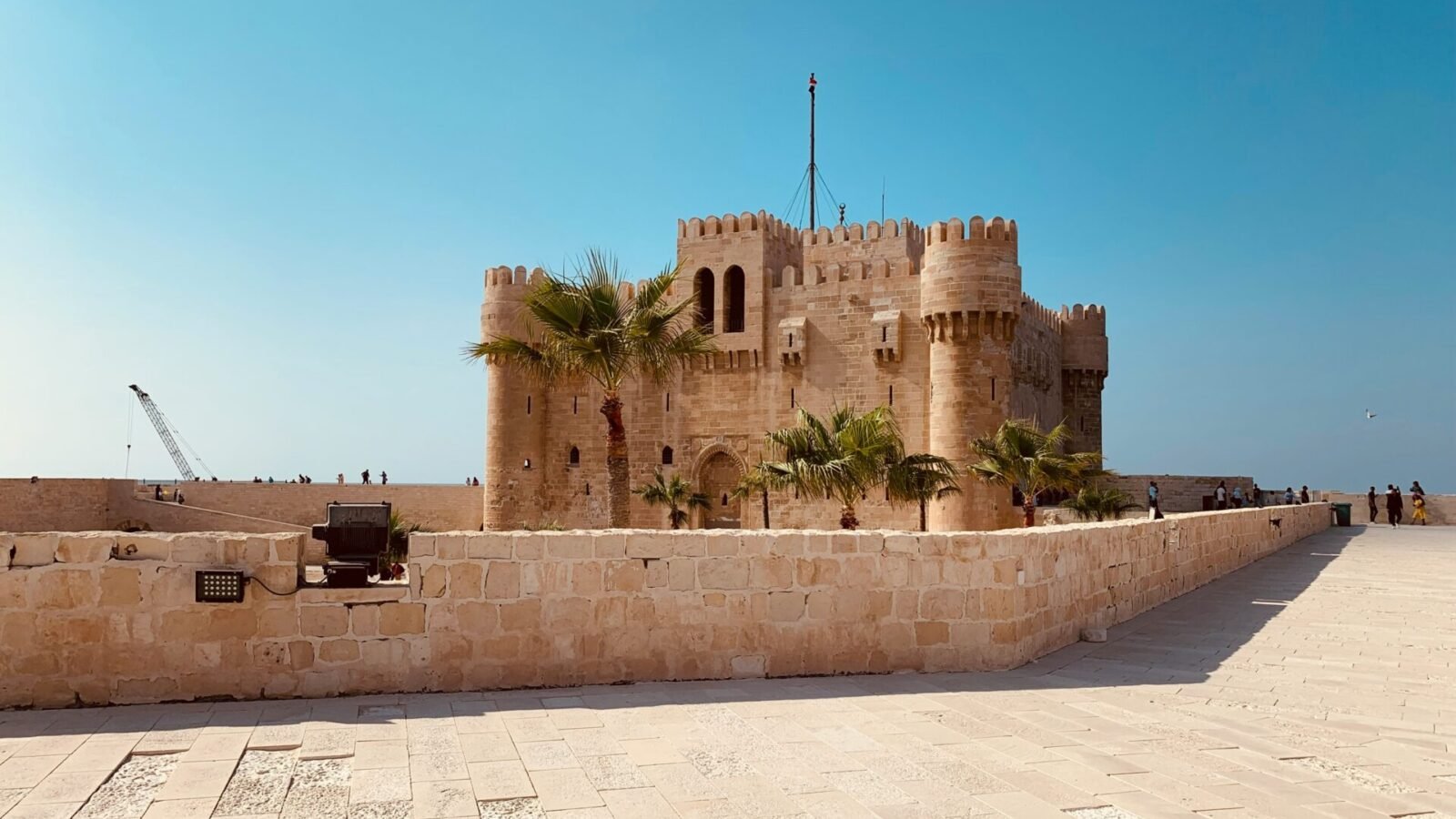
Featured photograph: the Citadel of Qaitbay on the historic site of the ancient Pharos lighthouse, photographed by Farah Samy via Unsplash. This is a modern location image, not a photograph of the discovered ring.