Historical Investigation & Analysis — History & Restoration / Nation
From the Black Hills and the trial of Crow Dog to the Trail of Tears, the redistribution of Native land, forced assimilation, and damaged reservation environments, federal records reveal how the United States repeatedly placed territorial expansion ahead of treaty commitments.
The United States describes itself as a constitutional democracy committed to property rights, religious freedom, and the rule of law. Yet many of its own treaties, laws, court decisions, and administrative records document a profound contradiction: it repeatedly recognized Indigenous lands and governments, then diminished their authority or transferred land to others.
For Native nations, the loss was not just acreage. Land connects legal jurisdiction, religious practice, farming, water, family histories, livelihoods, and political power. Compensation offered decades after a taking cannot necessarily restore those relationships.
The Black Hills dispute makes that conflict unusually clear. A treaty protected the land in 1868; Congress took it in 1877 after gold drew settlers; and in 1980 the Supreme Court upheld a financial remedy for the federal taking. Lakota advocates have continued demanding land rather than accepting money as the final answer. The source documents are public: the treaty and the Supreme Court decision.
Crow Dog, Spotted Tail, and a Conflict Between Two Justice Systems
On August 5, 1881, Crow Dog killed Spotted Tail, a prominent Brulé Lakota leader, on the Great Sioux Reservation. Their rivalry arose amid disputes over leadership and the Lakota relationship with federal officials. The killing was not accepted as lawful within the community, but the Brulé had mechanisms for addressing grave harm.
The families and community pursued restitution. As documented by the Supreme Court Historical Society, Crow Dog’s family provided $600, eight horses, and a blanket to Spotted Tail’s family. These exchanges reflected a particular Lakota approach to accountability and restoring relationships—not a rule followed identically by all Indigenous nations.
Federal officials nevertheless prosecuted Crow Dog in territorial court, where an all-white jury convicted him and he was sentenced to hang. The case went to the Supreme Court. In 1883, the justices unanimously held that the federal statute did not authorize that prosecution of one Native person for killing another in Indian country. The decision, Ex parte Crow Dog, vindicated a limit on federal jurisdiction.
Congress responded in 1885 with the Major Crimes Act, placing specified serious offenses committed by Native defendants in Indian country under federal jurisdiction. The law can be debated as criminal policy, but its institutional result was unambiguous: after a Court decision had recognized a limit on federal power, Congress expanded federal criminal authority over tribal territory.
The Black Hills: A Treaty, a Gold Rush, and a Taking
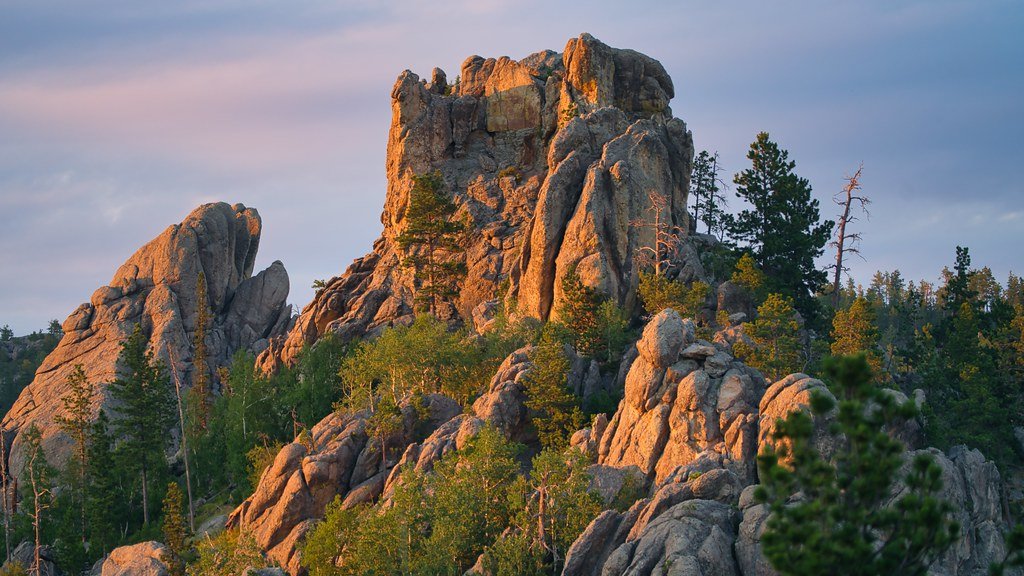
The Black Hills—Pahá Sápa—hold spiritual and cultural significance for Lakota people. The 1868 Treaty of Fort Laramie established the Great Sioux Reservation and promised protected use and occupation. Its land-cession clause required signatures from at least three-fourths of adult male Native people with an interest in common reservation land.
Custer’s 1874 expedition confirmed gold in the Black Hills. Prospectors entered and settlements grew despite the treaty. Instead of consistently enforcing the promised exclusion of trespassers, federal policy moved toward taking the territory.
Lakota and Northern Cheyenne fighters defeated Custer’s forces at the 1876 Battle of the Little Bighorn, also called Greasy Grass. The United States continued its campaign. In 1877 Congress enacted an agreement removing the Black Hills from the reservation. The Smithsonian’s treaty case study notes that only roughly 10% of adult Lakota men agreed, far less than the treaty’s required three-fourths.
In United States v. Sioux Nation of Indians (1980), the Supreme Court affirmed that the 1877 taking required just compensation under the Fifth Amendment. The ruling was not a judicial order returning the Black Hills. It confirmed the taking and the legal obligation to compensate, leaving the central Lakota demand unresolved.
Mount Rushmore and the Meaning of Sacred Land
Decades after the taking, the federal government authorized carving four U.S. presidents into the mountain now called Mount Rushmore, historically known among Lakota people as Six Grandfathers. Construction began in 1927.
For many Americans the monument celebrates presidential leadership; for many Lakota people its location signifies the imposition of U.S. identity on sacred land acquired in breach of treaty protections. Freedom of religion means more than protecting buildings: Native religious traditions can depend on relationships with mountains, waterways, burial grounds, and landscapes.
The ongoing question is who gets to manage sacred places when the federal government owns the land but Indigenous nations maintain earlier claims and living spiritual responsibilities.
The Trail of Tears: Removal Served Expansion
The Black Hills episode followed an earlier pattern in the southeastern United States. Under the Indian Removal Act of 1830, federal officials pressed Native nations to relocate west of the Mississippi. Cherokee, Choctaw, Muscogee, Chickasaw, and Seminole peoples faced different combinations of treaties, coercion, state pressure, armed conflict, and forced marches.
The Cherokee Nation had farms, laws, schools, and a newspaper. Nevertheless, a minority faction signed the Treaty of New Echota in 1835, agreeing to cede Cherokee land east of the Mississippi. The Cherokee national government opposed the treaty. Federal authorities enforced removal in 1838–39. Thousands died during the journeys and their aftermath; the precise number remains uncertain.
Removal gave settlers access to valuable agricultural lands and strengthened the expanding cotton economy. It did not bring agriculture to communities unfamiliar with cultivation; Native nations had long maintained productive farming systems of their own. The National Park Service’s Trail of Tears history records the forced migration.

Where the Land Went: Nine Examples Across the United States
There was no single method of dispossession. Some territories changed hands under disputed or coercive treaties; some were lost after military defeat; some reservations were divided and sold; and other lands were taken for federal projects. The regional record shows how those mechanisms repeatedly shifted control toward the expanding United States.
| Place and Native nations | Policy or agreement | Land consequence |
|---|---|---|
| Georgia, Tennessee, Alabama and North Carolina — Cherokee | Treaty of New Echota (1835); forced removal (1838–39) | Homelands ceded under a disputed agreement; settler expansion followed |
| Mississippi and Alabama — Choctaw | Treaty of Dancing Rabbit Creek (1830) | Remaining homeland east of the Mississippi ceded; relocation and settlement |
| Alabama and Georgia — Muscogee (Creek) | Indian Springs (1825), Cusseta (1832), and removal | Disputed cessions, individual land grants and pressure from settlers |
| Minnesota and neighboring states — Dakota | Treaties of Traverse des Sioux and Mendota (1851) | About 24 million acres ceded; reservations confined along the Minnesota River |
| South Dakota — Lakota | 1868 Fort Laramie Treaty; 1877 Act | Black Hills taken despite the treaty’s three-fourths consent requirement |
| Idaho, Oregon and Washington — nimíipuu (Nez Perce) | 1855 reservation; 1863 treaty | Reservation reduced approximately 90% following settler incursions |
| California — numerous Native nations | 18 treaties negotiated in 1851–52 | Senate refused to ratify; promised land protection never took effect |
| Oklahoma — multiple Native nations | Allotment and federal land openings, 1889–1906 | Parts of Native land bases entered settler ownership through several mechanisms |
| New Mexico and Arizona — Diné (Navajo) | Long Walk to Bosque Redondo, 1864; 1868 treaty | Forced confinement on an agriculturally disastrous site before partial return |
The Minnesota Historical Society reports that the 1851 Dakota treaties ceded approximately 24 million acres in what are now Minnesota and neighboring states, leaving a narrow reservation corridor. Federal failures to provide promised goods and payments later intensified a grave crisis. After the U.S.–Dakota War of 1862, Congress annulled treaties and took additional Dakota lands.
In the Pacific Northwest, gold and settler incursions prompted pressure to replace an 1855 Nez Perce reservation agreement. Rather than remove trespassers, the government negotiated a 1863 treaty shrinking the reservation by about 90%, according to the National Park Service. Some leaders whose lands lay outside the new boundary refused to sign.
California offers a particularly stark example of promises that never took effect: representatives negotiated 18 treaties in 1851–52, but the Senate refused ratification. National Archives records document those unratified agreements.
From Tribal Homelands to Homesteads, Railroads, and Settler Wealth
How was land distributed after the United States asserted control? Federal surveyors, land offices, railroad grants, homesteading rules, town development, and later reservation allotments created pathways to private ownership and commercial development.
The Homestead Act of 1862 generally offered qualifying applicants 160 acres after residence and improvement. The National Archives reports that more than 270 million acres passed through the homestead system by its final claims. That total is not a direct tally of Native acres seized by one law, and eligibility was not exclusively white. But homesteading operated within a larger expansion made possible in part by prior Indigenous displacement.
Farms, towns, mines, and railroads generated economic value for new settlers and corporations. For displaced nations, the loss meant foregone income, resources, jurisdiction, cultural continuity, and opportunities to shape development themselves. Today’s property maps cannot be fully understood without that earlier transfer of control.
The Dawes Act: Taking Reservation Land a Second Time
Reservation boundaries were no guarantee against further loss. The General Allotment Act, or Dawes Act, of 1887 encouraged division of certain tribal lands into individual holdings. Surplus lands could then be opened to non-Native purchasers, while rules governing inheritance and trust further complicated Native ownership.
According to the Bureau of Indian Affairs, Indian-held land fell from approximately 138 million acres in 1887 to 48 million acres in 1934. That represents about 90 million acres lost—roughly two-thirds of the earlier total. The law’s impact varied across nations and was not the only land policy in effect, but the scale of reduction is undeniable.
| Indian-held land | Acres (approx.) |
|---|---|
| 1887, start of allotment era | 138 million |
| 1934, end of allotment era | 48 million |
| Net decline | 90 million |
The damage extended beyond acreage. Fragmented holdings could leave families with tiny undivided interests, making management and inheritance difficult. Communal lands, local economic control, and the territorial foundations of governance were weakened by a federal system intended to change Indigenous landholding.
The “$5 Indians” Controversy: False Enrollment, Land Claims, and the Double Damage
Allotment did not merely reduce the territory held by Native nations. In Indian Territory, federal enrollment rules created opportunities for outsiders to seek a share of tribal land while also excluding or misclassifying people with legitimate claims. The historical term “$5 Indians” refers to allegations that some non-Native applicants, including white land-seekers, paid officials to register them as Native. The phrase describes reported bribery and fraudulent claims, not a lawful enrollment fee or a verified fixed payment in every case.
How white applicants sought to acquire tribal land
A critical distinction: the 1887 General Allotment (Dawes) Act initially exempted the Cherokee, Choctaw, Chickasaw, Muscogee (Creek), and Seminole Nations. Congress established the Dawes Commission in 1893, and the Curtis Act of 1898 advanced allotment among these Five Tribes despite resistance. The commission’s approved enrollment records became a basis for dividing tribal land into individual allotments. The timeline is documented by the National Archives and the Government Accountability Office.
The change made a place on a federal roll economically valuable. Approved applicants could receive allotted land, while rejected applicants could lose access to it. An outside claimant who falsely secured enrollment might gain land that otherwise belonged within a Native nation’s communal land base.
The Choctaw Nation’s historical account describes widespread fraudulent applications, including white applicants who made false claims when the Dawes Commission worked in Mississippi. Some rejected claimants appealed to federal courts, creating disputes over so-called “court citizens.” The Nation reports that the Choctaw-Chickasaw Citizenship Court was established to resolve these contested cases. These records document attempts to obtain tribal land through false enrollment claims; they do not mean every application was approved.
The National Archives’ history of Muscogee (Creek) resistance describes a 1899 Creek citizenship law referring explicitly to enrollment obtained through fraud, forgery, or unlawful money or influence. A 2025 GAO report likewise records historical allegations that some people interested in allotments used bribery to gain places on the rolls.
In a 2017 ICT/Indian Country Today investigation, historian Gregory Smithers and Oklahoma Historical Society expert Bill Welge discussed the allegations behind the “five-dollar Indians” label: people seeking land or food rations, and officials willing to accept improper payments. Neither that reporting nor the federal records establishes a reliable count of successful fraudulent enrollments, and the specific amount of $5 should not be portrayed as a universally documented transaction.
A second injury: exclusion and racial misclassification
While fraudulent outside claims threatened Native land, people with legitimate rights sometimes faced a very different problem: exclusion. Some Native people distrusted federal enrollment, resisted the process, were absent, or failed to satisfy the commission’s documentary rules. A person left out of the approved rolls could lose an allotment and leave descendants with a more complicated path to establish eligibility.
The treatment of Freedmen and their descendants was especially consequential. The Five Tribes had differing histories of enslavement, emancipation, and citizenship. Reconstruction-era treaties addressed Freedmen’s rights, but Dawes officials organized applicants into categories such as “citizens by blood,” “Freedmen,” and “intermarried whites.” These categories were administrative judgments, not infallible measures of ancestry or nationhood. Some families with Indigenous ancestry were recorded on Freedmen rolls rather than “by blood” rolls. The GAO’s historical review documents the categories and later citizenship disputes.
The 1866 Cherokee treaty guaranteed qualifying Freedmen and their descendants citizenship rights. After decades of disputes, a federal court recognized Cherokee Freedmen descendants’ equal citizenship rights in 2017. The Cherokee Nation Supreme Court ordered compliance in 2021, and the Interior Department approved a constitution protecting those rights. These facts make clear why being assigned to a Freedmen roll must not itself be treated as evidence of illegitimate citizenship.
That is the double damage: attempted or successful fraudulent claims by outsiders could divert land and rights, while federal rules and racial classifications excluded, misplaced, or burdened people whose citizenship and ancestry deserved accurate recognition. Both harms arose within a system that transferred immense authority over Native land and legal identity to federal officials.
What the Dawes Rolls can—and cannot—prove today
The approved Dawes Rolls remain foundational records used by the Five Tribes in current citizenship processes, although each nation applies its own laws. A descendant may trace eligibility through an ancestor named on those rolls. But presence on a roll is not proof that someone committed fraud, and it is not, by itself, proof of Indigenous ancestry by blood. The National Archives identifies legally recognized categories that include intermarried white people, adopted citizens, Freedmen, “by blood” enrollees, and rejected or doubtful claimants. Some non-Indigenous people held lawful citizenship under applicable tribal rules; they cannot be casually equated with impostors.
The possibility that descendants of applicants who obtained enrollment fraudulently still hold rights or influence through a flawed ancestral record deserves scrutiny. But it cannot be established for any living person merely from appearance, race, surname, or a family entry on the rolls. An allegation about a specific ancestor requires records identifying the applicant, the basis for admission, any objections, an actual allotment, and any later correction or court ruling. Descendants should not automatically be blamed for an ancestor’s conduct.
Researchers can compare Dawes census cards, enrollment applications, accepted and rejected rolls, land allotment jackets, and maps with prior tribal records and court files. The larger historical finding is clear even without accusing particular families: the federal system tied property rights and later citizenship documentation to an enrollment process that was vulnerable to fraud, coercion, and racial error.
Were Native People Given Barren or Polluted Land? The Evidence Is More Specific—and Still Damning
It would be inaccurate to claim that every reservation was barren or polluted at creation. Native nations continue to cultivate, ranch, manage forests, and protect valuable ecosystems on many reservation lands. But some removals imposed catastrophically unsuitable environments, while later federal development or extraction destroyed productive reservation land and exposed communities to contamination.
Bosque Redondo: Confinement on an Agricultural Failure
During the 1860s, U.S. troops forced Diné (Navajo) people from their homeland to Bosque Redondo in eastern New Mexico. The Long Walk and confinement caused hunger, disease, deaths, and social disruption. Poor soil and water conditions, crop failures, drought, and pests helped make the government’s proposed agricultural system untenable.
The 1868 treaty allowed Diné families to return to a portion of their homeland. It remains a strong example of coerced relocation to a place ill suited to sustaining the community.
Missouri River Dams: Fertile Reservation Land Underwater
Mid-twentieth-century federal dam projects permanently flooded more than 350,000 acres of seven reservations along the Missouri River, according to the Government Accountability Office. Fort Berthold alone lost more than 150,000 acres, including productive river-bottom farmland and homes.
Flooding did not simply exchange one parcel for another of equal value. People lost particular agricultural areas, neighborhoods, cemeteries, and community networks. Congress later provided additional compensation in some cases, but a cash payment could not restore drowned farmland.
Navajo Uranium Mining: Resources Extracted, Contamination Left Behind
Uranium mined on and near the Navajo Nation served U.S. energy and national-security programs. The Environmental Protection Agency has identified 523 abandoned uranium mines on the Navajo Nation and documented long-running cleanup work. Contaminated mine waste and affected water or soil remain serious concerns at some sites.
That is not evidence that the entire reservation is uninhabitable or was contaminated when assigned. It is evidence of a separate, later injustice: industrial extraction left hazards that Native communities and regulators have spent decades addressing.
Boarding Schools: Undermining Sovereignty Through Assimilation
Land loss was accompanied by policies aimed at changing Native identity. Federal Indian boarding schools separated children from family and community life, suppressed Native languages and religions, and sought cultural assimilation.
The Interior Department’s 2024 report identified 417 federally operated or supported boarding schools in 37 states or then-territories and confirmed at least 973 documented child deaths, while acknowledging incomplete records. See the department’s investigative findings.
Tribal authority is transmitted across generations through language, family, law, ceremony, and place-based knowledge. Policies that severed those connections compounded the effects of territorial dispossession.
The Modern Jurisdiction Problem: From Crow Dog to Violence Against Native Women
In 1978 the Supreme Court held in Oliphant v. Suquamish Indian Tribe that tribal courts generally lacked criminal jurisdiction over non-Indian defendants absent congressional authorization. This imposed a profound limitation on tribal authority over crimes committed in Indian country.
The consequences were especially troubling for victims of violence who faced fragmented investigative and prosecutorial authority. A National Institute of Justice study found 84.3% of surveyed American Indian and Alaska Native women had experienced violence during their lifetimes; 97% of women victims reported at least one perpetrator from a different racial group. These are survey measures, not a claim that 97% of all incidents had non-Native perpetrators. See the NIJ report.
Congress has partially changed the law. The Violence Against Women Act of 2013 recognized tribal authority over certain domestic-violence cases involving non-Indians; the 2022 law expanded covered crimes and participating tribes’ authority subject to statutory protections. The Justice Department explains those changes. They matter, but they do not erase the layered federal, state, and tribal jurisdictional system.
Why the Lakota Say the Black Hills Were Never for Sale
After lengthy litigation, the Supreme Court’s 1980 ruling upheld compensation for the Black Hills taking, including the value of the land and interest. The award exceeded $100 million at the time and has accumulated substantial interest. Yet numerous Lakota advocates and tribal leaders have continued rejecting payment as a substitute for the return of sacred land.
Their position concerns consent, sovereignty, and the meaning of property. A government that recognizes a nation’s land rights and then overrides its objection to a sale cannot assume that a later financial settlement repairs everything taken. Cultural sites, stewardship, jurisdiction, and inherited spiritual relationships are not interchangeable with money.
Compensation can address some economic harms, but Lakota land-return demands show that justice also requires asking who decides the remedy. The U.S. legal system can recognize a taking while still failing to deliver the restitution a nation seeks.
Is It Accurate to Say the United States Never Kept a Treaty?
The treaty record contains many serious federal violations, and those violations profoundly shaped the modern United States. But saying that not one treaty promise was ever honored is too absolute to substantiate. Native nations have won enforcement of important reserved rights, including treaty fishing rights under the 1974 Boldt decision and reservation recognition in the Supreme Court’s 2020 McGirt v. Oklahoma decision.
Those legal victories do not cancel the history of removal and cessions. They reveal another contradiction: Indigenous nations have often been forced into lengthy litigation to secure recognition of rights already written into treaties.
The 1871 end of federal treaty-making with tribes did not nullify earlier treaties. The central issue is whether the federal government will consistently treat surviving obligations as binding rather than as obstacles to settlement and development.
The Black Hills Fight Continues
In 2023 the ACLU and allied Indigenous and environmental organizations sought international scrutiny of damage to sacred sites in the Black Hills, including concerns surrounding extraction and environmental protection. The public appeal demonstrates that this is not just a historical land dispute; it also involves present-day land use, cultural protection, and the right of affected Native communities to shape decisions.
Different Native nations have different demands and political circumstances. Potential remedies can include return of public lands, stronger treaty enforcement, expanded tribal jurisdiction, co-management arrangements chosen by tribes, cleanup of contamination, protection of sacred sites, and negotiated compensation when affected nations actually want it.
America’s Unresolved Contradiction
The United States defended property rights while policies reduced Indigenous control over vast territories. It promoted religious liberty while sacred places were carved, mined, and developed. It called itself a nation of laws while Native governments faced legal limits imposed by Congress and the courts. It distributed land to settlers as Native nations were confined, relocated, or pushed to cede remaining holdings.
This historical indictment does not require the claim that every official had the same motives or that every treaty was violated in every respect. It rests on the documented pattern: agreements, trespass and pressure, federal acquisition, territorial redistribution, and remedies that often did not reflect Indigenous wishes.
The United States cannot undo the deaths, removals, and lost homelands. It can determine what it does with treaty obligations, jurisdiction, environmental responsibilities, and sacred land today.
The Black Hills dispute asks a question America still must answer: when the government acknowledges that land was wrongfully taken, who gets to decide whether justice means money—or the land itself?
Primary Documents and Further Reading
- the 1868 Fort Laramie Treaty
- the Supreme Court’s 1980 decision
- the Supreme Court Historical Society’s Crow Dog account
- the Supreme Court’s Crow Dog opinion
- the Smithsonian treaty study
- the National Archives’ Homestead Act record
- the Bureau of Indian Affairs’ historical review
- the National Park Service’s Trail of Tears history
- the Minnesota Historical Society’s treaty account
- the National Park Service’s Nez Perce treaty history
- National Archives records of unratified California treaties
- the Government Accountability Office’s Missouri River dam findings
- the EPA’s Navajo uranium cleanup records
- the Interior Department’s boarding school investigation
- the National Institute of Justice’s Native violence survey
- the Justice Department’s 2022 tribal jurisdiction summary
- the ACLU’s 2023 Black Hills appeal
- National Archives: 1862 Homestead Act
- Supreme Court: Oliphant v. Suquamish Indian Tribe
- Supreme Court: McGirt v. Oklahoma
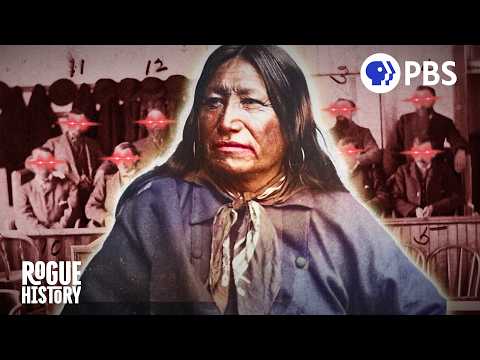
Video: Why the U.S. and Lakota Are Still Fighting Over This Land
The original Rogue History episode provides the Crow Dog, Spotted Tail, and Black Hills narrative that prompted this investigation. Watch on the original publisher’s channel: Why the US and Lakota Are STILL Fighting Over This Land.
Editorial note: This is a sourced historical investigation and analysis, not firsthand reporting or an allegation of unlawful conduct by a present-day named individual. The distinctions among disputed treaty signings, Fifth Amendment takings, and later settlements are preserved.