In the decades after the 1986 Chornobyl disaster, something unexpected happened: wolves, dogs, amphibians and microscopic animals continued living in the exclusion zone. Some populations show genetic and physiological differences. A remarkable study found unusually dark tree frogs where historical radioactive fallout was highest. What explains their survival—and what does it really tell us about melanin, radiation, and a controversial book that denies the atomic bombings of Hiroshima and Nagasaki?
The answer is both more fascinating and more demanding than the popular phrase “radiation-resistant animals.” Some organisms have protective traits or stress responses, while other studies document real radiation injury. Melanin is a diverse family of biological pigments with serious scientific potential, but ultraviolet protection is not the same as immunity to penetrating gamma rays or neutrons.
This investigation examines the animal studies discussed by science communicator Anton Petrov in “Animals in Chornobyl Aren’t Mutating, Something Stranger Is Happening”, the underlying research, the different forms of melanin, possible radiation-shielding technologies, and the historical claims of Michael Palmer’s Hiroshima Revisited. The scientific evidence and the historical alternative theory must be evaluated separately.
1. Chornobyl’s paradox: a contaminated landscape full of wildlife
On April 26, 1986, an explosion and fire at Reactor No. 4 spread radioactive materials across parts of the then-Soviet Union and Europe. Large populations were evacuated; access was restricted across an extensive exclusion zone. Radioactive contamination was never uniform: rainfall, wind, terrain, soil conditions and later movement of radionuclides created a mosaic of different exposures.
Cesium-137 and strontium-90 remain important decades later, while shorter-lived radionuclides largely disappeared through radioactive decay. Animals may encounter radiation externally, internally through contaminated food and water, or both. A field reading at one point does not establish every individual animal’s cumulative dose.
Research has nevertheless documented substantial mammal populations in the zone. A 2015 Current Biology study reported notable abundances of elk, roe deer, wild boar and wolves; its wolf-density comparison was approximately sevenfold relative to reference reserves. These population data do not prove that the animals are free of cancer, immune dysfunction or reproductive harm.
A major ecological explanation is that hunting, agriculture, roads and human settlement sharply declined. When the pressure from people is removed, wildlife can recover even in a place with environmental hazards. Population recovery and biological radiation damage can occur at the same time.
2. The microscopic worms: when expected mutations did not appear
Scientists collected nematodes from sites with different radiation conditions, then compared genomic sequences and the worms’ responses to chemical mutagens. The 2024 PNAS investigation reported no systematic association between sampled environmental radiation conditions and the genetic variation or mutagen-tolerance patterns that researchers could measure.
The study involved 298 preserved wild nematode isolates and more detailed examination of selected material. It is stronger evidence than merely looking at a worm and deciding that it appears healthy. But it does not show that radiation cannot damage nematodes, or that every organism in Chornobyl is mutation-free.
DNA damage can be repaired, harmful variants may disappear through selection, and many environmental factors influence exposure. The fact that researchers did not detect a predicted association is not the same as proving that no damage occurred. A critical question now is which repair or tolerance mechanisms already existed in these organisms before the accident.
The distinction is important for human medical research. A mechanism that protects a microscopic animal under certain conditions is a potential research lead; it is not an available treatment for human radiation exposure.
3. Chornobyl’s dogs: different populations are not proof of mutant superpowers
Free-breeding dogs descended from domestic animals have occupied the Chornobyl region for generations. Scientists studied dogs living near the nuclear plant and dogs living around Chornobyl City, roughly 16 kilometers away. The populations were genetically distinguishable, even though the geographical distance was relatively small.
A 2023 genetic study identified unusual genomic regions and candidate genes, raising the possibility of local selection. Such results attracted dramatic headlines about “mutant dogs.” But the existence of a genetic difference does not identify its cause. Ancestry, isolation, genetic drift, population bottlenecks, and selection may all contribute.
Researchers revisited the mutation explanation. In a 2025 North Carolina State University research update, the team reported no evidence of a higher mutation burden that would explain the dogs’ genomic separation. The findings challenged the claim that radiation had simply created a new breed through spectacular mutations.
A subsequent 2026 study in Genes investigated directional selection using whole-genome data and demographic comparisons. The researchers reported patterns consistent with selective response involving pathways related to DNA maintenance, immunity, cellular survival and other processes.
This is not a demonstration of specific “radiation immunity genes.” A candidate region becomes convincing evidence of a protective adaptation only when researchers can connect that genetic variant to measurable changes in function and survival, while accounting for competing explanations.
The dogs were exposed to a complex industrial environment that also included pollutants, variable food availability, infections, and social structure. Radiation is an important stressor, but it is not necessarily the only one.
4. Why some tree frogs became nearly black
The Eastern tree frog (Hyla orientalis) is often green. But scientists Pablo Burraco and Germán Orizaola documented individuals in the Chornobyl exclusion zone whose dorsal coloration ranged from ordinary green to nearly black.
Their 2022 Evolutionary Applications study examined 189 adult male frogs across sampling sites inside and outside the zone. Calibrated photographs provided a measure of skin luminance: how light or dark the animals appeared.
Frogs inside the exclusion zone had, on average, 43.6% lower skin luminance than frogs outside it. That number measures brightness—not a laboratory finding of 43.6% more melanin.
Dark coloration was linked to proximity to areas that received especially high radiation fallout in 1986, not to the frogs’ current measured radiation dose. The pattern supports the hypothesis that darker individuals may have survived the early, more intense contamination more successfully and passed their traits to later generations.
The research also examined body condition and selected oxidative-stress markers. It did not establish that melanin alone saved frogs in 1986 or identify the complete genetic mechanism. Other explanations and further tests remain relevant.
The result still matters: it is evidence consistent with environmental selection favoring a naturally existing trait, rather than an animal somehow becoming dark in response to today’s radiation on command.
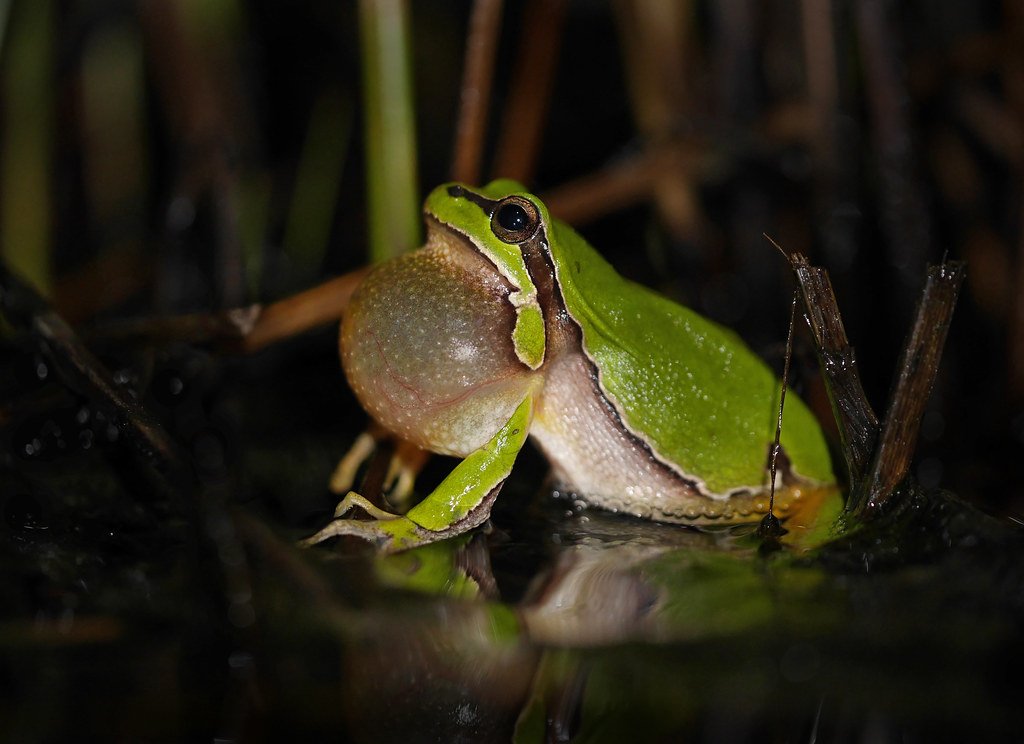
For the actual dark and green Chornobyl specimens photographed by the investigators, see Figure 2 of their open-access paper. This is the directly documented comparison, rather than a substitute image of an unrelated black frog.
5. Wolves: immune changes raise important questions, not proof of cancer immunity
Wolves range widely through the landscape and occupy higher levels of local food webs. Their exposure may include radiation from the environment and radioactive substances ingested through prey.
A 2026 Molecular Ecology paper investigated wolves tracked using GPS collars and dosimeters. Eight Chornobyl wolves were intensively monitored, and researchers compared biological samples with wolves from reference populations.
The authors estimated a mean lifetime absorbed radiation dose of approximately 124 milligray for the Chornobyl wolves, but individual exposure and the assumptions behind lifetime estimates deserve attention. They reported differences in leukocyte composition and signals relevant to stress response and immune-related processes.
A change in proportions of T cells, B cells or other leukocytes is not automatically evidence of a stronger immune system. It might reflect exposure, compensation, disease, age or physiological injury. Candidate genes associated with cancer biology do not establish that wolves cannot develop cancer.
These findings merit further work because they identify biological processes that could matter for understanding damage and response. Small sample sizes and complex environmental differences limit stronger claims.
6. Counterevidence: some Chornobyl wildlife has suffered measurable harm
Not all studies report resilience without cost. Researchers have documented associations between exposure and increased cataracts, developmental effects, reproduction changes, or mutations in some birds and other organisms. A 2015 meta-analysis in Scientific Reports found evidence that ionizing radiation from Chornobyl was associated with increased mutation rates in the body of studies examined.
Other work has reported different patterns for decomposition, soil ecology and animal population dynamics. Investigations vary in organisms, exposure assessment, study design and outcomes, so the results cannot be summarized as either “everything is dying” or “radiation causes no harm.”
Abundant wildlife may coexist with individual suffering; natural selection may occur because some individuals cannot survive. An organism’s existence is not proof that the environment is biologically harmless.
7. Melanin is not one substance: the essential chemistry
Melanin is a family of complex biological pigments and polymers, not a single uniform chemical. Different kinds are made from different biochemical precursors and are distributed in different tissues, organisms and cell structures. Their properties depend on chemical structure, redox conditions, bound metals, location and the particular type of radiation.
The familiar association is with pigmentation of human skin, hair and eyes. But related dark pigments appear in fungi, bacteria, animal nervous systems, and engineered laboratory materials. A major 2024 Chemical Reviews analysis discusses melanin interactions with electromagnetic radiation from ultraviolet through more energetic regions.
The same word “radiation” covers different physical phenomena. Ultraviolet photons from sunlight and penetrating gamma radiation do not interact with the human body in identical ways. A pigment’s demonstrated ultraviolet protection cannot be assumed to establish whole-body protection from nuclear radiation.
8. The forms of melanin and what each may do
| Pigment | Where found | Key functions or research interest |
|---|---|---|
| Eumelanin | Human skin, dark hair and eyes; many animals | Brown-black pigment; broad ultraviolet absorption, antioxidant chemistry and experimentally studied ionizing-radiation interactions. |
| Pheomelanin | Red and yellow human and animal pigmentation | Sulfur-containing pigment with different optical and redox behavior; may contribute to oxidative reactions under certain conditions. |
| Neuromelanin | Some neurons, including substantia nigra and locus coeruleus | Binds iron and other compounds; may be protective intracellularly but can participate in inflammation when released from damaged cells. |
| Allomelanin | Broad and heterogeneous category including some fungal, plant and microbial pigments | Diverse protective, structural and environmental functions; not a single precisely identical molecule. |
| DHN melanin | Many darkly pigmented fungi | Produced through a 1,8-dihydroxynaphthalene-related pathway; associated with fungal cell-wall properties and resistance to environmental stresses. |
| Pyomelanin | Certain bacteria and fungi | Often derived from homogentisic acid; studied for oxidative-stress tolerance and microbial persistence. |
| Selenomelanin | Laboratory-engineered materials | A synthetic selenium-containing melanin analogue being investigated for X-ray attenuation; not a naturally established human skin pigment. |
Eumelanin: more than a dark surface
Eumelanin is synthesized in melanocytes and packaged into melanosomes, which can be distributed to nearby skin cells. Its absorption of ultraviolet light and contributions to redox chemistry help lower some forms of sunlight-related damage. The quantity, distribution and chemical environment of pigment all matter.
Yet it does not completely prevent ultraviolet injury or skin cancer. And because intense gamma rays and neutrons can affect deep tissues, skin pigmentation cannot be assumed to shield bone marrow, internal organs or the nervous system.
Pheomelanin: protective pigment with complicated chemistry
Pheomelanin is associated with red and yellow pigmentation and contains sulfur-bearing structures. Depending on conditions, it can display properties unlike eumelanin, including different X-ray attenuation behavior in experimental material tests. It can also participate in pro-oxidant chemistry.
Neither laboratory attenuation by isolated pigment nor natural hair coloration provides an adequate basis for ranking humans’ nuclear radiation resistance. Those claims require direct tissue-level measurements and clinical evidence.
Neuromelanin: pigment in the brain
Neuromelanin accumulates in selected human neurons and can interact with iron and other compounds. Within intact cells, some binding functions may be useful. Under different conditions, pigment released from injured neurons may contribute to local inflammation.
This dual possibility motivates research in Parkinson’s disease and neurological degeneration. It is not evidence that the brain is naturally protected from nuclear exposure by its neuromelanin.
Microbial melanins: cell walls, survival and ecological advantage
Some fungi produce DHN melanin, often embedded in or associated with the cell wall. Its organization may change physical robustness, oxidative-stress responses and interactions with environmental radiation.
Certain microorganisms make pyomelanin through pathways involving homogentisic acid. Such pigments can influence stress tolerance and other ecological traits, though effects are not identical across species.
9. How pigment can reduce harm—and when it cannot
Radiation can damage DNA directly and can also generate highly reactive species through interactions with cellular water. Hydroxyl radicals and related products can react with DNA, proteins, lipids and membranes. Living systems counter these processes using many overlapping defenses: chemical antioxidants, enzymes, cell-cycle checkpoints, DNA repair, tissue renewal and immune responses.
Melanin can interact with energetic photons, participate in electron-transfer reactions, bind certain metal ions and help neutralize some reactive species in suitable conditions. The amount and location of pigment matter as much as chemical identity.
But pigment does not cancel the laws of physics. Radiation type, energy, density, material thickness and exposure route control shielding performance. Alpha radiation may be stopped by a thin barrier outside the body yet be damaging if emitted internally; highly penetrating gamma rays require a different shielding strategy.
This is why a lab result from pigment on a surface should never be presented as proof that a dark-skinned person is immune to radiation.
10. The dark fungi that may change growth under irradiation
A landmark 2007 PLOS ONE study by Ekaterina Dadachova, Arturo Casadevall and colleagues reported that ionizing radiation altered melanin’s electronic properties and enhanced growth in certain melanized fungi under tested laboratory conditions.
Researchers proposed that radiation-induced electronic changes might influence biochemical energy processes. The possibility of “radiotrophy” captured attention because it suggested that biological pigments might be doing more than merely absorbing damaging energy.
However, the full mechanism of a radiation-related energy benefit is not established at the level of plant photosynthesis. Fungi still require nutrients and ordinary metabolism. Increased growth in an experiment does not prove that a fungus can live on gamma rays alone.
The Microbiology Spectrum review examines the scientific possibilities and limits of melanin, radiation and fungal energy transduction.
11. Selenomelanin: engineered material for future radiation protection
In 2020, Northwestern University researchers described a synthetic selenium-containing analogue of pheomelanin called selenomelanin. The substitution of selenium-related chemistry was intended in part to improve X-ray attenuation. The findings were published in the Journal of the American Chemical Society.
Researchers tested the material in experimental systems, including human epidermal keratinocytes exposed to X-rays. These proof-of-concept results suggest an avenue for designing biomimetic protective materials, not an approved treatment or a way to make people invulnerable to radiation.
The technology could inspire coatings or specialized protective materials, but it needs further investigation across radiation energies, safety conditions and real-world exposures. Taking selenium supplements would not reproduce the engineered polymer and can be harmful in excess. Northwestern’s research report describes the work.
12. Space travel: could living materials produce part of a shield?
Space travelers face exposure to solar energetic particles and galactic cosmic rays, alongside other hazards of long-duration missions. NASA treats space radiation as a major concern for the Moon, Mars and deep-space exploration.
A 2022 experiment published in Frontiers in Microbiology investigated growth of the melanized fungus Cladosporium sphaerospermum aboard the International Space Station and made preliminary measurements related to radiation attenuation.
It is an intriguing engineering idea: materials produced or grown at a destination could sometimes reduce the mass launched from Earth. But a thin fungal layer tested on the ISS is not proven protection from the full range of deep-space radiation, and no practical astronaut shielding system has been established from these findings.
NASA’s Human Research Program explains why ionizing radiation poses risks to astronauts and why shielding is complicated.
13. Natural radiation hotspots and the adaptive response
Regions such as Ramsar in Iran, Kerala in India and Yangjiang in China are studied because local geology creates unusual background-radiation conditions in some communities. Doses differ markedly even within each area, so geography alone does not identify an individual’s lifetime exposure.
Scientists have observed a “radiation adaptive response” in certain controlled experimental systems: a small initial exposure can sometimes change how cells react to a later challenge. Candidate mechanisms involve DNA repair, antioxidant enzymes, cell-cycle control and programmed cell death. The protein p53 regulates damage responses; it is not itself a DNA-repair enzyme.
However, an adaptive effect in cultured cells or particular blood-cell assays is not proof that long-term elevated radiation benefits human health. Reviews of high-background-radiation studies describe complex findings, uneven dosimetry and uncertainty about individual cancer risk. Radiation hormesis is a debated hypothesis, not established medical advice.
The available evidence does not justify intentional radiation exposure or an assertion that adaptive responses reduce disease by any universal percentage. See a 2025 literature review and 2024 modeling research.
14. Enter Hiroshima Revisited: the claim and the necessary evidence test
In Hiroshima Revisited, Michael Palmer argues that Hiroshima and Nagasaki were not destroyed by nuclear detonations in August 1945. His alternative account proposes that conventional incendiaries and chemical agents, including sulfur mustard, were responsible for the destruction and medical injuries.
The book raises questions about explosive damage, burns, residual radiation, isotope measurements and survivor disease. Those are subjects that can legitimately be studied. But its central historical conclusion conflicts with multiple independent lines of evidence.
To establish the alternative theory, its proponents would have to explain measurable neutron-activation products in historical materials, radiochemical signatures, the technical record of nuclear weapon manufacture, the Trinity nuclear test, wartime documentation and long-term patterns of radiation-associated illness in survivors.
The fact that some organisms can tolerate chronic exposure, or that some kinds of chemical injuries resemble radiation injury, does not answer those evidentiary challenges. The biological studies and the book’s nuclear-denial proposition concern different claims.
15. The conventional firebombing of Tokyo: an important comparison with a clear limit
On March 9–10, 1945, the U.S. military’s Operation Meetinghouse devastated much of Tokyo using conventional incendiary weapons. The attack killed large numbers of civilians and produced enormous destruction without a nuclear detonation.
This event is relevant because burn damage and urban destruction alone cannot identify which weapons were used. An investigator should look beyond fire photographs to physical measurements, engineering records, impact patterns and medical evidence.
But Tokyo does not demonstrate that Hiroshima was also destroyed conventionally. Two cities can experience catastrophic fires from different underlying mechanisms. The conventional bombing establishes what conventional weapons can do, not which weapon caused a separate event.
16. The Bari mustard-gas disaster: why symptom comparisons are not enough
In December 1943, German air attacks hit Allied vessels at Bari, Italy. One American ship, John Harvey, was carrying sulfur mustard munitions. The release caused chemical injuries and complicated medical treatment because the cargo was secret.
This documented incident shows that military secrecy can make early diagnoses difficult and that chemical warfare agents can produce severe burns and systemic illness. It is therefore reasonable to compare clinical characteristics when evaluating historical cases.
Nevertheless, shared symptoms do not establish a shared cause. Radiation and chemical injuries differ in exposure pathways, timing, associated laboratory changes and patterns of delayed effects. The Bari event had an identifiable chemical source. Evidence of an analogous mustard-gas operation producing the Hiroshima and Nagasaki destruction has not been demonstrated.
17. Why present-day Hiroshima radiation does not resemble a damaged reactor
The two 1945 atomic bombs detonated as airbursts, whereas Chornobyl was a nuclear reactor accident involving release of radioactive material over time. Airbursts and reactor failures have very different mechanisms and environmental contamination patterns.
Prompt gamma rays and neutrons can irradiate people and buildings during a nuclear explosion. Neutron activation can create radionuclides in exposed materials. Residual fallout depends in part on the explosion’s height and how much ground material enters the fireball. Many radioactive isotopes decay over years or decades.
The City of Hiroshima explains that current background radiation in Hiroshima and Nagasaki is comparable to ordinary natural background levels. That fact is compatible with real historical nuclear airbursts; it does not mean no radiation was emitted in 1945.
Confusing an airburst with a long-lived, contaminated reactor site leads to mistaken expectations about what radiation measurements today should reveal.
18. Neutron activation: physical evidence beyond eyewitness accounts
Nuclear reactions can produce intense neutron fields. Researchers have examined historical materials from Hiroshima and Nagasaki for activation products such as europium-152 and cobalt-60 and compared measured activities with physics-based neutron transport models.
Such analyses do not depend on whether an observer thought a flash resembled an ordinary explosion. They test measurable isotopic products that conventional incendiary weapons do not explain.
Scientists have debated uncertainties in measurements and dose reconstruction; uncertainty in one sample or calculation is not evidence that the bombs never existed. Published investigations include studies of Hiroshima neutron activation and Nagasaki europium-152 measurements.
19. Fallout isotopes, survivor records and the weapons-development archive
Studies of historical fallout and related materials have examined uranium isotope ratios, cesium and plutonium evidence, with appropriate caution about later global fallout and sample contamination. Some measurements are more interpretable than others, which is why independent analytical methods matter.
The Radiation Effects Research Foundation has followed atomic-bomb survivor cohorts for decades. Its Life Span Study shows relationships between estimated radiation doses and long-term health outcomes, including leukemia and solid cancer. A major mortality analysis examined dose-related solid-cancer mortality over long follow-up.
The documented design, production and deployment of the uranium weapon Little Boy and plutonium implosion weapon Fat Man, alongside the July 16, 1945 Trinity test, provide additional records of how the weapons were made and used. See the National Park Service’s Manhattan Project history and the National Security Archive’s 80th-anniversary document review.
A broad alternative account must explain all of these independent findings, not merely identify another weapon that can produce severe burns. On the present evidence, Hiroshima Revisited does not do so.
20. Where melanin research intersects with the Hiroshima argument—and where it does not
Melanin studies demonstrate that biological tissues and organisms are not interchangeable. Some species have unusual defenses, some pigments interact with ionizing radiation, and different doses or exposure pathways can produce different biological outcomes.
That gives investigators a reason to avoid oversimplified statements such as “any radiation exposure is invariably fatal.” It does not give investigators a reason to reject isotope measurements, weapon-design records or the reproducible epidemiology of atomic bomb survivors.
Human skin pigmentation is mostly associated with the skin. Acute radiation syndrome can involve penetrating radiation injuring bone marrow and internal organs. A skin pigment’s protective effects against ultraviolet light cannot be extrapolated into complete protection from high-intensity gamma or neutron exposure.
Nor is there evidence that an individual’s racial identity or visible skin color predicts immunity to nuclear radiation. Melanin biology should not be turned into a claim about innate racial invulnerability.
21. Evidence audit: what is demonstrated, suggested, and unsupported
| Claim or subject | Evidence-based assessment |
|---|---|
| Melanized Chornobyl frogs | Observed: darker average skin color where 1986 fallout was historically higher; causal protective mechanism remains to be tested. |
| Chornobyl dogs | Observed: genetically differentiated populations and selection signals; no evidence that they acquired mutant superpowers. |
| Chornobyl wolves | Observed: radiation exposure, blood-cell differences and candidate stress-response signatures; cancer immunity unproven. |
| Nematodes | Observed: no systematic association in genomic and mutagen-tolerance tests examined; universal radiation harmlessness not demonstrated. |
| Fungal melanin | Observed: changed electronic behavior and enhanced growth in some laboratory conditions; a complete photosynthesis-like radiotrophic mechanism is unproven. |
| Engineered selenomelanin | Experimental X-ray attenuation and cellular protection; no approved human shield or treatment. |
| Radiation adaptive response | Reported under some controlled conditions; net benefit to human populations from intentional exposure is not established. |
| Hiroshima Revisited nuclear-denial claim | Contradicted by neutron activation, radiochemistry, epidemiology and documented weapon development. |
22. The American radiation legacy that deserves a sustained investigation
There are documented instances in which U.S. institutions failed to protect people from radiation hazards or disclosed information inadequately. These histories are more firmly grounded than the claim that nuclear detonations in Japan were fictional.
The U.S. nuclear weapons program exposed downwind communities, military personnel and workers to hazards that later became subjects of monitoring and compensation. The Radiation Exposure Compensation Act provides benefits for certain qualifying illnesses and exposure categories; eligibility and deadlines depend on the law.
On Navajo Nation lands, a legacy of uranium extraction has left hundreds of abandoned mine sites and continuing cleanup challenges. The U.S. Environmental Protection Agency documents the environmental problem and ongoing remediation efforts.
The Marshall Islands suffered serious fallout consequences during American nuclear testing, including the 1954 Castle Bravo explosion. The Department of Energy’s Marshall Islands program addresses aspects of environmental monitoring and related responsibilities.
Questions about military secrecy, underrecognized injuries, medical treatment, land contamination and public accountability are genuine. Denying established nuclear events risks diminishing rather than strengthening the testimony and claims of people harmed by actual exposure.
23. Potential medical applications—and strict limits
Studying DNA repair, antioxidant chemistry, immune responses and melanized shielding materials may eventually contribute to new technologies or medical strategies. The most plausible near-term opportunities involve carefully characterized materials and controlled laboratory or clinical research, not self-treatment.
A useful intervention would need to demonstrate benefit at clinically important doses, identify its biological mechanism, establish appropriate delivery and show safety across relevant tissues. Results from a fungus, a frog or cultured skin cells cannot be treated as proof of a therapy for humans.
Neither intentionally exposing oneself to radiation nor consuming selenium to imitate synthetic selenomelanin is justified by this research. Existing radiation-safety practices remain necessary.
24. Questions researchers still need to answer
Do darkly pigmented Chornobyl frogs actually experience better survival under comparable radiation conditions, and which genes govern their coloration? Which candidate dog variants influence measurable DNA repair or immune function? Are wolf immune differences adaptive, harmful, or both? What proportion of melanized fungal growth changes comes from radiation-related chemistry rather than other environmental effects?
For human applications, can pigment-based materials deliver meaningful protection against real radiation spectra without unacceptable toxicity, weight or engineering tradeoffs? And how can low-dose radiation research improve without confusing cellular responses with long-term health outcomes?
These are answerable scientific questions, requiring controlled experiments, independent replication and transparent exposure measurements.
Conclusion: resilience is not immunity, and speculation is not historical evidence
The living organisms of Chornobyl reveal an important truth: species respond differently to environmental danger. Some show measurable injuries. Others survive and reproduce, sometimes with traits that may have been favored by natural selection. Melanin adds a striking story of pigmentation, biochemical versatility and the possibility of engineered protection.
The scientific surprise is real. But none of it makes nuclear radiation harmless, and none of it establishes that the atomic bombings of Hiroshima and Nagasaki were staged with conventional weapons. That broader claim conflicts with physical isotope measurements, long-term survivor evidence and the historical record.
Chornobyl teaches us about adaptation and the costs of ecological disturbance. Hiroshima and America’s nuclear legacy teach us about the importance of accurate science, transparent government records, civilian suffering and lasting accountability. Keeping those lessons evidence-based makes them more powerful—not less.
The compelling discovery is not that history must be rewritten to deny nuclear weapons. It is that biology contains unexpected mechanisms worth understanding, while the full consequences of radiation still demand serious attention.
Watch the video and consult the original records
Watch Anton Petrov’s science explainer: “Animals in Chornobyl Aren’t Mutating, Something Stranger Is Happening” (YouTube). The linked video is the original supplied source; the discussion above evaluates its research claims against the cited papers.
Selected scientific research and archival sources
- Chornobyl tree frogs, 2022
- Chornobyl dog genomic differences, 2023
- Dogs and mutation accumulation, 2025
- Dogs and selection response, 2026
- Wolves, radiation stress and immunity, 2026
- Nematode genomics, PNAS, 2024
- Radiation and melanized fungi, PLOS ONE, 2007
- Fungal melanin and energy transduction, 2017
- Melanin chemistry, Chemical Reviews, 2024
- Selenomelanin, JACS, 2020
- Space-station melanized-fungus experiment, 2022
- Natural radiation background review, 2025
- Chornobyl mutation meta-analysis, 2015
- Abundant wildlife at Chornobyl, 2015
- Hiroshima Revisited (Palmer), primary text of disputed thesis
- Neutron activation in Hiroshima
- Europium-152 measurements, Nagasaki
- Hiroshima black-rain isotope analysis
- Atomic bomb survivor mortality analysis
- Hiroshima City on present background radiation
- National Security Archive: historical documents
- National Park Service: Los Alamos and weapon development
- EPA: uranium mines on Navajo Nation lands
- Department of Justice: Radiation Exposure Compensation Act
- DOE: Marshall Islands Program
Editorial disclosure: This is a literature- and document-based investigation, not firsthand Chornobyl field reporting or laboratory replication. The comparison frog photograph is expressly labeled as a reference image, not as a Chornobyl specimen. The book’s claims are discussed as a disputed theory, not accepted nuclear history. Featured documentary photo: “The Chernobyl reactor seen from Pripyat,” stahlmandesign, CC BY 2.0.