WASHINGTON, November 18, 2026 — A SpaceX proposal to build an enormous network of artificial-intelligence data centers in orbit is drawing attention to an environmental issue that has received far less scrutiny than rocket launches themselves: what repeated launches and the eventual destruction of satellites could put into Earth’s upper atmosphere.
SpaceX applied to the Federal Communications Commission (FCC) in January to operate up to one million satellites as an orbital data-center system. The FCC accepted that application for filing on February 4, but acceptance for filing is not approval to deploy the constellation. The agency’s public notice describes planned orbits from 500 to 2,000 kilometers above Earth.
A new analysis by atmospheric researchers Eloise Marais and Connor Barker of University College London, discussed in Scientific American’s November 18 reporting, estimates that constructing and maintaining such a system could dramatically increase rocket and spacecraft-reentry emissions. The analysis is a preprint awaiting peer review. Its figures are conditional projections—not measurements of environmental damage caused by a million deployed satellites.
What the researchers estimated
According to Scientific American, the researchers modeled a scenario involving SpaceX’s planned Starship launch system. Their calculations depend on assumptions about payload capacity, satellite lifetime, equipment mass, atmospheric disposal and launch operations. SpaceX has not publicly supplied all the technical inputs needed to test the scenario directly.
- More than a 150-fold increase in total rocket-launch emissions compared with the researchers’ 2025 baseline under the modeled deployment assumptions.
- A roughly 70- to 150-fold increase in nitrogen oxide emissions associated with returning spacecraft.
- About 5,000 Starship launches per year in the assumed construction and replacement scenario, equivalent to approximately 14 per day.
- Approximately 200,000 metric tons of spacecraft material per year potentially vaporizing in the upper atmosphere under the modeled end-of-life disposal assumptions.
Those numbers are not SpaceX’s confirmed flight schedule, an FCC finding, or a prediction that will occur regardless of design choices. In particular, the composition of future orbital data-center satellites and the final disposal practices remain uncertain.
Satellite pollution is already measurable
An important part of the concern is grounded in direct atmospheric observations. In 2023, scientists working with the National Oceanic and Atmospheric Administration (NOAA) found metallic elements linked to spacecraft and rocket-body reentry in stratospheric aerosol particles.
Their NOAA report and accompanying peer-reviewed research identified more than 20 elements associated with spacecraft materials, including aluminum, copper, niobium and hafnium. About 10% of the sampled stratospheric sulfuric-acid particles larger than 120 nanometers contained aluminum and other elements associated with spacecraft reentry.
That finding does not establish that the detected particles have already caused a measurable public-health crisis or a specific amount of ozone destruction. It establishes that human-made spacecraft material is reaching an atmospheric layer where its chemistry and long-term behavior matter.
Why the ozone layer and atmospheric circulation are under scrutiny
High-temperature spacecraft reentry can generate nitrogen oxides. Metals released from destroyed spacecraft can also form aerosols, including aluminum-containing particles. Scientists are examining whether these emissions can alter ozone chemistry, affect how radiation moves through the atmosphere, or change winds and temperatures in the middle atmosphere.
A separate 2025 NOAA research summary described a modeling study of much larger future satellite-reentry pollution loads. In that hypothetical scenario, the research projected changes in polar atmospheric temperature and circulation. The study was not a forecast of SpaceX’s proposed million-satellite system and did not establish the ultimate direction or scale of ozone effects.
The ozone layer shields people and ecosystems from harmful ultraviolet radiation. Its behavior depends on complex chemistry and circulation, so scientists warn against treating one emission estimate as a direct measurement of damage. Better observations of reentry aerosols and detailed spacecraft-material inventories are needed to narrow those uncertainties.
Regulation is part of the debate
The FCC’s Space Bureau is reviewing orbital operating authority, not issuing a blanket environmental finding that all launch and disposal impacts are harmless. Federal Aviation Administration oversight of rocket launches is a separate regulatory process. As the FCC has moved to revise its own environmental-review procedures, researchers and environmental advocates have questioned whether the combined effects of vast satellite constellations are adequately assessed.
The American Astronomical Society has also raised concerns in the FCC proceeding about how such a large constellation could affect astronomy and views of the night sky. Those concerns are distinct from atmospheric pollution but show how a proposed network on this scale could have multiple public impacts.
What this means for American communities
Orbital AI computing is being promoted as a possible way to access abundant solar power while reducing pressure on terrestrial power grids. That potential benefit requires a genuine system-wide comparison: the costs of building satellites and rockets, manufacturing fuel, completing launches, operating hardware, replacing failed equipment and disposing of spacecraft must be measured against the energy and environmental effects of ground-based data centers.
American workers, launch-region communities, utilities, researchers and consumers all have interests in the outcome. Pollution introduced high in the atmosphere does not necessarily remain close to its launch site, and decisions made by U.S. agencies may influence how other commercial constellations are evaluated.
What remains unknown
The full satellite design, actual deployment timetable, number of flights, materials used, final disposal methods, total lifecycle emissions and eventual atmospheric consequences are not established by the current public record. Marais and Barker’s new estimates highlight the scale of a possible problem, while NOAA’s measurements show why closer investigation is justified.
The critical distinction: SpaceX has proposed an unprecedented orbital system; scientists have independently measured some pollution from existing spacecraft reentry; and the environmental effects of deploying and retiring one million AI satellites remain uncertain. Stronger disclosures and research would make it easier for regulators and the public to weigh the project’s claimed benefits against its potential costs.
Sources and research
- FCC public notice: SpaceX Orbital Data Center application (February 4, 2026).
- Scientific American: How bad would SpaceX’s million AI satellites be for Earth’s atmosphere? (November 18, 2026).
- Marais and Barker analysis on ESS Open Archive (preprint described by Scientific American; not yet peer reviewed).
- NOAA: Metals from reentry detected in the stratosphere (2023).
- Murphy et al.: Metals from spacecraft reentry in stratospheric aerosol particles, PNAS (2023).
- NOAA: Modeling potential atmospheric consequences of satellite reentry (2025).
- Barker et al.: Radiative Forcing and Ozone Depletion of a Decade of Satellite Megaconstellation Missions, Earth’s Future (2026).
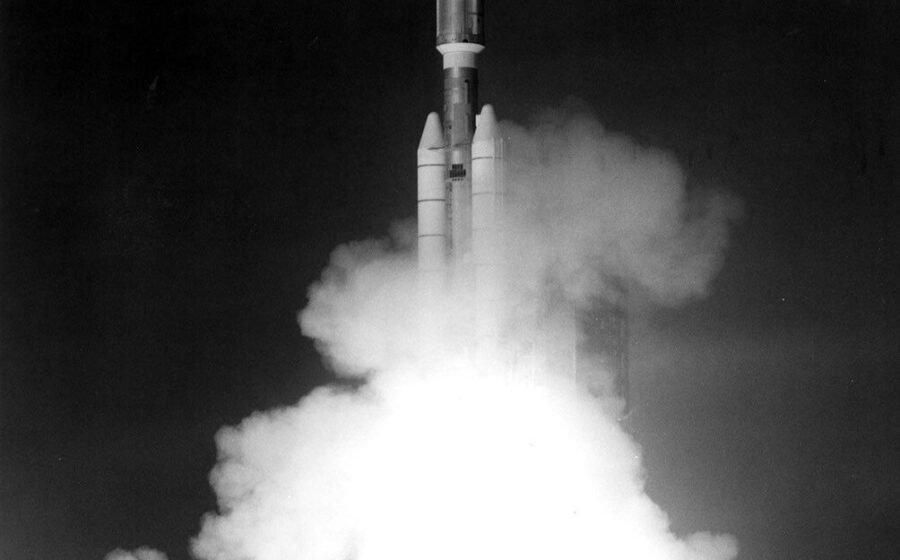
Featured photograph: SpaceX Starship launch during IFT-5 (archival photograph, not an orbital AI data-center mission). Photo by Steve Jurvetson / CC BY 2.0. The image is documentary context and is not evidence of atmospheric pollution levels.