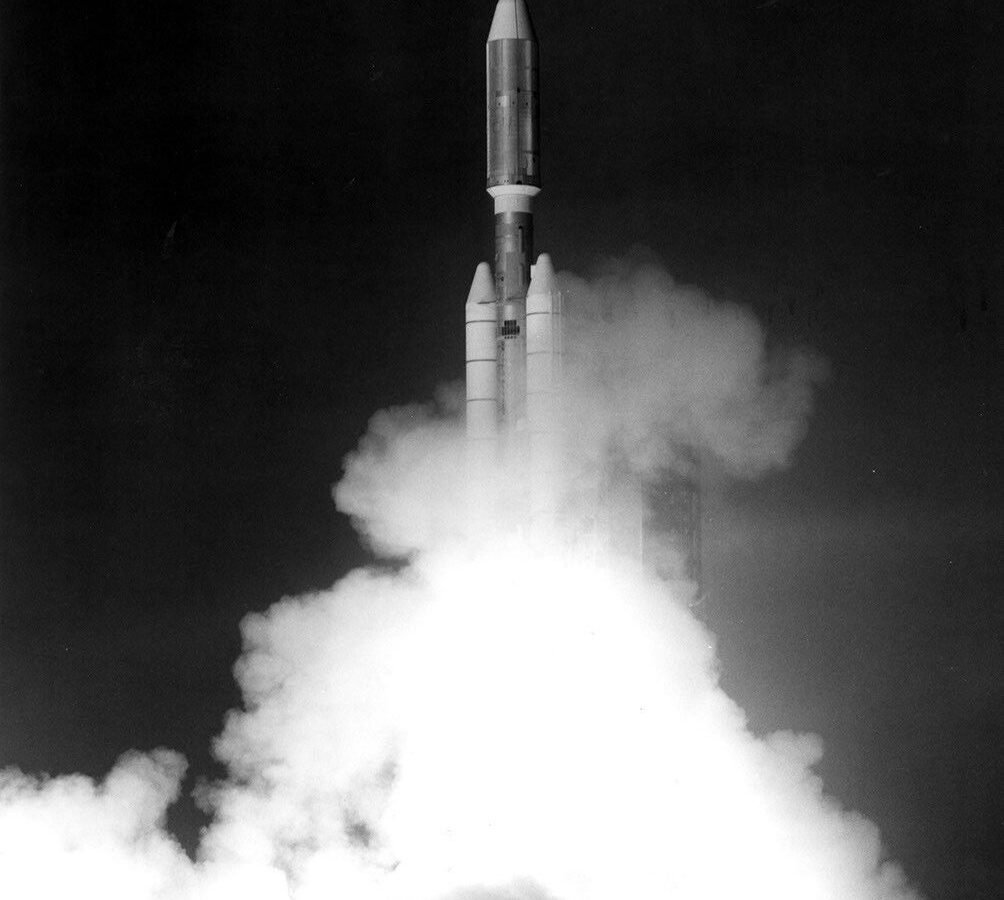
NASA’s Voyager 1 reached a distance of one light-day from Earth on Wednesday, November 18, 2026, extending its record as the farthest human-made object from our planet. The spacecraft crossed the milestone at approximately 5:16:07 a.m. Eastern (4:16:07 a.m. Central), according to NASA’s mission calculations. It was roughly 16.094 billion miles (25.902 billion kilometers) from Earth.
The milestone comes more than 49 years after Voyager 1 launched from Cape Canaveral, Florida, on September 5, 1977. The spacecraft is still sending scientific data from beyond the Sun’s heliosphere, although shrinking power supplies and the immense distance make the mission increasingly demanding.
A 24-hour signal delay in each direction
A light-day is a unit of distance: how far light travels in 24 hours. Radio signals travel at the speed of light, so messages transmitted to Voyager 1 now take about one full day to reach it. Replies require another day to travel back to Earth. That makes a command-and-response exchange roughly a 48-hour undertaking, even before engineers account for spacecraft operations and scheduling.
NASA gives the exact light-day distance as 16,094,799,096 miles (25,902,068,356 kilometers). Voyager 1 is moving through space at nearly 38,000 miles per hour—extraordinary by human standards, but slow compared with light. The achievement is a distance marker, not a newly crossed physical boundary. NASA says the spacecraft will detect no sudden environmental change because of the milestone.
From the outer planets to interstellar space
Voyager 1’s original planetary mission took it past Jupiter in 1979 and Saturn in 1980, returning observations that reshaped scientists’ understanding of giant planets and their moons. In August 2012, NASA determined that the spacecraft had entered interstellar space by crossing the heliopause, the boundary of the solar-wind bubble surrounding the planets.
That did not mean Voyager 1 had left every part of the solar system: the distant Oort Cloud, a theoretical reservoir of icy objects, extends vastly farther. The new light-day milestone likewise emphasizes the scale of space without changing the spacecraft’s scientific surroundings.
Keeping a spacecraft from 1977 in contact
At nearly five decades old, Voyager 1 must operate with limited electrical power from its radioisotope power system. Mission controllers have gradually turned off equipment to preserve essential capabilities. NASA’s Jet Propulsion Laboratory also reported an unusual communications pause in October 2026 and said engineers restored contact while investigating the cause.
The distances mean engineers cannot respond instantly to a problem. Each decision must account for delayed signals, aging electronics and precious remaining science operations. Voyager 2, launched separately in 1977, is also operating in interstellar space; NASA projects that it will reach one light-day from Earth in November 2035.
The Golden Record: A cultural message carried into space
Alongside its scientific instruments, Voyager 1 carries the Golden Record, a gold-plated copper disc containing sounds, images, music and greetings selected to represent life on Earth. Its purpose was not to communicate with NASA but to preserve a cultural message for any potential discoverer far in the future.
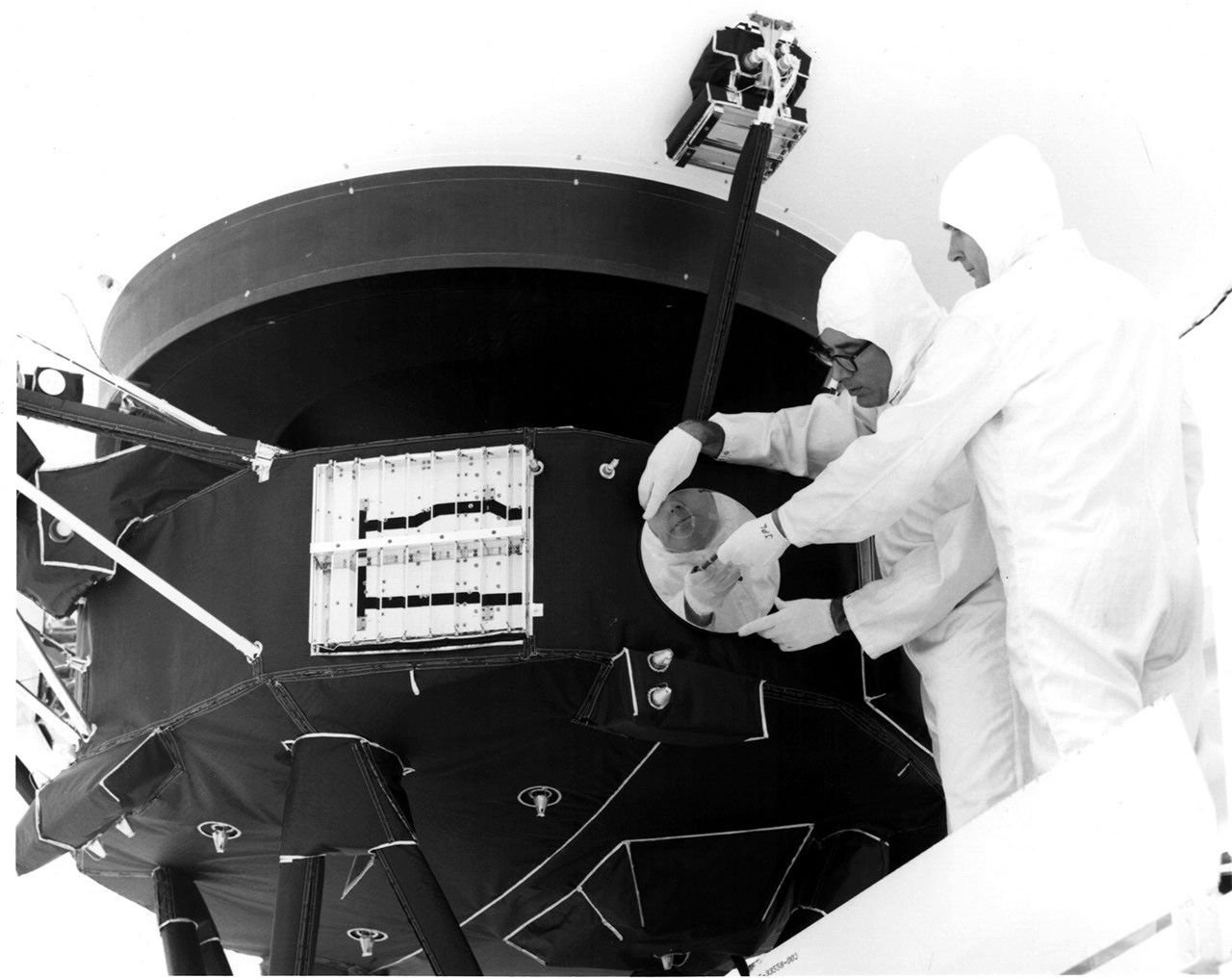
The object offers a reminder that the Voyager mission is both a long-running engineering achievement and a record of what humanity considered worth sharing with the cosmos in 1977.
What comes next
Voyager 1 will continue outward while its remaining power and systems permit. NASA has not announced a specific end date for all mission operations, and the agency cautions that problems aboard a nearly 50-year-old spacecraft can be unpredictable. Its continued measurements of interstellar conditions remain scientifically valuable.
This report follows Khemetic.News’ November 12 coverage of NASA’s invitation to celebrate the approaching milestone. The spacecraft has now reached the distance that celebration anticipated.
NASA video: How far away is Voyager 1?
Watch NASA/JPL-Caltech’s official one-light-day video explainer. The original publisher’s video explains how light travel time translates into long-distance communications. Video: NASA/JPL-Caltech.
Sources and further reading
- NASA Science: Voyager 1—What Is a Light-Day?
- NASA Science: Current Voyager positions and mission status
- NASA JPL: Voyager 1 power and communications update, October 29, 2026
- NASA: Voyager 1 mission background
- Scientific American: Voyager 1 reaches one-light-day milestone
Featured image: Voyager 1’s September 5, 1977 launch from Kennedy Space Center, an archival NASA/KSC photograph (PIA17464), not an image of the 2026 milestone. Original image and credit.