TACOMA, Washington — The U.S. Attorney’s Office for the Western District of Washington says it will decline to defend the federal government in many lawsuits challenging immigration detention as a surge in habeas corpus petitions strains its available attorneys. The move affects cases in one federal judicial district; it is not a nationwide decision by the Justice Department to stop representing Immigration and Customs Enforcement (ICE).
In an October 26, 2026 letter reproduced in a federal court order, Acting U.S. Attorney Charles Neil Floyd told Chief U.S. District Judge David Estudillo that the office was handling dozens of immigration habeas petitions each week and could no longer enter an appearance in every case. It would continue screening petitions and decide which to defend.
What the Justice Department’s Letter Actually Changes
Habeas corpus allows a person in government custody to ask a court to examine whether that detention is lawful. In immigration cases, petitions may challenge continued confinement or the denial of a bond hearing. Filing a petition does not itself establish that a detention is unlawful.
Under the Washington office’s procedure, if a federal attorney does not file a notice of appearance within seven court days after a standard scheduling order, the judge may presume that prosecutors will not respond. The office said it will no longer act as a conduit for orders and communications in cases in which it declines to appear, and supplied addresses for courts to contact ICE directly. The government still can appear in selected cases.
Floyd cited the time required for briefs, status reports, follow-up motions and litigation that can continue even after detainees receive hearings or are released. Those responsibilities, he said, have competed with the office’s other civil work. The Associated Press reported on the office’s growing caseload.
November 16 Court Orders Show the Practical Effect
On November 16, U.S. District Judge Tiffany M. Cartwright granted habeas petitions from Alejandro Olguin Lino and Alvaro Arroyo Calvillo, two people challenging detention without bond hearings at the Northwest ICE Processing Center in Tacoma. The orders were issued in separate cases.
In Olguin Lino v. Mullin, the judge noted that the government had not appeared within the specified period and treated the petition as intentionally unopposed under the Justice Department’s letter. The court concluded that the petition stated a plausible basis for relief under immigration law. A separate order in Arroyo Calvillo v. Mullin granted similar relief.
Each order directed authorities, within 14 days after the petitioner requests a bond hearing, to provide that hearing or release the person. The orders do not end immigration proceedings or grant lawful immigration status. A bond hearing is an opportunity to seek release, not a guarantee that an immigration judge will order it.
An Increasing Burden on Courts and Families
The Washington situation reflects pressure on federal courts far beyond Tacoma. In a November 18 investigation, ProPublica said its nationwide database had tracked nearly 100,000 habeas petitions by immigrants challenging detention. That figure describes filings tracked by the newsroom, not 100,000 judicial findings of unlawful detention.
In reporting published November 16, Seattle public-radio station KUOW quoted immigration attorneys who said unopposed cases could move more quickly. The Northwest Immigrant Rights Project told KUOW it had filed petitions for more than 600 people since September 2025. Those are the organization’s reported filings, not a count of people already released.
For people detained while awaiting immigration decisions, the stakes include time away from family, work and legal counsel. For federal judges, a prosecutor’s choice not to appear does not eliminate the court’s duty to review the petition and the governing law.
What Remains Uncertain
The office has not established a public total for how many future petitions it will decline to defend, and judges may respond differently depending on the legal issues and evidence. It is also not clear whether the approach will become common in other districts.
The immediate change is narrower, but consequential: some people challenging ICE detention in Western Washington may receive decisions without a contested government filing. Whether they obtain a hearing or release remains subject to each court order and applicable immigration law.
Sources and Documents
- U.S. District Court: Olguin Lino v. Mullin, November 16 order, including October 26 DOJ letter
- U.S. District Court: Arroyo Calvillo v. Mullin, November 16 order
- Associated Press: Western Washington federal immigration caseload and DOJ response
- KUOW: Immigration attorneys respond to the change, November 16
- ProPublica: DOJ staffing and immigration habeas litigation, November 18
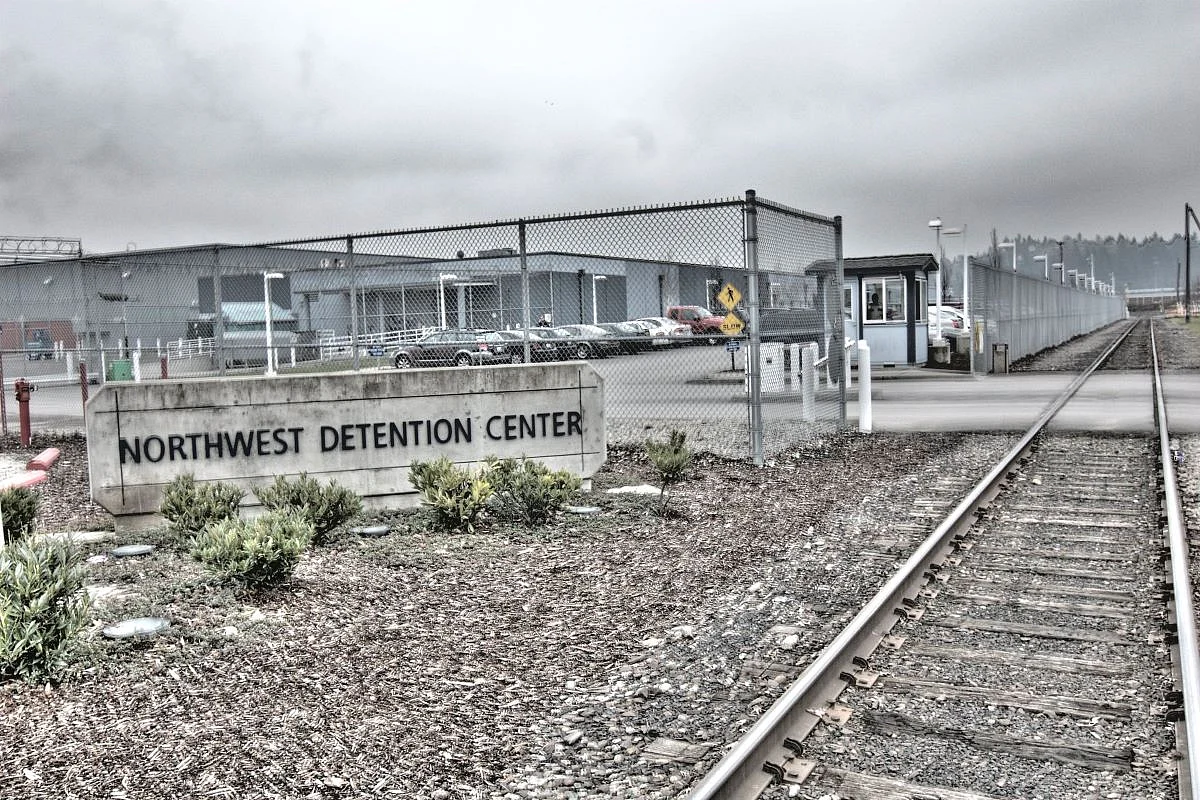
Featured image: Archival view of the Northwest ICE Processing Center in Tacoma, Washington. Photo: clpmag via Flickr, licensed CC BY-SA 2.0. The photo does not depict the November 2026 court proceedings.