Khemetic Nation News Network | History & Restoration Desk | October 15, 2026
KHEM/EGYPT — A resident’s decision to report an engraved stone found near his home has helped archaeologists uncover fragments of two monumental royal statues at Behbeit el-Hagar in the Nile Delta. Reporting published on October 15 describes how Egyptian authorities honored Khaled el-Shahat Khalil for alerting specialists, enabling rescue excavations at the site.
A community discovery becomes a documented archaeological find
The Egyptian Supreme Council of Antiquities’ work revealed a royal head approximately 1.6 meters high, identified as Ramesses II and shown wearing the double crown of Upper and Lower Khem/Egypt. Specialists estimate its original monument, including its base, may have stood around 8.5 meters tall. They also found a second statue fragment measuring approximately 2.4 meters and a pink-granite block bearing royal titles in hieroglyphs.
The initial discovery and official announcement date to October 13–14; today’s development is additional reporting on the excavation and the public recognition of the resident who safeguarded the find. The statues have not been fully reconstructed, and researchers continue investigating their original positions and historical context.
Why the location matters
Behbeit el-Hagar is associated with the remains of a temple dedicated to Auset (Isis). The newly identified material expands questions about royal building activity and the site’s earlier significance. It does not, on its own, establish the full history of the temple or prove any particular interpretation of ceremonial activity.
Connecting the find with the Book of Maat
The Book of Maat (2018 edition) gathers historical and sacred literary traditions, including the Pyramid Text, where references to the “Two Lands” express an ancient Egyptian vision of kingship and order (printed page 22, Word of the Gods 81). The Ramesses II head’s double crown offers a separate material example of the language of unification. The literary passage is a cultural comparison, not scientific proof of the statue’s date or provenance.
The most uplifting feature of this find may be the collaboration itself: a citizen recognized an object of possible historical value, reported it, and helped specialists protect a piece of shared heritage.
Sources: Anadolu Agency, October 15, 2026 report of the honor; Emirates News Agency account of the antiquities ministry’s October 13 statement. KNN comparative reference: Book of Maat, 2018 edition, printed page 22.
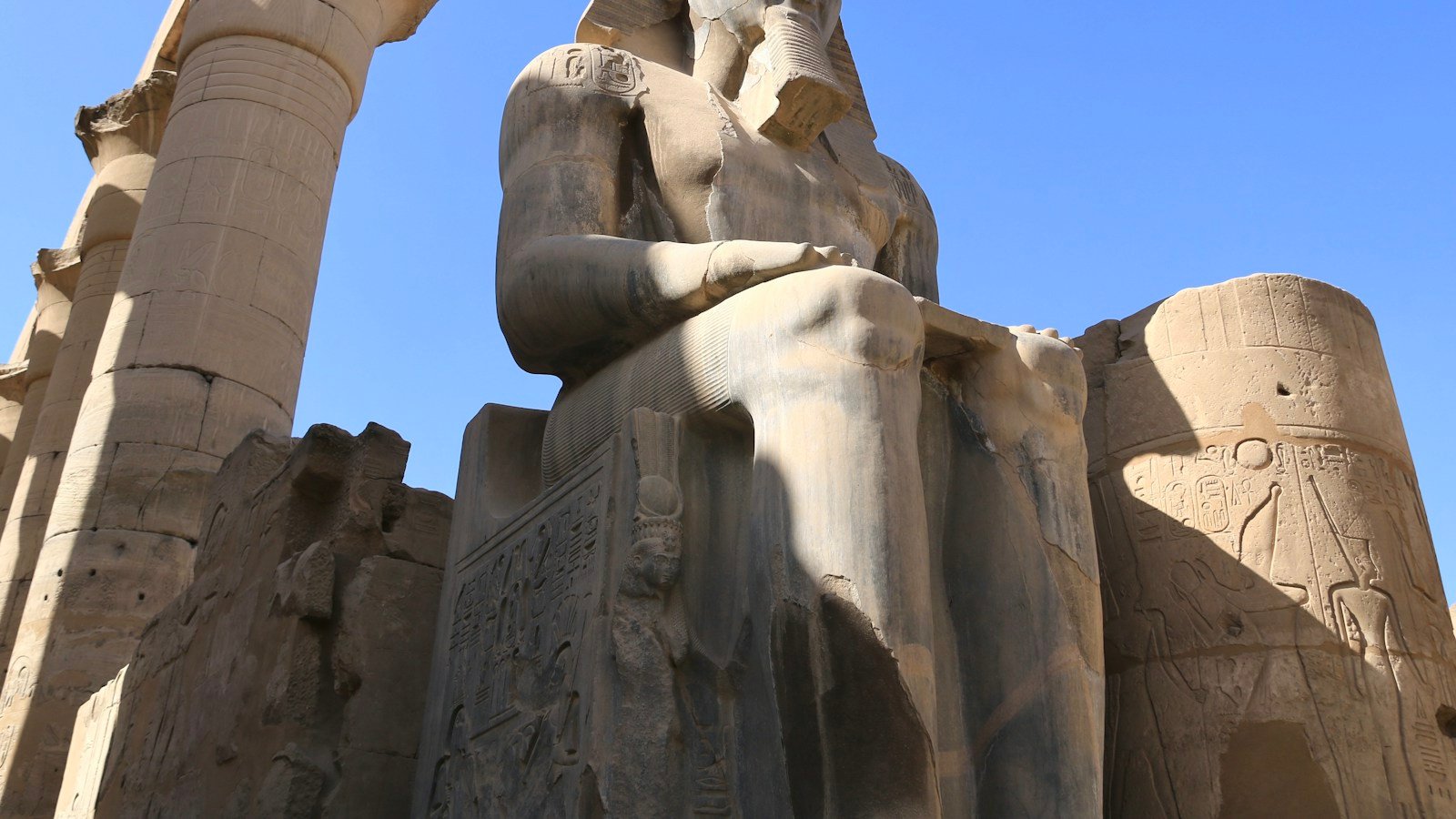
Featured photograph: Hongbin / Unsplash. Historic Luxor site illustration; not an image of the newly excavated objects at Behbeit el-Hagar.