WASHINGTON, D.C. — An undergraduate research assignment at Howard University has grown into a public database documenting missing and murdered Black women and girls in the nation’s capital. At an October 2026 research presentation, the creator reported 186 documented cases; the live Deadlining dashboard currently displays 180. Its creator, Howard junior Avery Bernard Johns, hopes the work will help families, researchers and investigators find information that can be difficult to locate in official records.
Johns discussed the project, called Deadlining, in a November 19 interview with NBC4 Washington. The database covers cases from 1961 through 2025, according to independent reporting on her October research presentation at the University of New Hampshire.
The aim is to make scattered records easier to discover while preserving the identities and histories of the people behind them. The database is a research and public-information project; its existence does not mean that all included cases are still open, or that investigators have formally adopted its findings. Readers can explore the creator’s public Deadlining database and map. Case counts may change as records are updated.
A 1961 Disappearance Inspired the Project
Johns began researching Hattie Yvonne Jackson, who disappeared at age six on July 21, 1961, near Rock Creek Park in Washington. Her disappearance remains listed by the National Center for Missing & Exploited Children.
In her NBC4 interview, Johns said she found much of the material about Jackson at Howard University while struggling to locate a complete account through other public sources. That experience led her to look for other cases involving Black women and girls whose records were fragmented.
How 37 Search Results Became 186 Documented Cases
At her October 2026 University of New Hampshire presentation, Johns said an initial search of a federal missing-person database produced 37 cases matching her search criteria. By reviewing additional law-enforcement sources, archived newspapers and community records, she assembled 186 cases. The public website’s dashboard displayed 180 when Khemetic.News checked it on November 20, 2026; the published material does not explain the difference between this figure and the earlier research count.
That discrepancy does not prove that 149 cases were improperly excluded from one federal system. Missing-person listings, confirmed homicides and historical records may use different definitions and reporting rules. But it demonstrates how much additional work can be required to assemble an accessible record across multiple sources.
What Deadlining Is Investigating
Deadlining takes its name from redlining, the historical discrimination in housing and lending that shaped access to neighborhoods and investment. Johns is examining possible relationships among historic redlining, urban development, gentrification, transportation corridors and the locations of missing-person or homicide cases.
Her research uses geographic mapping and historical sources to identify patterns that warrant closer examination. Johns has warned that geographic correlations alone cannot establish that a road, neighborhood change or demographic shift caused a disappearance or death. Her hypothesis should not be confused with a proven conclusion.
Families and Online Communities Preserve Important Information
Johns told NBC4 that online communities and relatives sometimes had more readily accessible information about missing individuals than the publicly available police records she searched. Family and community archives can help locate leads and build historical timelines, but those details still require careful verification.
The project’s central contribution is visibility: bringing names, dates and available records into a searchable place while retaining distinctions between verified facts, uncertain leads and missing information.
Relisha Rudd, DaCara Thompson and the Cost of Missing Information
NBC4 placed Johns’ work alongside two cases familiar to families in the region. Relisha Rudd was eight when she disappeared from Washington in 2014; her whereabouts remain unknown. Nineteen-year-old DaCara Thompson disappeared in Maryland in August 2025 and was later found dead.
Prince George’s County subsequently enacted DaCara Rose’s Law, a measure requiring prompt acceptance of missing-person reports and public notice that no waiting period is required. County legislative records show that CB-002-2026 was enacted April 7, 2026, and took effect May 26. The measure reinforces an existing local policy rather than establishing that families previously had to wait before filing a report.
What Comes Next
Johns told NBC4 that she hopes to extend Deadlining beyond the District into Baltimore and Virginia and develop methods that other communities and public agencies could use. Her work has also appeared in an American Academy of Forensic Sciences research program.
The unanswered questions include how cases will be checked and updated over time, how the spatial patterns will be tested, and whether the database will help resolve any investigations. Johns has not claimed that the project has already solved missing-person cases.
For now, the project provides a documented starting point for people trying to learn about the women and girls represented in the records — and an argument for making public case information easier to find.
Watch the NBC4 Interview
Watch NBC4 Washington’s original interview with Avery Bernard Johns on YouTube (video credit: NBC4 Washington). The interview is linked directly rather than reuploaded.
Sources and Image Credits
- NBC4 Washington — Original interview and article, November 19, 2026
- The New Hampshire — Research presentation report, October 13, 2026
- National Center for Missing & Exploited Children — Hattie Jackson case
- Prince George’s County Council — CB-002-2026, DaCara Rose’s Law
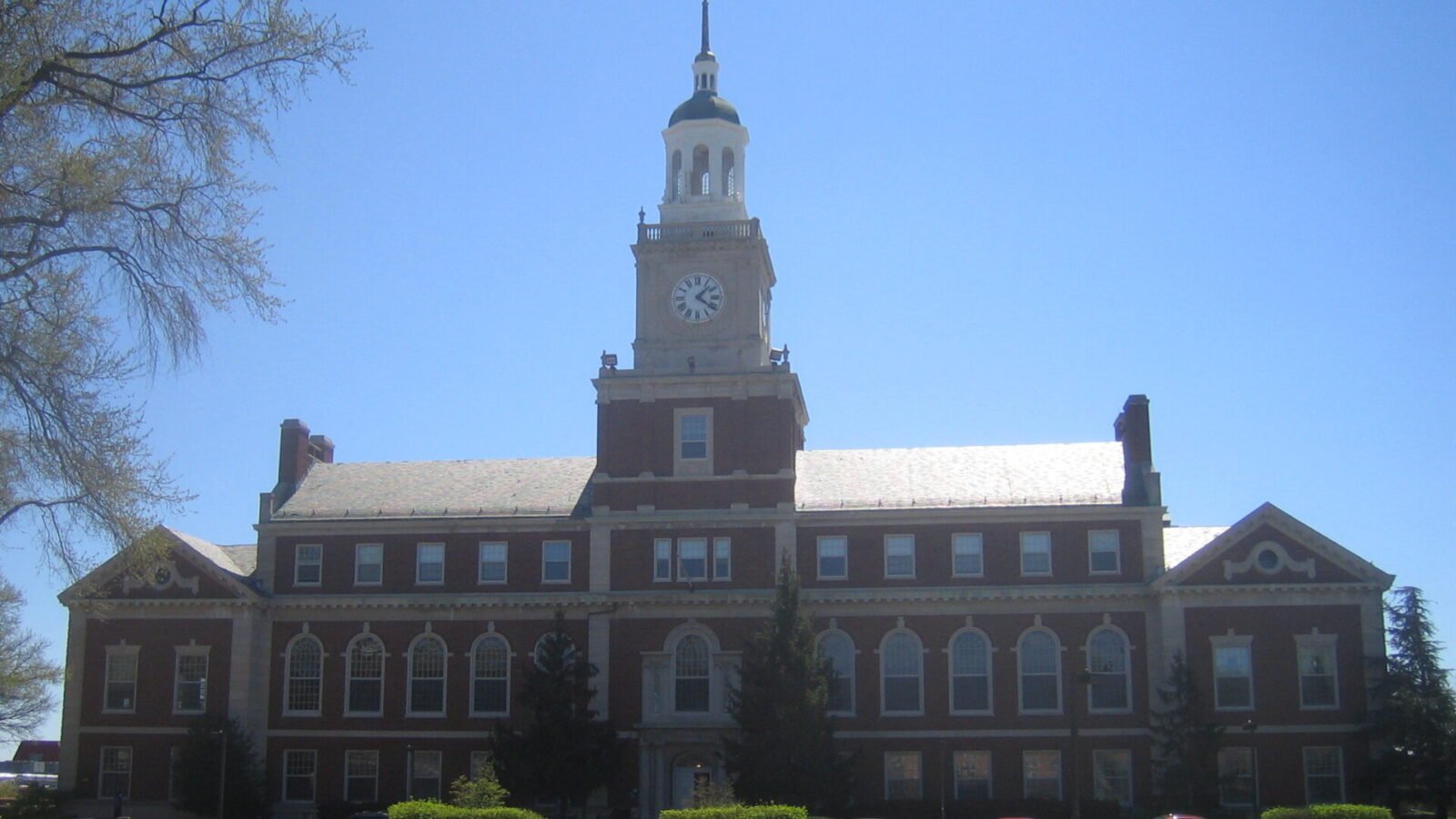
- Featured photograph: Founders Library at Howard University, Washington, D.C., photographed April 9, 2006, by David Monack, public domain via Wikimedia Commons. Archival photograph of the campus, not a portrait of Avery Bernard Johns.
- Inline photograph: Rock Creek Park, Washington, D.C., by Ken Lund, CC BY-SA 2.0.
Reporting note: Khemetic.News did not conduct an independent interview with Johns or audit all 186 case entries. The article distinguishes her research claims from independently verified case details and public legislative records.