Scientists at Paderborn University in Germany have published new results from a programmable quantum computer that uses light to perform specialized experiments. The findings, published November 17, 2026, in the peer-reviewed journal PRX Quantum, examine why some kinds of quantum light offer advantages over others—and what researchers still need to learn before such systems can become broadly useful.
Called the Paderborn Quantum Sampler (PaQS), the research platform sends photons through an optical network and measures how they emerge. The computer was already operational in 2024; the November 2026 news is the team’s new study of its capabilities, not the invention of a finished universal quantum computer. Paderborn University announced the results November 18.
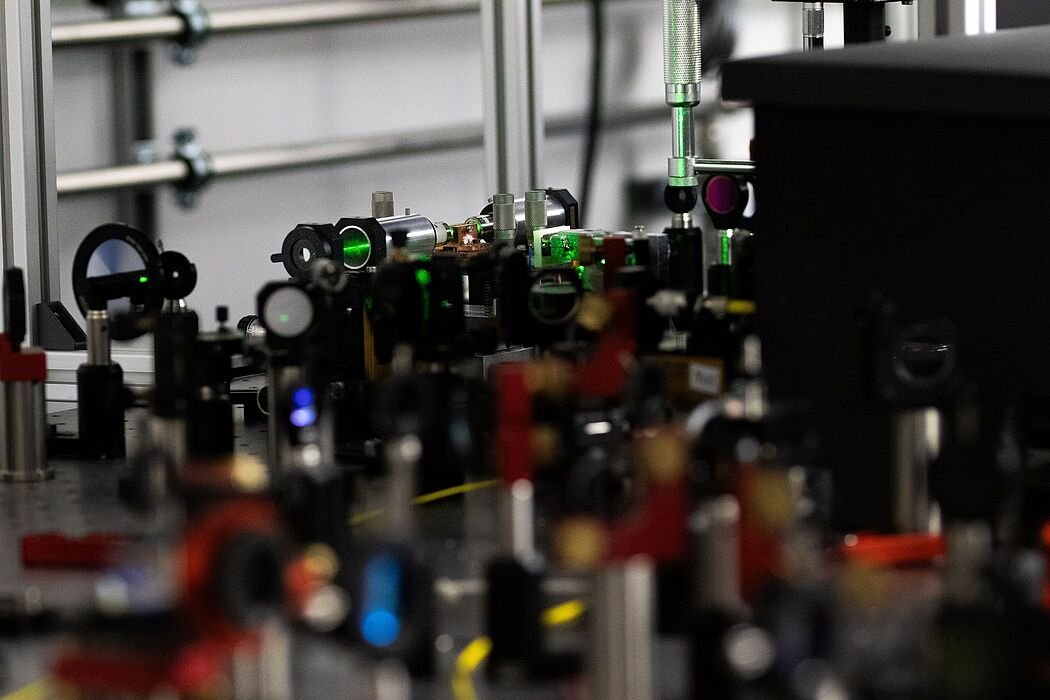
Featured photograph: The actual PaQS optical experiment, showing apparatus used to generate squeezed light. Credit: Paderborn University / Martin Ratz (2024). Original image and usage record (no usage restrictions listed).
What the experiment demonstrated
PaQS is a form of boson sampler, a specialized quantum device designed to produce and measure patterns of light. It is not the same as a general-purpose desktop computer or a fault-tolerant machine capable of running arbitrary quantum algorithms.
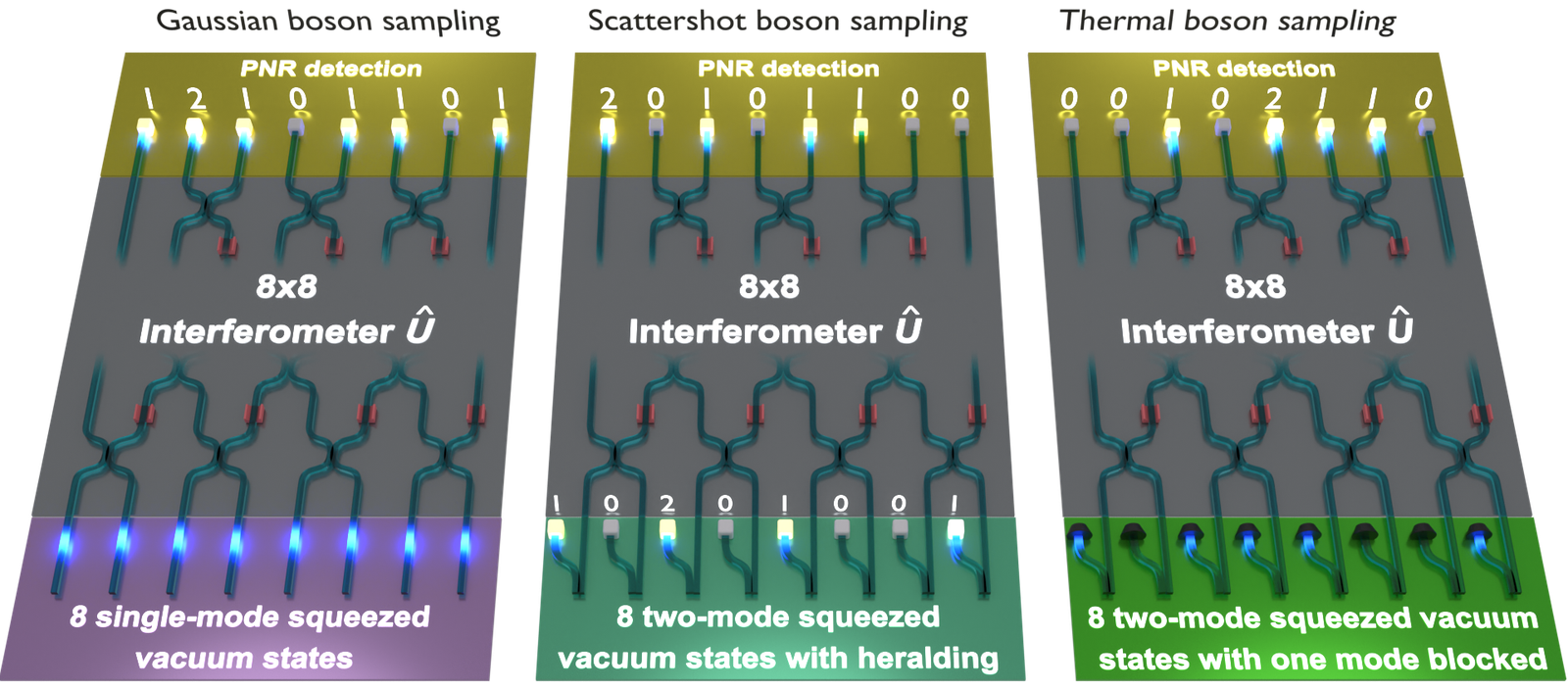
In the published study, Michael Stefszky and colleagues used a 12-mode interferometer that could test eight Gaussian and non-Gaussian quantum input states in a single experimental run. That makes it possible to compare different approaches under closely matched laboratory conditions.
The researchers used a certification method to test whether the measured behavior could be reproduced with classical resource states. Under their chosen measure, non-Gaussian inputs showed a distinct advantage in verifying nonclassical behavior. The result helps identify which physical resources matter as scientists design larger photonic systems.
What does “thousands of years” actually mean?
Paderborn University says that simulating the output patterns of sufficiently large and complex photonic networks on conventional supercomputers could take many thousands of years. That is a statement about the difficulty of scaling a particular simulation problem.
It is not a verified benchmark showing that this PaQS machine has already completed a commercially useful task thousands of years faster than an ordinary supercomputer. The new paper benchmarks quantum input states and nonclassical behavior; it does not demonstrate a general-purpose speedup for drug discovery, encryption breaking or other real-world workloads.
Why photons matter
Photons can carry quantum information through optical circuits. Photonic systems offer potential advantages such as fast operation and miniaturized integrated components, but losses and other imperfections make it difficult to preserve useful quantum effects at scale.
The team’s programmable setup lets scientists vary its light-processing network while examining different quantum resources, including squeezed light and photon statistics. Paderborn says the system is being expanded to tackle more complex experiments.
PaQS is part of the German PhoQuant initiative, which involves Paderborn researchers and partners including Fraunhofer IOF, Menlo Systems and Swabian Instruments. University accounts describe a consortium of 13 research and industry partners supported by roughly €50 million in initiative funding; that is not the price tag of the individual PaQS machine.
What the findings mean for the United States
Future quantum computers could affect scientific research, advanced materials, chemical modeling and cybersecurity. Those possibilities matter to American universities, manufacturers and government agencies even when a particular advance comes from an overseas laboratory.
The distinction between today’s experimental platforms and future large-scale quantum systems is particularly important for encryption. On October 27, 2026, the U.S. National Institute of Standards and Technology released its final report on transitioning to post-quantum cryptography. That planning addresses future threats from sufficiently capable quantum computers; it does not imply PaQS can now defeat modern encryption.
What remains unknown
Researchers still need to determine how to scale photonic hardware, control losses, verify performance against increasingly sophisticated classical methods and translate laboratory demonstrations into useful applications. The new work is a contribution to that process—not a claim that those challenges have been solved.
Sources and further reading
- Stefszky et al., “Benchmarking Gaussian and Non-Gaussian Input States with a Hybrid Sampling Platform,” PRX Quantum, November 17, 2026.
- Paderborn University research announcement, November 18, 2026.
- Paderborn University announcement of the operational PaQS machine, October 7, 2024.
- Interesting Engineering, November 19, 2026.
- NIST IR 8547, “Transition to Post-Quantum Cryptography Standards,” October 2026.