Khemetic Nation News Network | History & Restoration Desk
Historical explainer
Ancient Maya culture in what is now El Salvador comes into focus through both monumental architecture and the material traces of everyday life. At Joya de Cerén, a buried farming village preserves an unusually intimate view of households. At San Andrés and Tazumal, plazas, raised platforms and ceremonial buildings reveal another side of the region’s past: organized centers of authority and public activity.
Read together, these places broaden the picture of Maya civilization beyond its best-known temples. They also require attention to local differences. The archaeological record of El Salvador includes communities with distinct histories and connections to several Mesoamerican traditions.
Joya de Cerén: everyday life preserved beneath ash
UNESCO’s account of Joya de Cerén identifies it as an exceptional record of Maya agricultural life. A volcanic eruption buried the settlement around the seventh century CE. Public summaries differ in their approximate dating: UNESCO’s brief description says around 600 CE, while El Salvador’s Ministry of Culture gives approximately 650 CE.
The preserved remains include homes, storage spaces, a kitchen, a sweat bath and buildings interpreted as serving communal and religious activities. Tools, pottery and plant remains illuminate work that monumental inscriptions rarely describe. Maize fields, herbs, agave, guava and cacao are among the evidence UNESCO records.
The significance lies in the survival of ordinary surroundings. Household objects and cultivated ground allow researchers to examine how people stored food, organized domestic space and used their environment. UNESCO inscribed the site on the World Heritage List in 1993. Its fragile earthen remains require continued protection.
San Andrés: a center supported by farmers and artisans
Nearby San Andrés offers a different scale of settlement. The Ministry of Culture’s site description places it in the Zapotitán Valley, about five kilometers from Joya de Cerén. Its acropolis incorporated a raised architectural complex, while a large plaza lay to the north.
In its 2021 account of the park, the ministry dates the settlement’s peak to approximately 600–900 CE. Farmers in the surrounding area cultivated maize, beans and squash; artisans produced pottery and obsidian tools. Adobe was an important building material, alongside volcanic stone.
Comparing San Andrés with Joya de Cerén makes the relationship between ceremonial centers and daily labor more visible. Grand architecture depended on a wider landscape of food production, craftwork and households. This is a historical interpretation of the combined evidence, rather than a claim that every household belonged to the same social or political arrangement.
Tazumal and Chalchuapa: a meeting place of traditions
Tazumal lies within the broader archaeological landscape of Chalchuapa, in western El Salvador. The Ministry of Culture describes Chalchuapa as a long-lived settlement with its own cultural character, incorporating Maya, Teotihuacan and Toltec influences over centuries.
That description matters: connections to Maya civilization do not erase local identity or other cultural contributions. Nor should every phase of occupation across the wider Chalchuapa area be treated as identical to the history of the Tazumal complex.
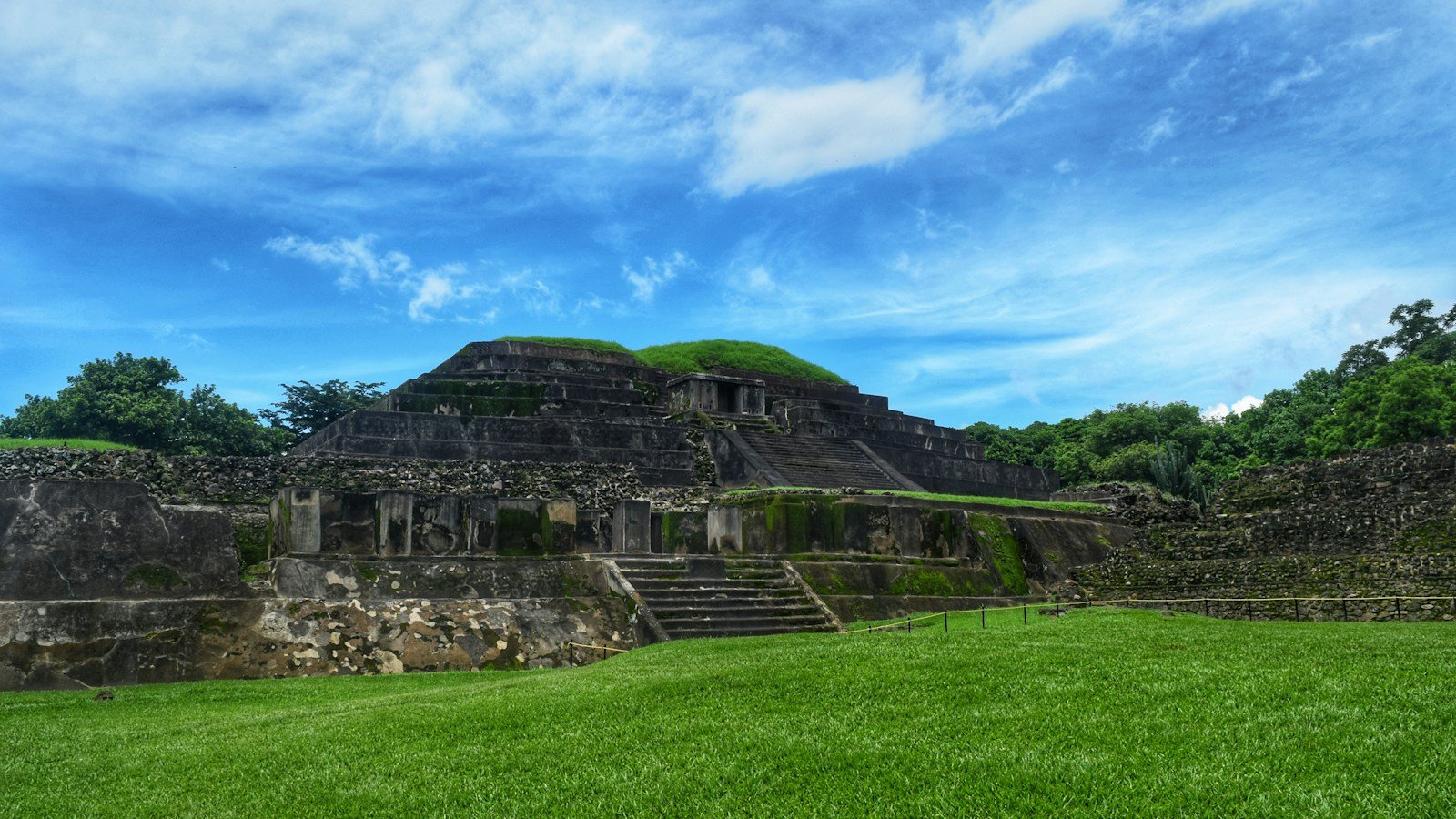
A 2023 ministry overview describes Tazumal’s principal pyramidal structure as approximately 24 meters high and records successive construction phases. It also identifies structures associated with a ballcourt and nearby residential remains from the early Postclassic period. These features indicate a built environment that changed over time, rather than a monument created in one event.
Heritage extends beyond the ruins
Ancient sites are also places where present communities engage with heritage. The ministry reported in 2023 that San Andrés had been declared a Sacred Ceremonial Site in December 2021, recognizing Indigenous peoples’ right to practice their spirituality.
Preserving these places therefore involves more than maintaining stone and earth. Their interpretation benefits from careful archaeology, respect for living Indigenous communities and an understanding of the differences between individual sites. El Salvador’s Maya history is especially revealing when households and fields receive the same attention as temples and plazas.
Featured photograph: Tazumal’s main pyramid, photographed by Luis Rodriguez / Unsplash. The image depicts Tazumal, not Joya de Cerén or San Andrés.
Sources and editorial note
This historical explainer draws on UNESCO’s Joya de Cerén record and the linked archaeological-site descriptions and heritage reports published by El Salvador’s Ministry of Culture. It summarizes established site information and is not a report of a newly announced discovery.