TUCSON, Arizona — One Arizona cannabis entrepreneur wants to give underused marijuana cultivation facilities an unusual second life: host smaller artificial-intelligence computing centers inside buildings already outfitted for energy-intensive growing operations. The idea is still a proposal, not a documented conversion.
Moe Asnani, the former owner of two Tucson D2 Dispensaries and founder of the iLAVA cannabis brand, described the concept in a November 9 report by Arizona Public Media. His argument is that former indoor growing sites already have electrical service, climate-control equipment and water infrastructure that could potentially support smaller computing installations.
Whether those sites would actually save water or energy, or deliver enough computing power to make money, remains unanswered. University of Arizona experts and local officials raised important questions about efficiency, cybersecurity and environmental effects.
Featured image: An archival photograph of a two-tier indoor cannabis cultivation room taken in 2022; it does not show any facility proposed for conversion in Arizona. Credit: Beeblebrox / Wikimedia Commons, CC BY-SA 4.0.
Why struggling cannabis operators are looking at computers
Arizona’s cannabis business is dealing with excess supply and lower prices. In March, Arizona’s Family reported that state marijuana tax collections peaked at about $289 million in 2024, compared with $283 million in 2025. Those are tax collection figures, not a complete measure of cannabis sales or the financial health of every farm.
A large indoor grow room can already have substantial lighting, ventilation, cooling and water delivery systems. The prospect of reusing an industrial site, rather than constructing a new one, is attractive in a region where residents have expressed concern about the footprint of new data center projects.
But existing infrastructure is not a turnkey AI installation. It would have to be evaluated for continuous electrical demand, cooling loads, connectivity, fire protection, building codes, zoning and the cost of processors and servers. An electrical connection built for grow lights is not automatically sufficient for high-density computing hardware.
The water comparison has important limits
Asnani’s former company estimated that an 18,000-square-foot growing facility used roughly 1.7 million gallons of water in 2024, according to AZPM’s reporting. The broadcaster also cited as much as 31 million gallons annually for Tucson’s much larger Project Blue data center.
Those figures describe different sizes and purposes. Comparing them does not show that a cannabis-farm conversion would consume less water than the cultivation operation it replaced. The answer would depend on the server workload, cooling technology, electricity source and actual operating conditions. Arizona does not have comprehensive mandatory grower water-use reporting for an easy statewide comparison.
Small data centers may be less energy-efficient
David Ebert, the University of Arizona’s chief AI and data science officer, cautioned that smaller facilities can have weaker energy efficiency than major data centers. In the AZPM interview, he cited power usage effectiveness figures just above 1.0 for some larger facilities and around 2.0 to 2.8 for smaller sites. These were examples, not audited performance figures for Asnani’s proposed operation.
Power usage effectiveness measures total facility power compared with the electricity delivered to computing equipment; lower is generally better. It does not measure the usefulness of the computation, the carbon intensity of the power supply or water consumption. A smaller node might still be useful where customers have latency, local control or specialized processing needs.
What ‘sovereign AI’ could mean for local organizations
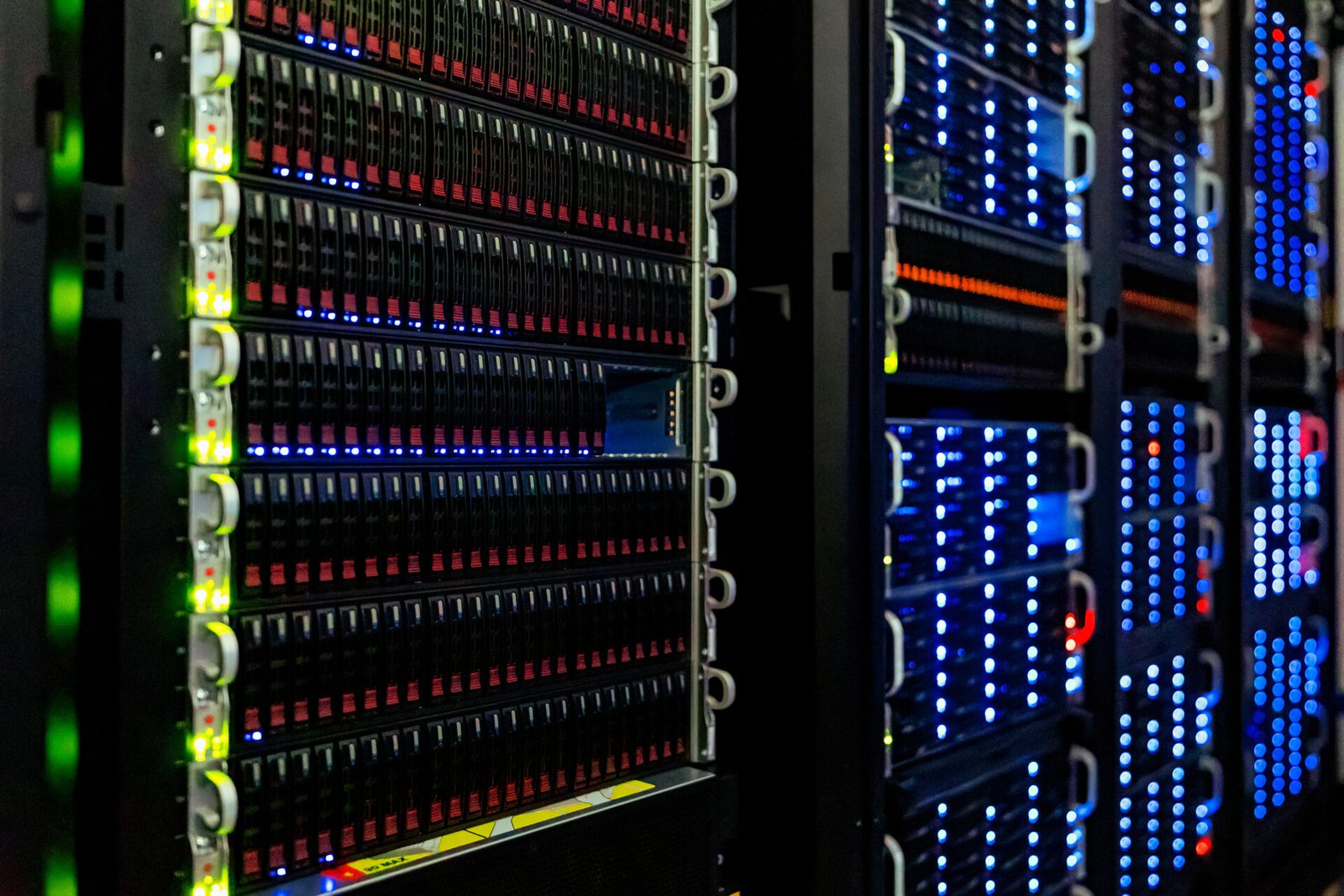
Asnani has framed the plan partly as a way to give organizations more control over the computing and data they use, rather than automatically relying on large cloud-service operators. Regional facilities could, in principle, serve businesses or institutions that want particular data-location arrangements.
But geographic proximity alone does not make information more secure. Ebert emphasized that professional cybersecurity management and network safeguards matter more than whether computing is spread across many small sites or concentrated in one larger operation.
A wider national question, not yet an established conversion boom
The economic pressure is not confined to Arizona. An October Forbes investigation described cannabis producers in other states seeking buyers or new uses for expensive cultivation properties, but also documented obstacles including power constraints, local opposition and zoning restrictions. A property marketed to data-center developers is not the same thing as an operating data center.
The technology outlet Tom’s Hardware also examined the Arizona idea on November 12, emphasizing the costs of server upgrades, power and cooling and the disadvantage that some small operators face against much larger providers.
What Tucson officials still need to decide
Tucson City Council member Paul Cunningham told AZPM he was willing to explore reuse of existing buildings if the water and energy impacts could be constrained. That is openness to a proposal, not an approval of a specific conversion. Asnani said he was at the initial stage of working out whether his plan could proceed.
For Arizona communities, a meaningful assessment would require verified site-specific power and water estimates, a clear account of public costs and benefits, and the applicable permitting decisions. Until a facility is approved, built or converted, and operating, the proposal should not be described as a success—or as evidence that farms across the state are already turning into AI data centers.
Sources and further reading
- Arizona Public Media — Kieran Hadley, Nov. 9, 2026 (original local reporting and interviews)
- Tom’s Hardware — Nov. 12, 2026 (technology and economic considerations)
- Arizona’s Family — Mar. 27, 2026 (Arizona marijuana tax collections)
- Forbes — Oct. 21, 2026 (broader U.S. cannabis property conversion proposals)