CALIFORNIA — November 15, 2026. California has documented 75 lung transplants among workers sickened by silica dust while fabricating engineered-stone countertops, as the American Medical Association has backed nationwide restrictions on high-silica products. The tally reflects a worsening occupational-health crisis in the workshops that cut, grind and polish the popular kitchen and bathroom surface.
In a September 30 letter to California workplace-safety regulators, the California Department of Public Health said that as of September 16 it had confirmed 644 silicosis cases, at least 35 deaths, and 75 lung transplants among engineered-stone countertop workers. Another 53 workers had been referred for lung transplantation. These are dated surveillance figures, not a current count of everyone affected.
KQED reported on November 10 that the number of California workers diagnosed with the disease had subsequently exceeded 680. The state says its surveillance almost certainly misses people who have not been diagnosed or reported.
Why countertop fabrication can damage lungs
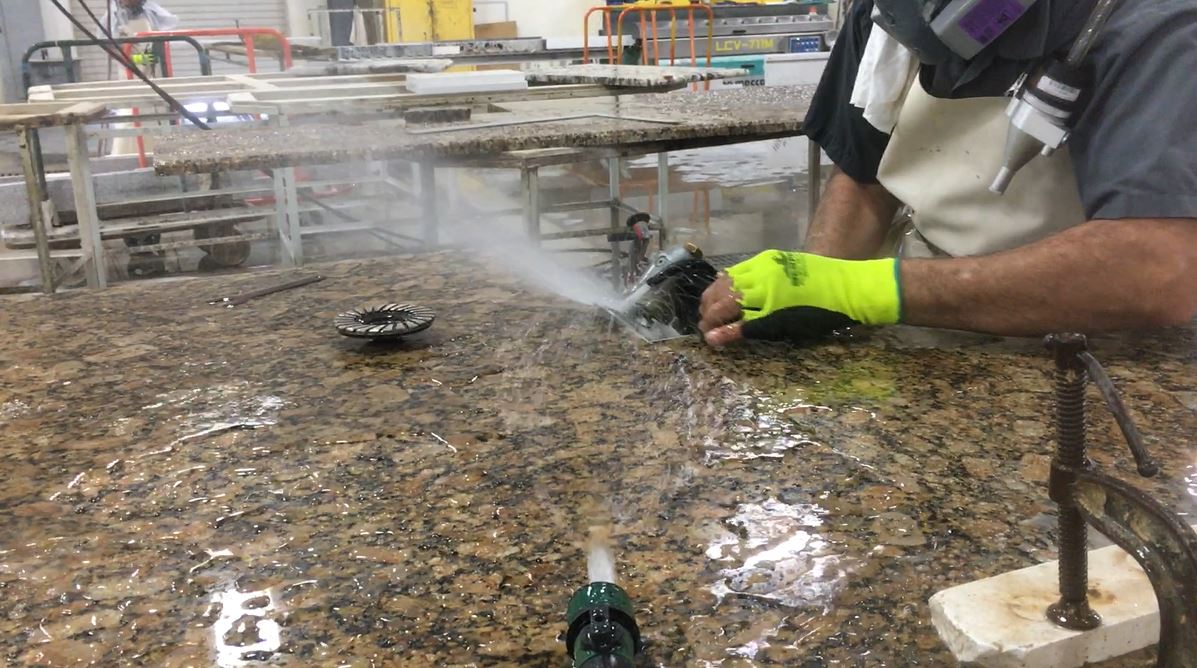
Many engineered-stone products are made from crushed quartz mixed with resins and colorants. Some contain more than 90% crystalline silica. Workers who saw, grind, drill or polish the slabs can inhale microscopic airborne particles. Those particles can scar the lungs and cause silicosis, an incurable, potentially fatal occupational disease.
The danger being documented is primarily workplace dust exposure during fabrication, not routine contact with a finished countertop in a home. Even when wet cutting and ventilation are used, effective protection depends on proper equipment, training, enforcement and material-specific exposure controls.
The toll has fallen heavily on Latino workers
A study published in NEJM Evidence on August 12 examined 592 California cases documented through June 2026. In that surveillance group, 98% of cases involved Latino workers, with a median age of 46 at diagnosis. The authors highlighted the illness’s rapid progression in some workers and severe outcomes at relatively young ages.
California public-health officials have said many affected workers are young Latino immigrants. Access to diagnosis, specialty treatment, workers’ compensation and legal help can shape whether cases are identified and whether patients receive care before the disease advances.
Doctors support a national restriction, but it is not law
On November 9, the American Medical Association announced adopted policy supporting a prohibition on engineered-stone countertops and similar products containing more than 1% crystalline silica. Its policy opposes manufacturing, importing, distributing, selling, fabricating and installing those high-silica products throughout the United States. The organization also supports safer substitutes, worker screening and better disease surveillance.
An AMA policy statement is not a federal ban. In California, Cal/OSHA’s October 22 discussion draft outlines a potential emergency restriction. The public-comment period ended October 30. The draft and the medical association’s position should not be mistaken for enacted restrictions.
Industry groups favor different approaches
The International Surface Fabricators Association argues that licensing businesses and verifying safety compliance could protect workers more effectively than a product ban by itself. Manufacturers have also raised concerns that restricting engineered stone might shift fabrication to other high-silica materials without fixing poor workplace practices.
Doctors and worker advocates supporting the prohibition say dangerous exposures and serious illness have continued despite existing safety rules. California regulators must weigh the practical limits of enforcement, the availability of alternative surfaces and the need to prevent additional irreversible lung disease.
What happens next
California’s workplace-safety rulemaking remains the immediate test of whether high-silica engineered stone fabrication will be restricted at the state level. Federal restrictions would require separate government action. Meanwhile, occupational-health specialists continue to urge screening of exposed workers and effective controls in fabrication shops.
The numbers describe people who built and finished a widely used household product, some of whom now live with transplanted lungs. Whether regulators choose a product restriction, strengthened enforcement or both, the central question is how to stop more workers from facing the same outcome.
Watch: Original reporting on workers and lung transplantation
Watch InvestigateTV’s March 2, 2026 report, Deadly Dust: Liability, examining affected workers and the debate over manufacturer liability. Video credit: InvestigateTV; this link opens the original publisher’s video page.
Sources and documents
- California Department of Public Health: September 30, 2026 regulatory comment and September 16 case count
- American Medical Association: November 9, 2026 policy announcement
- AMA House of Delegates: Resolution 933, adopted policy language
- NEJM Evidence: California silicosis surveillance, August 2026
- Cal/OSHA: October 2026 draft restriction and public-comment process
- KQED: November 10 reporting and industry perspectives
Image credit: Featured photograph is an archival 2011 trade-show view of engineered-quartz countertop material, by Charles & Hudson, CC BY-SA 2.0. It does not depict a California patient or a workplace associated with these cases. CDC/NIOSH image courtesy of the federal agency; use does not imply CDC endorsement.