Copenhagen Atomics is developing a modular nuclear reactor intended to fit into a customized 40-foot shipping container, with a planned output of 100 megawatts of thermal energy. The Danish company’s claimed century of thorium fuel potential, however, does not mean a reactor has operated for 100 years—or could run that long without equipment replacement.
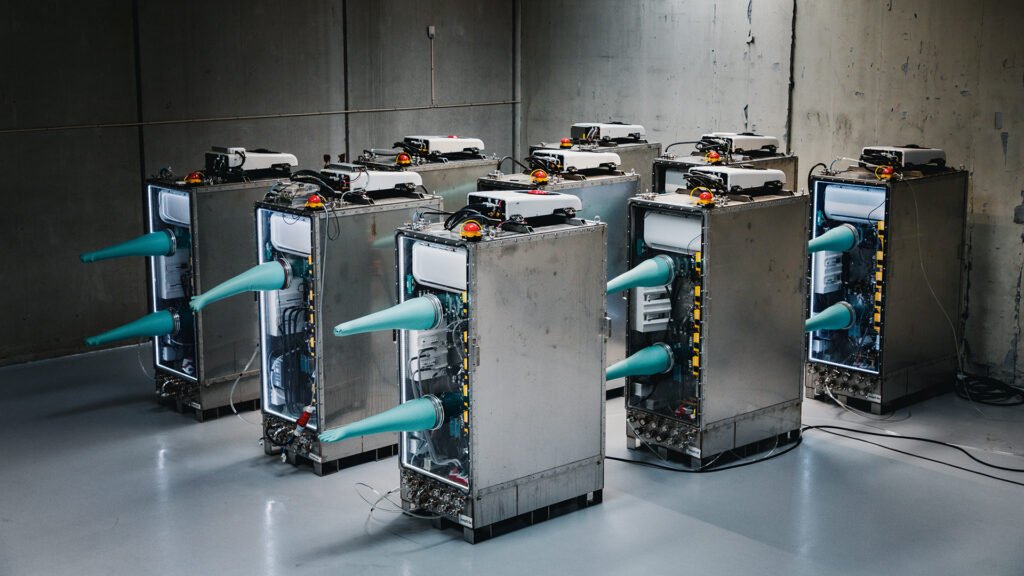
The company’s Onion Core molten-salt reactor is still in development. Copenhagen Atomics says it has built two full-scale non-fission prototypes and is working on a third. A critical experiment is planned for 2028 in Switzerland, while commercial deployment remains a goal for the 2030s. Company specifications and a September 2026 update outline those milestones.
What does the 100-year fuel claim actually mean?
A November 16 report by The Cool Down says Copenhagen Atomics estimates that roughly 10 metric tons of thorium could represent more than a century of fuel potential. It also reports that the thorium-bearing blanket would be replenished approximately every decade.
The 100-year figure is a projection about thorium resources and a proposed fuel cycle, not a demonstrated reactor lifetime or guarantee that a plant can operate without ongoing materials, maintenance or replacement. The International Atomic Energy Agency’s 2024 technology catalogue describes a five-year design life for the reactor vessel. Copenhagen Atomics’ own commercial concept similarly anticipates replacing modules periodically while retaining or reusing certain materials.
The company also distinguishes its first planned reactors from an eventual fully breeding thorium system. Initial units would use approximately 5%-enriched uranium in the fuel salt, with thorium in a surrounding blanket; later designs aim to convert more thorium into usable fissile fuel. Source: Copenhagen Atomics.
How the proposed reactor works
Conventional commercial power reactors generally use solid uranium fuel assemblies. The Onion Core concept instead circulates liquid fluoride salts and uses heavy water to moderate neutrons. A separate surrounding salt layer contains thorium-232, which can absorb neutrons and eventually form fissile uranium-233 through nuclear transformations.
Thorium itself is not a drop-in substitute for enriched uranium: it is a fertile material, not a fuel that can independently initiate the intended chain reaction. The reactor needs a fissile starting material and careful management of heat, neutron behavior, chemistry and radioactive products.
The planned 100 MWth capacity measures heat delivered by the reactor, not electricity exported to the grid. Turning that heat into power requires turbines and additional systems, so electrical output would be lower. Industrial users might also use the heat directly. Company technical specifications.
What has actually been demonstrated
Copenhagen Atomics reports extensive tests of high-temperature salt circulation and pumps. In February 2026 it said its testing program had exceeded 100,000 combined pump operating hours. Such evidence matters for corrosion resistance and reliability, but it does not mean that a commercial reactor has generated nuclear electricity for that duration. Read the company’s pump-testing report.
The latest published roadmap says two full-scale prototypes were completed without nuclear fission, a third was under construction and a first critical experiment at the Paul Scherrer Institute was targeted for 2028. This is a development schedule, not a completed regulatory approval.
The challenges before commercial operation
- Reactor physics: Demonstrate controlled fission, the expected neutron balance and the proposed fuel-conversion process.
- Materials: Establish safe durability in hot fluoride salts and under sustained irradiation.
- Regulation: Obtain applicable nuclear fuel, facility, safety and operating licenses.
- Cost and deployment: Validate mass production, maintenance schedules, decommissioning and price estimates in real operating conditions.
The company has discussed a target electricity price of $30–$40 per megawatt-hour. It labels this as a projection based on a future mass-manufacturing model, not a price demonstrated by an operating fleet. Company’s September 2026 cost discussion.
The connection to U.S. nuclear development
The story extends beyond Denmark. Texas Atomics says it plans to bring the Onion Core technology to the United States, beginning with a proposed fuel-salt production line in Texas. The firm later wants to seek U.S. licensing and operate a molten-salt demonstration reactor. Its planned first reactor would be a demonstration unit, not a commercial electricity generator.
That is an announced development strategy, not evidence that a Copenhagen Atomics reactor has already been licensed or begun operating in the United States. Any American deployment would be subject to U.S. regulatory oversight, fuel controls and local project requirements.
What happens next
The most significant next steps are a successful nuclear critical experiment, evidence of material durability under actual reactor conditions, and regulatory review of the design and fuel-handling systems. The concept could eventually support low-carbon industrial heat and electricity, but the 100-year fuel claim should not be confused with proven performance.
Video: Visiting Copenhagen Atomics
Science presenter Dr. Ben Miles visited Copenhagen Atomics and interviewed its developers in a video released in November 2026. Watch the original visit on YouTube. Video credit: Dr. Ben Miles. The tour documents a research and development program, not commercial nuclear operation.
Primary sources and further reading
- The Cool Down (November 16, 2026): The 100-year thorium claim
- Copenhagen Atomics: Technology and specifications
- Copenhagen Atomics (September 28, 2026): Prototypes, cost targets and roadmap
- Copenhagen Atomics: Pump-testing update
- International Atomic Energy Agency: 2024 SMR technology catalogue
- Texas Atomics: Proposed U.S. fuel and reactor plan