WASHINGTON, November 18, 2026 — Americans who undergo an eye examination that includes a refraction generally have a federal right to receive a copy of their eyeglass prescription immediately afterward, automatically and at no additional prescription-release charge. The eye doctor must provide it before offering to sell the patient glasses.
The requirement comes from the Federal Trade Commission’s long-standing Eyeglass Rule, not a newly announced 2026 law. It is designed to let patients compare prices and choose where to buy corrective eyewear rather than being limited to the practice that performed their examination.
What your eye doctor must provide
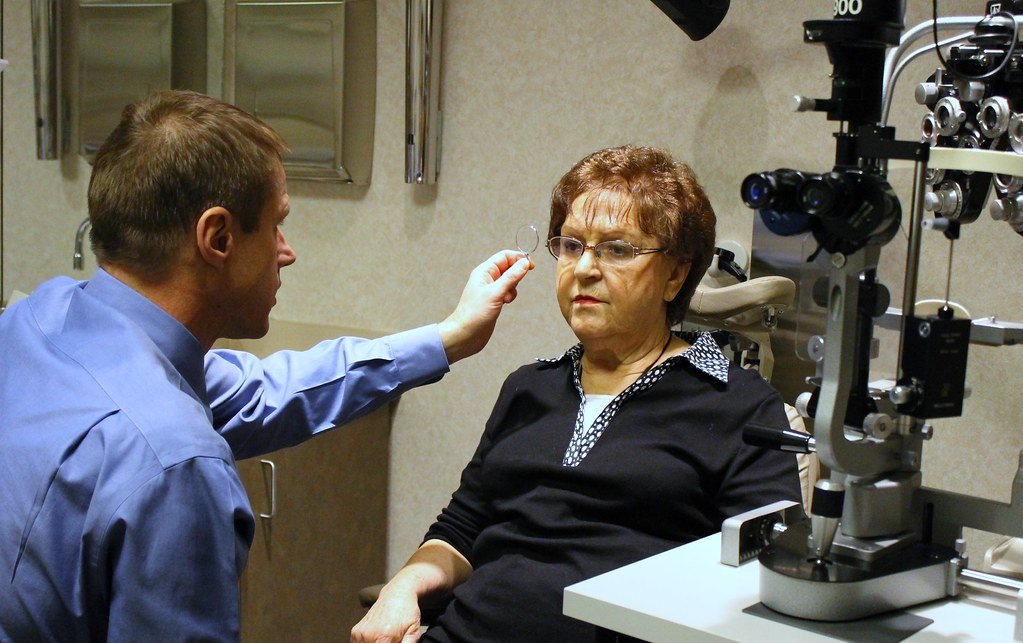
The FTC says covered optometrists and ophthalmologists must release a prescription after any examination that determines a patient’s refraction — the lens measurements used to correct vision. It does not matter whether the patient asks for the prescription or whether the practice separately charges for the refraction.
- Give the patient a copy of the glasses prescription immediately after the qualifying examination.
- Provide it automatically, unless the patient specifically refuses to receive it.
- Release it before offering to sell the patient eyeglasses.
- Do not charge an extra fee merely for giving the patient a copy or make the patient purchase eyewear.
- Do not demand that the patient sign a waiver disclaiming the prescriber’s responsibility for the examination.
A practice may charge for the examination itself. Under the FTC’s guidance, it may condition prescription release on immediate payment only if it requires immediate payment from all eye-examination patients; proof of insurance coverage counts as payment for this purpose.
The 2024 update added confirmation and digital-delivery rules
The federal Eyeglass Rule dates to 1978. In 2024 the FTC finalized additional requirements aimed at improving compliance. The new confirmation requirement took effect September 26, 2024.
Eye care professionals who sell glasses or otherwise have a financial interest in eyeglass sales generally must ask patients who receive paper prescriptions to confirm receipt in writing or electronically. The practice must retain the resulting confirmation records for at least three years. A patient may refuse to sign the acknowledgment; that does not permit the practice to withhold the prescription.
Digital delivery is permitted only when the patient affirmatively agrees, in writing or electronically, both to receiving a digital prescription and to the particular delivery method, such as email, text or an online patient portal. The prescription must be accessible, downloadable and printable, and must still be provided immediately. A patient who wants paper can request a paper copy instead.
Why the rule matters for households buying glasses
Prescriptions are the information consumers need to compare eyewear sellers. Without a usable copy, a patient might feel compelled to choose frames and lenses at the same office where the examination occurred, even when lower-cost or preferred options are available elsewhere. The FTC says automatic release supports competition and consumer choice.
The rule does not guarantee that glasses themselves will be free or that all sellers will offer the same products or pricing. It means patients can take their prescription to another store or use it for an online order.
What the rule does — and does not — cover
An eye-health examination that does not determine refraction does not trigger the automatic glasses-prescription release requirement. The FTC also states the federal Eyeglass Rule does not apply to optometrists or ophthalmologists employed by federal, state or local government entities. Other laws or policies may still affect access to records.
Many online eyeglass orders require a pupillary distance measurement, which identifies the distance between the pupils. Federal law does not generally require this measurement on every eyeglass prescription, although some states do. If a practice measured it but did not include it, medical-record access rules may offer another way to request it.
Contact lenses are covered by a separate federal Contact Lens Rule. Patients must receive the contact-lens prescription when the fitting is complete, which can take more than one appointment.
What to do if an office withholds your prescription
Patients can ask the office to provide their glasses prescription and refer staff to the FTC’s guidance for eye care providers. If the office insists on an extra prescription-release fee, requires a glasses purchase or otherwise refuses to comply, patients can record the date and circumstances and submit a report at ReportFraud.ftc.gov. A complaint is a report of a suspected violation, not itself proof that a practice broke the law.
The FTC reiterated these requirements in June 2025, reminding eye care providers that the obligation to release prescriptions has existed for decades.
Watch the FTC explanation

Sources and further reading
- FTC, “Complying with the Eyeglass Rule” — detailed requirements and exemptions.
- FTC Consumer Advice, “Buying Prescription Glasses or Contact Lenses: Your Rights” — patient guidance.
- FTC June 2024 final-rule announcement — changes and rationale.
- FTC June 2025 compliance reminder.
- FTC official video, “Your Eyewear Prescription Rights”.