A widely shared video cites an Italian study as evidence that people vaccinated against COVID-19 face a 34% higher risk of colorectal cancer, a 54% higher risk of breast cancer and a 62% higher risk of bladder cancer. Those percentages are drawn from a genuine peer-reviewed study. But the video’s central claim goes further than the research can support: the investigators measured hospitalizations involving cancer diagnoses, not proof that vaccines caused cancers to develop.
The study, published July 1, 2025, in EXCLI Journal, examined 296,015 people aged 11 and older in the province of Pescara, Italy. Its authors included researchers affiliated with the University of Bologna, the University of Ferrara and Pescara’s local health authority. The team used routinely collected Italian National Health System records from the COVID-19 vaccination period through December 2023. The research remains relevant to American readers because claims based on it are circulating without important caveats about methodology and causation. Read the original study.
What the researchers reported
Of the people included, 246,750 (83.3%) had received at least one dose of a COVID-19 vaccine, and 49,265 (16.6%) were recorded as unvaccinated. Over the analyzed follow-up, 3,134 people had a hospitalization with a cancer diagnosis. The study used statistical models adjusted for age, sex, previously recorded SARS-CoV-2 infection and selected medical conditions.
| Cancer type | Adjusted hazard ratio | Relative association |
|---|---|---|
| Colorectal | 1.34 (95% CI 1.00–1.80) | 34% higher |
| Breast | 1.54 (95% CI 1.10–2.16) | 54% higher |
| Bladder | 1.62 (95% CI 1.07–2.45) | 62% higher |
The researchers also found a 23% higher adjusted hazard of hospitalization for cancers overall among people receiving at least one dose (hazard ratio 1.23; 95% confidence interval 1.11–1.37) in their main analysis. Yet that overall result changed substantially when researchers altered the minimum interval between vaccination and hospitalization. The original analysis details those changes.

Why “six months later” can be misleading
The video presents the percentages as an increase in cancer diagnoses within a six-month follow-up. That is not how the research was designed. The team set a minimum waiting period of 180 days before tracking eligible cancer-related hospitalizations, then followed participants for differing lengths of time. In other words, six months was a lag before an event could count, not a finding that a cancer arose six months after a shot.
When researchers extended that minimum interval to 365 days, the overall association for at least one dose was no longer statistically significant. In the three-or-more-dose comparison, the study reported a lower adjusted hazard of cancer hospitalization overall (0.90; 95% confidence interval 0.83–0.98). Some site-specific associations involving breast and bladder cancer remained in the one-or-more-dose comparison. These mixed findings are important to report together rather than selecting only the largest percentages.
Hospitalization records are not a cancer registry
A person hospitalized with a cancer diagnosis does not necessarily have a newly developed cancer caused by something that occurred shortly beforehand. Some cancers take years to develop. The Italian researchers used hospital discharge records because population cancer registry data were not available quickly enough for the study period. That choice made the research possible but limited what its results could establish.
There were also important differences between the groups. The mean age was 45.1 among unvaccinated people and 50.2 among those receiving at least one dose; the three-or-more-dose group was older still. Statistical adjustment addressed some measured differences, but the authors acknowledged that unmeasured factors—including smoking and differences in healthcare-seeking behavior—could influence observed hospitalization rates. COVID-19 infections, testing patterns and delayed cancer care during the pandemic further complicate interpretation.
Other scientists challenged the study’s methods
In a published letter to the journal, Giovanni M. Malatesta and colleagues said the results deserved examination but questioned the analysis of vaccination status over time. They raised the possibility of immortal time bias—a methodological problem that can distort comparisons when time before vaccination is handled incorrectly.
Study authors Lamberto Manzoli, Cecilia Acuti Martellucci and Maria Elena Flacco responded in a separate published letter. They defended the use of Cox models and criticized the opposing analysis for insufficient adjustment for age. The existence of the exchange does not, by itself, validate either causal interpretation. It illustrates why an observational signal needs independent replication and careful design before being translated into medical advice.
A published correction: The investigators also published a corrigendum on December 4, 2025, addressing underlying all-cause mortality data used in their research. The correction is part of the study’s record and should be consulted alongside the original article. A revision to mortality data is not evidence that vaccination caused the cancer hospitalization associations.
What American cancer authorities say
The U.S. National Cancer Institute says the available evidence does not show that COVID-19 vaccines cause cancer, make an existing cancer return or accelerate its progression. Its guidance for people with cancer also explains that vaccine-related swelling of lymph nodes can affect the interpretation of certain imaging scans. In separate patient guidance, Mayo Clinic says population research has not established a link between COVID-19 vaccination and increased cancer risk.
These statements do not make unexpected findings off-limits for inquiry. They distinguish an open scientific question from a demonstrated risk. Patients concerned about their personal cancer history, screening schedule or vaccination should consult their healthcare professionals rather than changing care based on a viral clip.
What remains unknown—and what should happen next
The Italian researchers themselves characterized their conclusions as preliminary because they could not quantify the impact of important sources of bias or unmeasured confounding. Stronger evidence would require independently conducted studies using high-quality cancer registries, reliably dated vaccination and diagnosis records, and appropriate control of other risk factors. The precise timing of diagnoses and healthcare utilization also matters.
Bottom line: The three widely shared percentages describe adjusted associations with cancer-related hospitalizations in one Italian observational study—not proof that COVID-19 vaccines caused colorectal, breast or bladder cancer. Both the initial findings and the study’s methodological limitations deserve accurate public reporting.
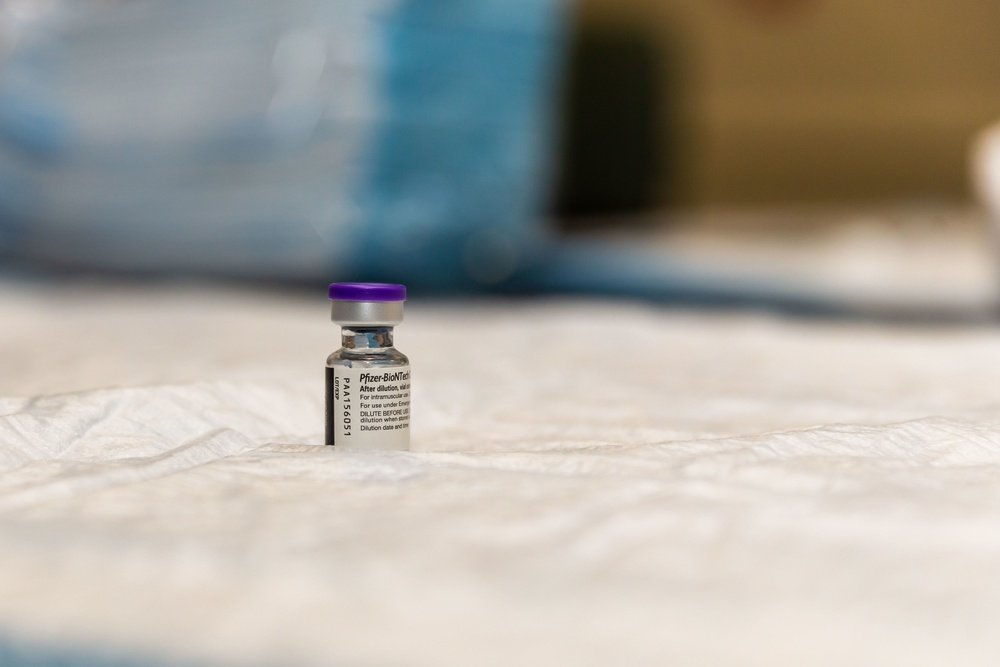
Featured photograph: An archival COVID-19 vaccine vial photographed at Naval Hospital Camp Pendleton, California, Dec. 16, 2020. Lance Cpl. Kerstin Roberts / U.S. Marine Corps via DVIDS; public domain. This photograph does not depict a participant or specimen from the Italian cohort study.
Primary sources and further reading
- Acuti Martellucci et al., “COVID-19 vaccination, all-cause mortality, and hospitalization for cancer,” EXCLI Journal (July 2025).
- Malatesta et al., methodological commentary, EXCLI Journal (2025).
- Manzoli et al., authors’ response, EXCLI Journal (December 2025).
- Acuti Martellucci et al., December 2025 study corrigendum, EXCLI Journal.
- National Cancer Institute: COVID-19 vaccines and people with cancer.
- Mayo Clinic: COVID-19 vaccine myths and evidence.
Source note: Khemetic.News analyzed the original peer-reviewed paper, the published scientific exchange and U.S. medical guidance. It did not conduct independent patient-level research or interview the investigators. The viral clip was supplied by a reader as a transcript and was not independently authenticated as a full, unedited recording.