WASHINGTON — Nvidia’s top lawyer contacted senior U.S. Commerce Department officials while federal investigators were examining possible diversion of advanced American AI chips through Singapore-based Megaspeed International, according to reporting published November 9 by Bloomberg and The New York Times.
Investigators subsequently faced unusual limits on communications involving Nvidia, and the Justice Department later asked Commerce to pause its work. The reporting raises serious questions about the independence of U.S. export-control enforcement. It does not establish that Nvidia itself ordered an investigation stopped or that federal authorities closed the entire case.
What the reported intervention involved
In late summer 2025, Nvidia general counsel Tim Teter called Commerce Under Secretary Jeffrey Kessler, who oversees the Bureau of Industry and Security (BIS), to ask whether U.S. authorities were involved when Singaporean officials questioned and restricted the travel of Megaspeed executive Alice Huang, Bloomberg reported, citing people familiar with the matter.
In the weeks that followed, BIS staff were told to route requests involving Nvidia through Kessler or obtain his approval before contacting the company. They were also instructed not to mention Megaspeed or its Malaysian affiliate Speedmatrix in some outside communications, the report said. Teter later contacted BIS personnel directly and indicated he had Kessler’s permission to do so. Kessler told agency staff to handle the matter according to the rules, according to Bloomberg.
The Justice Department subsequently asked BIS to pause its inquiry. Justice can assume responsibility for a case when a potential regulatory violation becomes a criminal investigation. The publicly reported record does not prove why the pause occurred, whether the call caused the restrictions, or whether evidence was lost.
Disputed inventories and denied allegations
Megaspeed operated data centers in Southeast Asia and was suspected of helping restricted Nvidia processors reach customers in China. Megaspeed denies diverting chips. Bloomberg reported that Nvidia’s inventory figures submitted to U.S. authorities initially fell short of trade-record totals by roughly 50,000 chips sold through hardware partners. Nvidia later said it had identified hardware at additional warehouses. An accounting discrepancy alone is not proof of illegal diversion.
Nvidia told Bloomberg that it regularly works with governments to investigate potential diversion and help stop unlawful shipments. The company said it had stopped doing business with Megaspeed; Bloomberg noted that Megaspeed nevertheless remained listed as an Nvidia Cloud Partner. Those assertions need to be distinguished from a court finding of wrongdoing, which has not been established in the reporting reviewed for this article.
On November 12, Megaspeed said it had cooperated with U.S. inspections and retained an American law firm to review its GPU inventories and export-control compliance, Reuters reported.
The separate national-security inquiry
The case has also drawn attention to reports about Jensen Huang’s personal relationship with Alice Huang, a former Megaspeed executive whom U.S. officials reportedly suspected of working for Chinese intelligence. That intelligence allegation has not been proved in public court proceedings; China has rejected it.
Jensen Huang publicly acknowledged marital infidelity in a November 8 message to employees. The same day, Nvidia’s board announced an independent investigation into reports that its chief executive was targeted by a foreign intelligence effort. The board stated it had no reason at the time to believe company secrets or U.S. national security were compromised. On November 10, independent directors retained former acting U.S. Attorney Joon H. Kim and Wachtell, Lipton, Rosen & Katz for the review.
That internal board inquiry is separate from the government’s examination of possible chip diversion. Neither establishes that Nvidia’s leadership knowingly participated in a spying or smuggling scheme.
Congress seeks records; new questions for Commerce
On November 11, Senators Elizabeth Warren and Chris Coons asked the White House, Commerce Department and State Department to preserve records about Nvidia, Megaspeed, chip-export licensing and possible intelligence risks. The senators requested written confirmation of preservation instructions by November 17 and sought documents about any suspension or transfer of investigative work.
Separate reporting on November 11 by the Financial Times described delays in considering Megaspeed for a U.S. trade blacklist, despite support for its inclusion from other agencies. Axios reported disagreement among senior administration officials over whether the company should face restrictions. These are reported internal disputes, not judicial findings.
Why Americans have a stake
Advanced Nvidia processors power AI systems used across research, business and national-security infrastructure. U.S. export controls limit some sensitive technology transfers to China on national-security grounds. If enforcement is delayed, inconsistently applied or shaped by unequal access to officials, companies that follow the rules can face an uneven playing field, while the public loses confidence in federal oversight.
The unanswered questions are concrete: who imposed the unusual communication restrictions on BIS staff; why Justice asked Commerce to stand down; whether U.S. authorities reconciled the reported 50,000-chip discrepancy; and whether the relevant records will be preserved for oversight. Federal investigative findings, rather than an attention-grabbing video title, must ultimately answer them.
Watch and read the original reporting
Video: Bloomberg Television, “Nvidia Faces Fresh US Scrutiny on Megaspeed Probe” (November 10, 2026) — original publisher coverage of the Megaspeed investigation.
Sources: Bloomberg investigation; Gizmodo follow-up; The New York Times; Warren–Coons Senate records-preservation letter; Nvidia board update; Reuters on Megaspeed’s response.
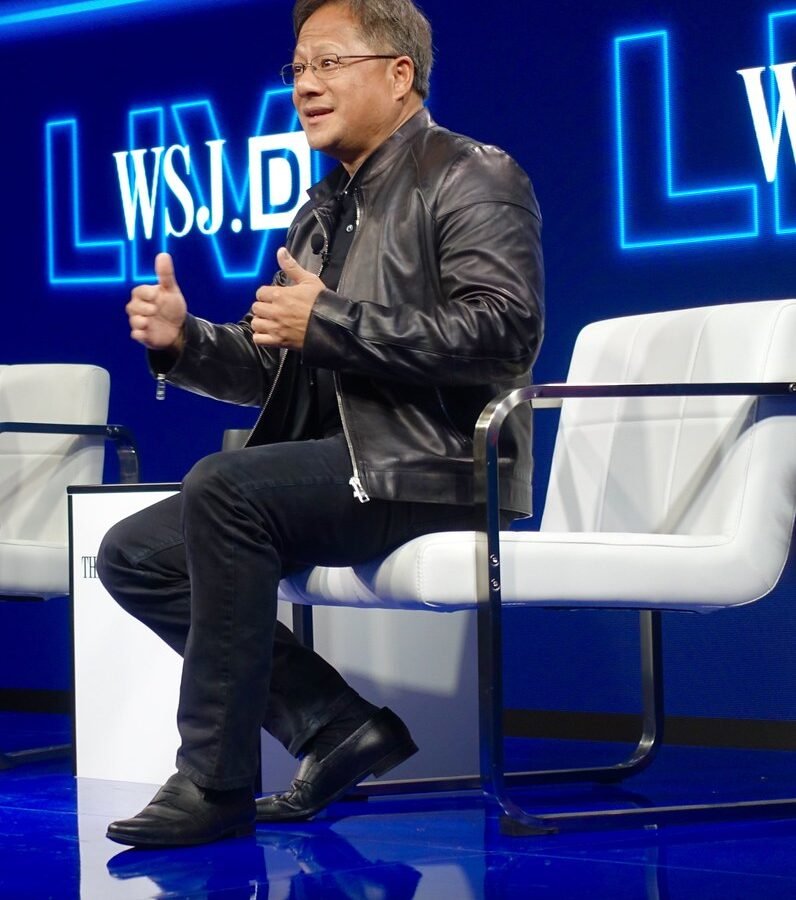
Featured image note: The Jensen Huang photograph was taken in 2016, before the events discussed here. Photo by Steve Jurvetson (jurvetson), CC BY 2.0; archival context, not a photograph of the inquiry.