Federal regulators, state attorneys general and private consumers accuse Amazon of using automated pricing, seller penalties and supplier pressure to discourage discounts. Court documents trace the alleged influence far beyond Amazon’s own website.
By Lotta Goddess | Khemetic.News | November 13, 2026
A one-cent difference in the price of pajamas illustrates a much larger American antitrust battle. According to an October 2026 Business Insider investigation, an online merchant received an Amazon notification on January 12, 2026, identifying a product listed on Amazon for $29.99 but offered elsewhere for $29.98. Even a penny was enough to trigger scrutiny by automated pricing systems.
The seller’s experience resembles allegations in a federal lawsuit filed by the Federal Trade Commission and a coalition of states in September 2023. Regulators say Amazon’s anti-discounting practices can penalize merchants who offer cheaper goods elsewhere and train rival retailers to abandon price cuts. Another automated system, Project Nessie, allegedly identified moments when competitors were likely to follow Amazon’s price increases.
California has advanced a separate lawsuit with product-specific examples involving communications about prices at Walmart, Chewy, Home Depot and other stores. Amazon disputes the allegations and says its pricing standards help shoppers find competitive offers. These lawsuits have not established a final judicial finding that Amazon engaged in unlawful price fixing or monopoly maintenance.
1. What the FTC’s federal monopoly lawsuit alleges
On September 26, 2023, the FTC and state attorneys general sued Amazon.com, Inc., in the U.S. District Court for the Western District of Washington, Case 2:23-cv-01495-JHC. The FTC alleges Amazon maintains monopoly power in two markets: online superstores serving shoppers and online marketplace services for third-party sellers.
Its allegations concern several related practices: punishing independent sellers when cheaper offers appear elsewhere; using Amazon’s own retail-pricing systems to discourage competitors from cutting prices; linking valuable Prime-related eligibility to Amazon’s fulfillment services; and charging substantial marketplace and advertising fees. The government says these strategies reinforce one another, making it harder for rival platforms to attract shoppers and sellers.
The FTC’s theory is not simply that Amazon is big. It is that market power combined with punitive pricing and fulfillment rules can restrict competition and raise prices even outside the company’s storefront. Amazon rejects the agency’s antitrust allegations. Official FTC lawsuit file.
2. Jeff Wilke and a strategy allegedly designed to discourage lower prices
Paragraphs 325–332 of the FTC’s publicly redacted November 2023 complaint discuss former Amazon Worldwide Consumer executive Jeff Wilke and an approach in which Amazon would follow competitors’ pricing changes without initiating a price war. The government attributes to Wilke a stated interest in avoiding a “perfectly competitive market” and a prediction that “prices will go up.” These are allegations and attributed statements in a complaint—not adjudicated findings about his intent.
Imagine a retailer lists a household item for $30, the same as Amazon. The retailer cuts the price to $27, hoping to win shoppers. Amazon quickly matches $27. The rival earns less per sale but may not draw the customers it expected. If the rival later restores its price, Amazon can follow upward. Across many repeated transactions, the FTC argues, competing retailers may learn that cutting prices is not worth the margin they surrender.
Such price matching can also deliver real savings on individual purchases; automated repricing is not inherently illegal. The antitrust question is whether Amazon’s market position and associated seller rules suppress the independent discounts that a healthy competitive marketplace would otherwise produce. FTC revised redacted complaint, paragraphs 325–332.
3. Project Nessie: A separate algorithm accused of pushing prices upward
Amazon’s alleged anti-discounting strategy should not be confused with Project Nessie, a separate pricing system described in paragraphs 418–432 of the same FTC complaint. Regulators allege that Nessie predicted when online competitors would follow Amazon’s price increases. Amazon could then raise its own price, wait for rivals to follow, and keep selling at the new level.
The complaint says the system was used beginning in 2014. It describes instances in which Amazon sold fewer units but earned greater profits because higher margins outweighed reduced sales. The following figures are amounts alleged by the FTC based on Amazon’s calculations, not court-established damages or confirmed nationwide consumer losses.
| Project Nessie allegation | Reported figure |
|---|---|
| Additional profit in 2015 | $363 million |
| Additional profit in 2018 | $334 million |
| Additional profit during 2016–2018 | More than $1 billion |
| Items purchased at Nessie-set prices in April 2018 | Over 8 million |
| Total purchase value of those April 2018 items | Nearly $194 million |
The government further alleges that Amazon paused Nessie during prominent shopping events such as Prime Day and the holiday season, and paused use in 2019 as scrutiny increased. A documented historical system is not evidence that Nessie is currently running in November 2026. Read FTC complaint paragraphs 418–432, especially paragraph 423.
4. The Buy Box and the cost of being invisible
A product page may offer several merchants’ listings, but most shoppers use the prominent Add to Cart and Buy Now buttons. This position is called the Featured Offer, formerly the Buy Box. In its 2024 amended complaint, the FTC alleges that nearly 98% of Amazon purchases passed through that interface.
Amazon’s Marketplace Fair Pricing Policy and Pricing Health guidance explain that external price comparisons can affect offer eligibility and enforcement. These published rules establish that cross-platform comparisons occur; they do not by themselves establish unlawful conduct.
Suppose a merchant pays lower transaction costs when selling directly from its own website. It might otherwise sell a $30 product there for $27. But if offering a cheaper direct price risks losing Amazon’s more visible purchase placement, the merchant may keep its direct website price high. That is the FTC’s alleged mechanism for turning Amazon’s costs into a price floor on other stores.
5. California’s 2026 discovery filings identify specific brands and products
California Attorney General Rob Bonta filed a separate suit against Amazon in September 2022 (San Francisco Superior Court Case CGC-22-601826). The state’s publicly filed April 2026 memorandum describes communications it says were discovered through litigation. California characterizes those exchanges as examples of coordinated price increases. They remain the state’s interpretation of evidence, contested by Amazon, rather than judicial findings against the named businesses.
Levi’s and Walmart: Khaki pants at $29.99
California alleges that Amazon identified Levi’s Easy Khaki Classic pants at lower Walmart prices. An email described in the memorandum says a Levi’s representative spoke with Walmart about moving prices to $29.99. California’s filing cites an Amazon listing that had shown approximately $25.47 to $26.99 and says both retailers later reflected the higher price. The memorandum includes exhibit references for the email exchanges.
GlobalOne and Chewy: Pet treats
California alleges Amazon and GlobalOne discussed raising the prices of more than ten Canine Naturals pet-treat products, with Chewy expected to follow. The filing describes a 24-hour override of Amazon’s automated price match and messages about the timing of a coordinated increase. The state argues these communications show movement toward a higher common price rather than independent discounting.
All the Rages, Walmart and Home Depot: Home décor
The state points to correspondence concerning 84 products that Amazon allegedly considered unprofitable because of lower outside prices. Among the Walmart price changes California identifies are $45.83 to $59.99 and $24.99 to $39. The filing contends Amazon’s supplier pressure contributed to higher competing retail prices.
Armen Living: Removing products from competing stores
California also alleges that Amazon warned furniture vendor Armen Living about products listed for less elsewhere. The vendor subsequently removed certain items from rival retailers, according to the state’s memorandum. One cited barstool had a price of $156.58 against a higher $172.97 reference.
The source is California’s redacted memorandum supporting its preliminary-injunction motion. The state also issued a February 23, 2026 statement. These documents should be read with the later ruling denying the requested injunction.
6. The FTC headquarters and the federal evidence
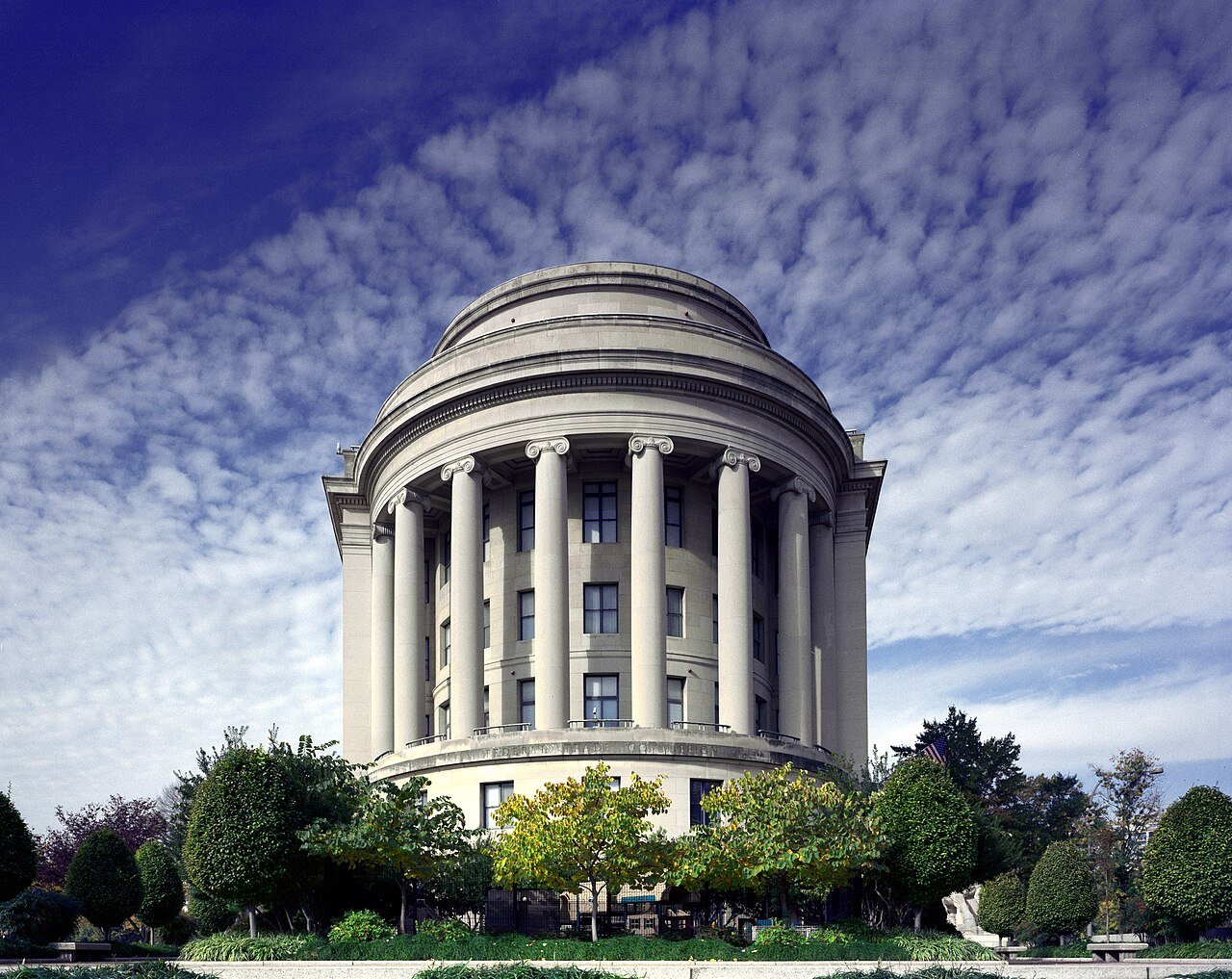
The FTC’s 2023 allegations are supported by publicly filed complaints identifying pricing mechanisms and their alleged competitive effects. Those complaints are legal claims, not a substitute for the court’s eventual consideration of Amazon’s defenses and the evidentiary record.
7. The one-cent pajama warning and sellers’ experiences
An October 2026 Business Insider investigation reported that a pajama merchant believed he could profitably sell products on other sites for about 20% less than on Amazon, where fees were higher. Yet the same seller received a January 12, 2026 notification about an Amazon listing at $29.99 and another offer at $29.98. A difference of just one cent was enough for automated attention.
The investigation also interviewed the inventors of Bed Scrunchie, who described feeling pressure to increase prices at competing retailers to protect Amazon visibility. These firsthand seller accounts, as attributed to Business Insider, illuminate incentives but do not establish that every flagged price constitutes an antitrust violation. The longer Business Insider video includes the reporting and discussion of court documents.
8. Federal and state lawsuits that could shape online pricing
FTC and states v. Amazon: The federal monopoly case
Filed in September 2023, case 2:23-cv-01495-JHC addresses allegedly interconnected pricing, fulfillment and marketplace practices. Central federal antitrust claims survived a September 2024 dismissal ruling. An October 30, 2026 court order set briefing deadlines; a bench trial is scheduled for March 29, 2027, subject to change.
California v. Amazon: The state price-fixing case
California sued in 2022. In April 2026, the state prevailed against an important part of Amazon’s summary-judgment defense. On August 27, 2026, however, the court denied the state’s request for a preliminary injunction without prejudice. The judge found the evidence submitted did not sufficiently show that the challenged conduct was ongoing or likely to continue and also noted delay in seeking relief. That did not dispose of the underlying case. Trial was scheduled for January 19, 2027. See the California Lawyers Association’s explanation of the ruling.
District of Columbia v. Amazon: A revived case
The District of Columbia sued in 2021 over alleged restrictions on marketplace and wholesale prices. The D.C. Court of Appeals reversed an initial dismissal in August 2024, concluding that the complaint adequately pleaded claims that could proceed. It did not determine liability.
De Coster v. Amazon: Customers who bought on Amazon
In case 2:21-cv-00693-JHC, a court certified a class in August 2025 generally covering qualifying U.S. shoppers with at least five eligible marketplace purchases of new physical goods beginning May 26, 2017. The official notice website lists a June 14, 2027 trial date, subject to change. Class certification is not a ruling that the plaintiffs were overcharged.
Frame-Wilson v. Amazon: Customers who bought at Walmart or eBay
A November 2, 2026 federal order certified a narrowed class covering qualifying shoppers who made at least two purchases from Walmart’s third-party marketplace or at least four purchases through eBay since March 19, 2016. The products must have been concurrently offered by the same seller on Amazon and monitored by Amazon’s challenged price-comparison system. The case directly tests the proposition that Amazon’s rules could have affected prices at competing sites. The lawsuit is contested and the decision did not find an antitrust violation. Read the November 2 certification order.
9. What Amazon says in its defense
Amazon disputes the allegations and argues that its pricing system serves customers by avoiding prominently displayed offers that are uncompetitive compared with options elsewhere. Sellers remain free to set their own prices, Amazon says, while Amazon retains the right to determine which offers are recommended or qualify for prominent purchase placement.
It also argues that negotiating prices with suppliers is a normal part of retail competition. Courts will have to determine whether the surrounding agreements, penalties and marketplace power crossed legal boundaries. A computer program that matches public prices is not automatically an illegal cartel. And describing an algorithm as “AI-driven” does not establish that it uses modern generative AI; the documented tools involve automated repricing and optimization.
10. Another FTC lawsuit: Hidden charges in Amazon’s ad auctions
The FTC and 22 states filed a separate advertising case against Amazon on August 31, 2026. In a November 5, 2026 update, regulators alleged undisclosed surcharges raised what advertisers paid above apparent auction outcomes, in some instances by up to 50% on ordinary days and 250% during major shopping events. Amazon contests that lawsuit as well.
This is not the same case as the retail monopoly action or proof that Project Nessie remains active. Advertising costs are nevertheless important to sellers’ overall operating expenses. Whether the disputed charges were ultimately passed to customers requires separate evidence. Khemetic.News has separately reported on the advertising case.
11. Why the allegations matter for American households and small businesses
Consumers: A shopper may see a low price on Amazon today, yet still miss out on an even lower price that another retailer or independent merchant would have offered absent the challenged restrictions. An occasional one-cent difference seems trivial, but the alleged system-wide loss of discounting incentives could be substantial. No final nationwide estimate of overpayments has been established.
Independent sellers: Business owners may pay lower fees on direct sales but hesitate to offer the resulting savings if doing so risks losing prominent placement on Amazon. Merchants who depend heavily on the marketplace may feel especially constrained.
Retail competitors: Temporary discounts can be less attractive if Amazon automatically neutralizes the lower price before a rival attracts significant new customers. At the same time, price matching can benefit shoppers in the short run. Both economic effects matter to the litigation.
Emerging platforms: A new marketplace that charges sellers lower fees may struggle to convert those savings into better offers if sellers fear penalties from a much larger incumbent.
12. What remains unresolved
No final judgment in the central cases discussed here establishes that Amazon illegally maintained a monopoly through its challenged pricing systems. The historical FTC descriptions of Project Nessie do not establish its current use. California’s detailed discovery allegations have not yet been resolved at trial, and the court declined to grant an immediate injunction in August 2026. The De Coster and Frame-Wilson class-certification decisions permit group litigation rather than resolving the merits.
Upcoming proceedings will evaluate what the documents mean, the degree of Amazon’s market power, whether any agreements were unlawful, causation, Amazon’s explanations and potential consumer harm. The lowest price visible today is not necessarily the lowest price that a more competitive market could produce. Whether Amazon unlawfully restricted that competition remains for the courts to decide.
Video: The price-matching allegations explained
Watch the original video excerpt supplied for this investigation. A longer Business Insider report details merchant interviews and court-filed communications.
Source documentation and further reading
- FTC Amazon eCommerce case index
- FTC revised redacted complaint (Nov. 2023)
- FTC original case announcement
- California April 2026 memorandum with exhibits
- California attorney general February 2026 release
- California Lawyers Association discussion of August 2026 injunction ruling
- District of Columbia v. Amazon, 2024 appellate decision
- De Coster class action and court-authorized notice
- Frame-Wilson November 2026 class certification
- Business Insider 2026 investigation
- FTC 2026 advertising-auction complaint update
Editorial note: Reporting is based on public court records, government filings, published Amazon policies and attributed independent reporting. Accusations are separated from findings; no firsthand interviews are claimed. Photographs are documentary images of the actual institutions, not images of any alleged misconduct.