As franchise operators behind Checkers, Wendy’s, Popeyes, Subway and Outback seek bankruptcy protection, rising food and labor costs are colliding with expensive debt and households squeezed by war-related fuel prices. A review of U.S. court filings and federal economic data shows where the stress is concentrated—and why the larger economy cannot be judged by restaurant closures alone.
November 13, 2026 — The U.S. restaurant franchise sector is confronting a fresh round of operator bankruptcies and store closures. A November 9 docket-based inventory counted 30 bankruptcy proceedings involving 25 operators in 2026, spanning brands from Checkers and Rally’s to Wendy’s, Popeyes, Subway, Applebee’s and Outback Steakhouse. These are filings by operators, not the bankruptcy of each national brand, and the count is not a tally of shuttered restaurants.
The bankruptcy wave reflects overlapping pressures: restaurant food and labor expenses, expensive financing, inconsistent customer traffic, rent and franchise fees. The U.S.–Iran war has added costs through oil, diesel and gasoline, but several of these cases began before the war and cannot be attributed to it alone. The effects are national yet uneven, with particularly visible cases across the South, Midwest and Western states.
What the filings show—and what they do not
The independent case tracker says its 30 filings are court-docket matched and uses one count for related cases administered together. Its methodology has not been matched against a comparable historical series, so it cannot establish a precise year-over-year increase by itself. Separately, Restaurant Dive reported a rise in significant multi-unit franchisee filings during 2026, citing restructuring lawyers and difficult sales conditions.
| Franchise / operator | States linked to the case | Reported scale or status |
|---|---|---|
| Checkers & Rally’s / Global Midsouth | Alabama, Missouri, Mississippi, Tennessee | Oct. 28 Chapter 11; a 16-location portfolio was reported in 2025, not 16 verified closures |
| Popeyes / Sailormen | Florida, Georgia | 136 locations at Jan. filing; 22 closures expected, not all necessarily completed |
| Subway / MTF companies | Maine, New Hampshire, Pennsylvania, Virginia | 43-location operator entered Chapter 11 in January |
| Applebee’s / Neighborhood Restaurant Partners | Florida, Georgia, Alabama | 53-location operator filed in March |
| Carl’s Jr. / Sun Gir-related companies | California | Related franchise companies filed in April; store sales and restructuring followed |
| Hardee’s / ARC Burger | Eight states identified in the docket | Chapter 7 filed April; 77 restaurants reportedly closed in late 2025 |
| Moe’s Southwest Grill / Quality Fresca | Florida, South Carolina, Virginia, Washington, D.C. | 38-store operator filed in August |
| Wendy’s / Meritage Hospitality | Michigan and 14 other states | 314 locations when filed in September; phased closures reported |
| Outback Steakhouse / Out West | California, Arizona, Colorado, Nevada, New Mexico | 61 restaurants at Nov. filing; 10 October closures reported in four states |
| Denny’s / EYM Diner of DFW | Texas | Chapter 11 filed Nov. 4; other Denny’s franchisee cases are separate |
| Schlotzsky’s / JPrieto Hospitality | Texas | Chapter 11 filed Nov. 5 |
The Southeast: Florida and Georgia lead several high-profile cases
Popeyes operator Sailormen entered Chapter 11 in January with restaurants in Florida and Georgia, reporting declining traffic, inflation pressure and a troubled restaurant-sale transaction. The company disclosed a path to sell many restaurants; a sale should not be mistaken for a closure. Popeyes said 22 locations were expected to shut. Florida also features in Applebee’s, Moe’s and Village Inn operator cases. Some Village Inn filings described the aftereffects of Hurricanes Helene and Milton, showing that storm damage and financing stress may overlap with inflation.
The Midwest and West: Wendy’s, Checkers, Carl’s Jr. and Outback
Meritage Hospitality filed for Chapter 11 on September 17 with 314 Wendy’s restaurants across 15 states. Reporting tied the case to falling restaurant-level earnings, lender claims and disputes with the franchisor over fees and store closures. Michigan locations were among those reported closed. In Tennessee, Checkers and Rally’s operator Global Midsouth filed on October 28 amid a property foreclosure dispute; its previously described restaurant portfolio also extended into Alabama, Mississippi and Missouri.
In California, Carl’s Jr. franchise companies were among the significant Chapter 11 cases. In the West, Out West Restaurant Group filed on November 2 while operating 61 Outback Steakhouse locations across California, Arizona, Colorado, Nevada and New Mexico. Outback parent Bloomin’ Brands disclosed a proposed $26.3 million stalking-horse asset purchase, contingent on bankruptcy-court approval, potential better bids and other terms. The filing expressly stated that Out West’s case did not place Bloomin’ Brands itself in bankruptcy. Read the SEC disclosure.
The war’s added cost: gasoline, diesel and transportation
The U.S.–Iran war began in late February 2026, disrupting Middle East energy shipments and raising costs for American drivers and suppliers. Reuters reported that on November 12 U.S. gasoline cost approximately $3.91 a gallon, compared with about $2.98 before the war; diesel was about $6.10, compared with $3.76. AAA measured the regular gasoline national average at $3.90 on November 12 after a recent decline—still an unusually expensive November.
| Illustrative cost | Before war ($2.98/gal) | Nov. 12 ($3.90/gal) |
|---|---|---|
| One 15-gallon fill-up | $44.70 | $58.50 |
| Four fill-ups (60 gallons) | $178.80 | $234.00 |
| Difference for four fill-ups | — | +$55.20/month |
Diesel affects prices people never see at the pump: a trucking firm, food distributor or agricultural business that buys 1,000 gallons weekly would pay about $2,340 more each week at $6.10 instead of $3.76 per gallon, if its fuel consumption stayed unchanged. That is an illustrative cost comparison, not the reported expense of any specific company. Distribution companies may pass part of these costs to restaurants, groceries or households, though the final price impact depends on contracts, competition and margins.
The U.S. Energy Information Administration’s November 10 outlook projected Brent crude at about $104 a barrel in November and $99 in December, while warning that shipping disruptions could keep prices volatile. The energy shock is an added burden, not a sufficient explanation for businesses whose debt problems predated the conflict.
Inflation: prices can keep hurting even as inflation slows
According to the Bureau of Labor Statistics’ November 10 CPI release, overall consumer prices rose 0.4% in October from September, following 0.6% in September. Grocery prices rose 0.4% during October; food away from home rose 0.5%; shelter rose 0.3%. Because October 2025 data were not collected during a federal funding lapse, BLS could not provide a standard 12-month October 2026 inflation rate for many categories. It is important not to invent one.
For households, lower monthly inflation does not undo years of cumulative increases. Rent, insurance, utilities, groceries and gasoline compete for the same paycheck. For franchise owners, food, payroll, rent, royalties, equipment and financing payments compete for the same sales. The National Restaurant Association estimates average total restaurant expenses increased 36% between 2019 and 2026.
Food insecurity: when dining out competes with basic necessities
Food insecurity is limited or uncertain access to enough food because of financial or other resource constraints—not a claim that the country has run out of food. The latest USDA national survey found 18.3 million U.S. households, or 13.7%, experienced food insecurity at some point in 2024. Those are 2024 results, not a measurement of 2026 war impacts.
When household transportation and grocery bills climb, restaurants may become occasional rather than routine purchases. That can depress transactions for lower-margin operators. At the same time, layoffs from restaurant closures can intensify financial stress for the workers and neighborhoods affected. Restaurant bankruptcies do not automatically create food deserts, but job losses can make food less affordable for families already on the edge.
Why a busy restaurant can still go bankrupt
Imagine a location with $1 million in yearly revenue and a 5% pretax margin. It would earn $50,000 before taxes. If annual operating and financing costs rise by $60,000 without an offsetting increase in sales, it loses $10,000—even if the dining room still looks busy. This is an illustration, not the finances of a named franchisee.
A National Restaurant Association survey published October 30 found 54% of participating restaurants reported higher same-store sales in September than a year earlier, but 44% reported lower customer traffic. Prices can lift revenue even while customer counts fall. In a separate association analysis, 33% of surveyed operators said their restaurants were not profitable in the first half of 2026. These survey results describe the participating operators, not every restaurant nationwide.
Chapter 11 is not the same as shutting down
Chapter 11 typically gives debtors an opportunity to reorganize, sell assets or negotiate with creditors under court supervision. A company may continue paying employees and operating many locations. Chapter 7 generally centers on liquidation. That is why portfolio size, filed bankruptcy cases, proposed closures and completed closures must never be treated as the same number. Nor does a franchisee filing mean the parent restaurant brand itself has failed.
The longer-term implications for America
Jobs, mobility and household stability
Restaurant jobs support people entering the workforce, families balancing childcare and individuals with limited local alternatives. A closure can interrupt wages, healthcare and transportation arrangements. The consequences are more severe when a restaurant is one of only a few employers within practical commuting distance.
More ownership concentrated in fewer hands
Distressed restaurants may be bought by franchisors or capital-rich operators. Successful sales can preserve restaurants, but repeated restructuring could reduce the number of independently financed operators and make business ownership harder for entrepreneurs without substantial borrowing capacity. The proposed Outback acquisition illustrates this possibility, though the transaction is not yet completed.
Vacant properties and local business spillovers
Closed locations can leave retail centers with empty storefronts, suppliers with unpaid invoices and landlords with fewer rent-paying tenants. Sales taxes may fall where spending genuinely leaves the community. These are potential local consequences, not a measured nationwide impact from the 30 filings.
Exposure to overseas energy shocks
Fuel price increases ripple through U.S. freight, agriculture, packaging and family transportation. The 2026 oil disruption reinforces the value of resilient domestic supply chains, diversified energy sources, efficient logistics and transparent planning. Those investments require capital, which heavily indebted small operators may struggle to access.
Is this a failing economy—or a deeply uneven one?
It would be inaccurate to declare the entire U.S. economy in collapse on the strength of these filings. The Bureau of Economic Analysis estimated that inflation-adjusted GDP grew at a 3.4% annualized rate in the third quarter of 2026, following 2.2% in the second. Restaurant operators themselves show mixed results: some are shrinking while others continue to open stores.
A growing national economy can nevertheless leave families struggling to afford fuel, food and housing, and leave leveraged small businesses without enough cash to survive. That tension—growth at the national level and financial strain in specific communities—is a more accurate reading of the evidence than a blanket prediction of collapse.
What comes next
The developments worth monitoring include fresh bankruptcy filings, confirmed restaurant closures, court-approved acquisitions, actual layoffs, customer traffic, borrowing costs, fuel prices and food-security surveys. For workers and residents, local store-specific notices and court updates matter more than headlines about whole restaurant chains disappearing.
The central warning: America’s franchise squeeze is not simply a burger story. It is a convergence of stretched household budgets, high operating expenses, debt and geopolitical energy shocks. Protecting economic opportunity means making it possible for workers, families and independent business owners—not just major brands—to withstand those pressures.
Sources and methodology
- Store Closure Watch, docket-based franchisee inventory (updated Nov. 9, 2026): filing counts, case numbers and state/brand coverage; figures should not be equated to closures.
- Restaurant Dive, Sept. 16, 2026: industry restructuring and economics.
- Bloomin’ Brands SEC Form 8-K, Nov. 2, 2026: Out West’s 61 restaurants and proposed transaction.
- Bureau of Labor Statistics, Oct. 2026 CPI: monthly inflation and missing year-ago comparison.
- AAA, Nov. 12, 2026: U.S. gasoline prices.
- EIA Short-Term Energy Outlook, Nov. 10, 2026: oil and fuel outlook.
- USDA Economic Research Service, household food security in 2024: latest food-insecurity baseline cited.
- National Restaurant Association, Oct. 30, 2026: operator traffic and sales survey.
- National Restaurant Association, restaurant cost trends: average operating cost increases.
- Bureau of Economic Analysis, Oct. 29, 2026: GDP growth as a counterpoint to industry distress.
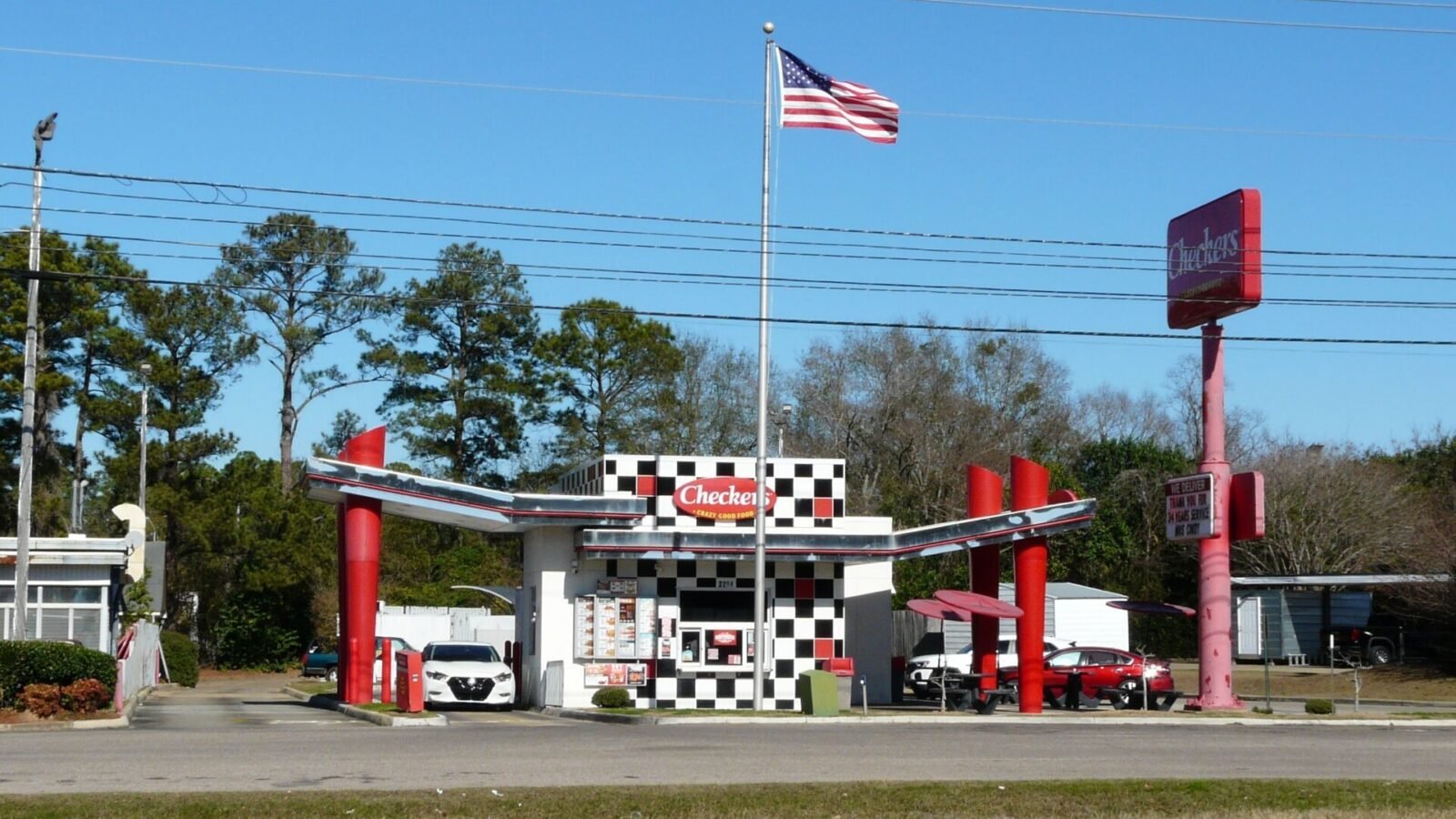
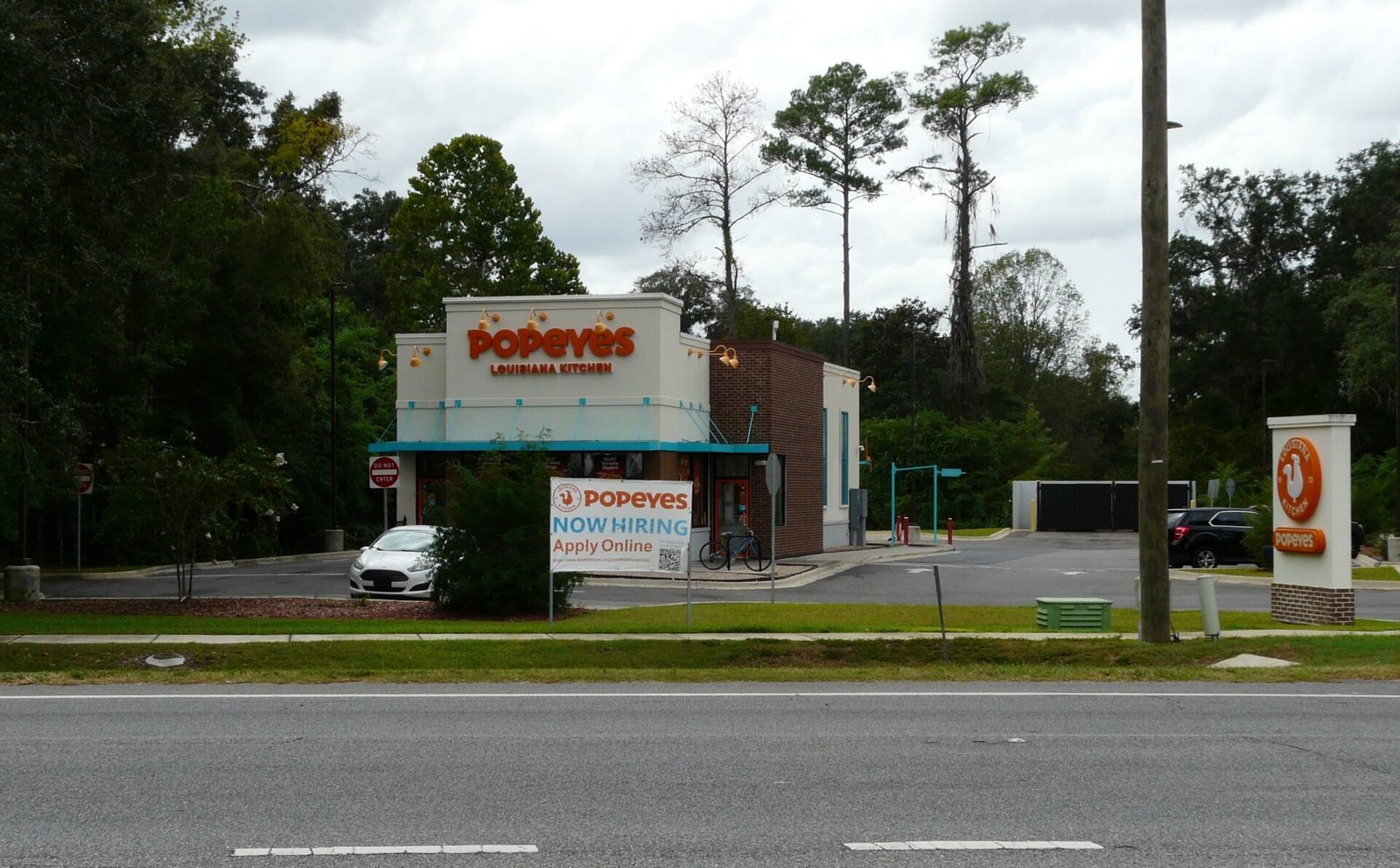
- The Bushranger, Checkers archival photo; The Bushranger, Popeyes archival photo; both photographs licensed CC BY-SA 4.0. No connection between these photographed locations and the bankrupt operators is established.
- AP Archive, May 11, 2026: historical reporting on gasoline prices during the conflict.