WASHINGTON, Nov. 15, 2026 — A newly finalized federal housing regulation could jeopardize rental assistance for roughly 80,000 people living in mixed-immigration-status households, including tens of thousands of U.S.-citizen children, according to estimates by independent housing researchers. But the estimates are not a count of confirmed evictions, and the new rule does not require everyone affected to leave on its effective date.
The Department of Housing and Urban Development (HUD) announced its final Verification of Eligible Status rule on Nov. 10. It was published in the Federal Register on Nov. 12 and is scheduled to take effect Dec. 14, 2026. The rule covers public housing, Section 8 voucher and project-based rental assistance, and certain other programs.
What changes for mixed-status families?
Under longstanding federal rules, a household containing both immigration-eligible and ineligible members could receive prorated assistance: only eligible people were counted for the federal subsidy, and the household paid a greater share of its housing costs. This arrangement allowed mixed-status families to live together while receiving limited assistance.
HUD’s new regulation ends the possibility of keeping that prorated arrangement indefinitely. It also requires evidence of U.S. citizenship or qualifying immigration status from applicants and assisted residents regardless of age and eliminates the option for a household member to decline to claim eligible status without supplying verification.
The federal statute already restricts assistance to citizens and specified eligible noncitizens; the change concerns verification and how households with ineligible members may continue to receive housing help. HUD says the update brings its regulations closer to the statute. Housing advocates argue it imposes new burdens on eligible residents whose families include someone without eligible status.
How many people might be affected?
The Center on Budget and Policy Priorities, analyzing 2024 HUD administrative data for the proposal, estimated 79,600 people in approximately 20,000 mixed-status assisted households. Its analysis counted about 36,900 children, including 35,400 U.S. citizens. These are estimates of people who could face a choice between changes to their living arrangements and loss of assistance—not verified totals of people already displaced.
HUD’s final rule states that about 71% of mixed-status assisted families are concentrated in three states: California (36%), Texas (22%) and New York (13%). That means housing authorities in those states may face a larger share of the implementation burden.
HUD’s position and the response from housing advocates
In its Nov. 10 announcement, HUD said it wants federally funded housing restricted to eligible people and argued that the policy could direct scarce assistance toward qualifying applicants on waiting lists. The agency cited a joint eligibility review identifying nearly 200,000 assisted tenants whose citizenship or immigration eligibility had not been verified. An unverified record does not by itself establish that a tenant is ineligible or has committed fraud.
The National Housing Law Project and other housing advocates warn that households may have to choose between separating from an ineligible family member and losing assistance. They say possible consequences include displacement, higher housing costs, disrupted schooling and increased homelessness. Those are projected risks, not outcomes that have yet occurred under the newly finalized rule.
In responding to public comments, HUD said it disagreed with claims that the regulation directly orders family separation. The agency said the rule retains temporary transition protections and appeal procedures. It also acknowledged that affected families could experience hardship.
When must residents act? The December 14 date is not an eviction deadline
The regulation sets a Dec. 14 effective date, but its documentation and termination process has additional steps. According to the final regulatory text:
- Covered housing providers must notify existing tenants who still need to submit eligibility evidence no later than 30 days after the effective date.
- Mixed-status tenant households that have not submitted the required evidence as of Dec. 14 generally must submit it within 90 days of that date.
- An additional extension of up to 60 days may be granted when required documents are temporarily unavailable or more time is needed, subject to the rule’s conditions.
- Other existing tenants who have not submitted the evidence generally do so at their next required annual or interim eligibility reexamination.
- The regulation retains notice, informal review or hearing protections and limited temporary deferrals of assistance termination in qualifying circumstances.
The transition periods do not guarantee permanent eligibility. They do mean that Dec. 14 should not be described as a nationwide deadline for affected families to vacate their homes. Actual impacts will depend on each household’s eligibility, verification process, administrative decisions and any legal developments.
What families can do now
Until the final rule takes effect, existing regulations still apply. The National Housing Law Project’s know-your-rights guidance advises households to consult qualified legal counsel before deciding to separate, relocate or disclose a family member’s immigration status. Residents who receive a notice should keep a copy, review deadlines and ask about applicable review or hearing rights. Legal aid may be found through LawHelp.org. This article is general information, not legal advice.
The rule does not apply identically to every federal or federally supported housing program. Families should verify whether their own assistance is one of the Section 214 covered programs rather than assuming all housing aid is affected.
What remains uncertain
It is not yet known how many households will ultimately lose assistance, leave their homes or change household composition. Legal challenges and additional implementation guidance could also change the course of enforcement. The most accurate present distinction is between a finalized rule, an upcoming effective date and estimates of its possible human impact.
Sources and documents
- Federal Register: HUD final rule, Nov. 12, 2026
- HUD announcement, Nov. 10, 2026
- Center on Budget and Policy Priorities: estimate for mixed-status families
- National Housing Law Project: statement on the new rule
- CBS News reporting
- Deseret News reporting, Nov. 15, 2026
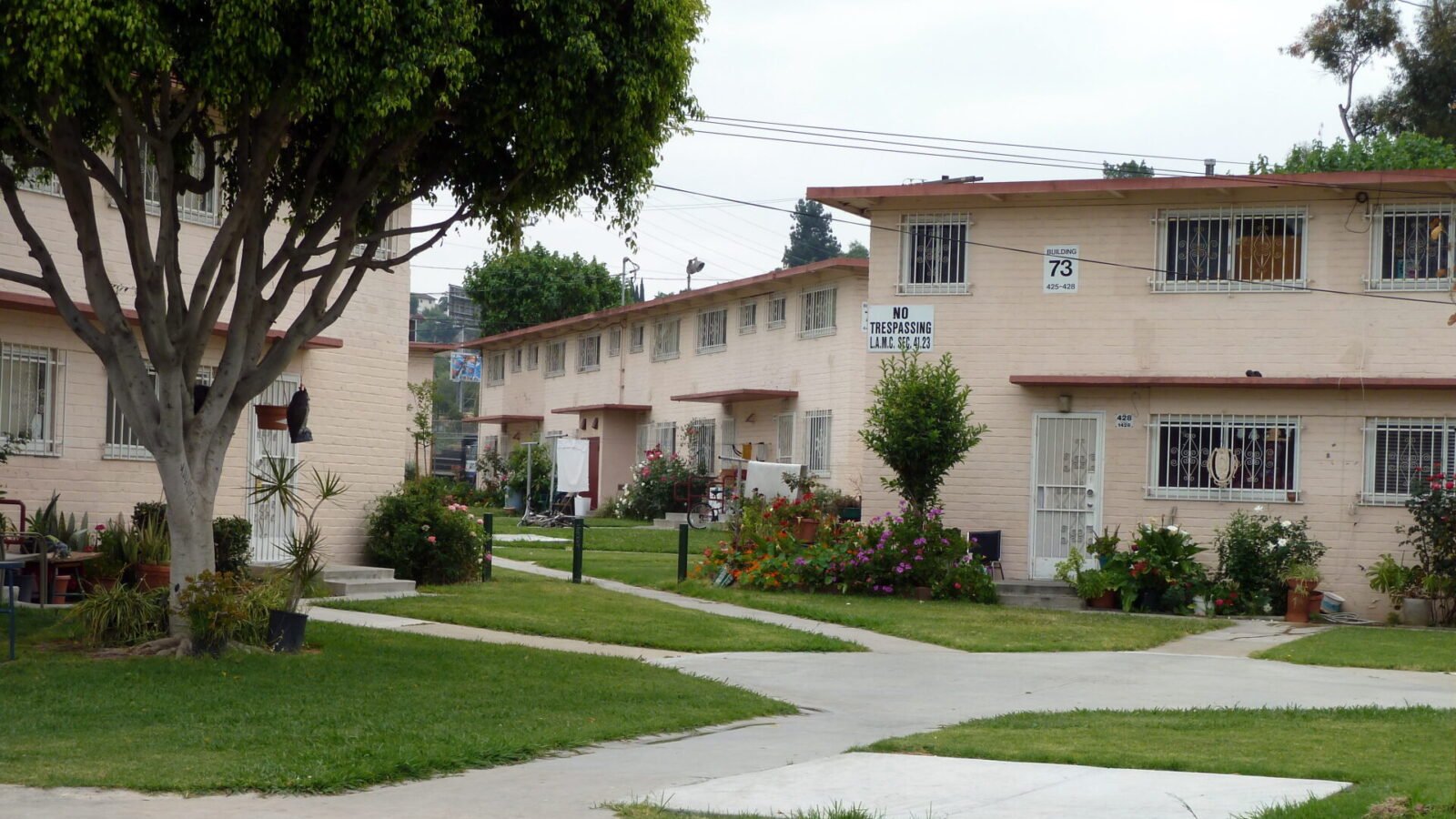
Featured image: Ramona Gardens public housing complex, Boyle Heights, Los Angeles, California, photographed May 7, 2011, by Tedder, licensed under CC BY 3.0. Archival image, illustrative of U.S. public housing; no residents pictured are identified as affected by the new rule.