McDonald’s collected $10.44 billion in franchise rent during 2025, according to its annual SEC filing, not $27 billion in rent as a viral video claim might suggest. The $120 billion estimate attached to its property business is an investment-manager valuation scenario—not an official appraisal.
The Golden Arches are associated with hamburgers and fries, but the corporation’s revenue depends heavily on something less visible to customers: recurring payments from independent operators who run most of its restaurants. McDonald’s 2025 financial statements show that franchise rent, royalties and initial fees together brought in $16.55 billion, versus $9.69 billion in sales at company-operated restaurants. Total corporate revenue was $26.89 billion. The numbers are detailed in McDonald’s 2025 Form 10-K.
What McDonald’s actually earned from rent and fees
The company reports several different revenue streams. They should not be confused with total sales made across the worldwide restaurant network, which include sales at franchised stores that do not flow directly into the corporation’s revenue.
| McDonald’s corporate revenue source | 2025 amount |
|---|---|
| Franchise rents | $10.442 billion |
| Franchise royalties | $6.018 billion |
| Initial franchise fees | $88 million |
| Company-operated restaurant sales | $9.69 billion |
| Other revenue | About $647 million |
| Total corporate revenue | $26.885 billion |
One important distinction: receipts are not the same as profit. McDonald’s pays occupancy expenses, invests in buildings and incurs corporate operating costs. It reported $13.93 billion in franchised restaurant margins in 2025, compared with $1.42 billion in margins from company-operated restaurants. Franchised operations accounted for approximately 90% of combined restaurant margin dollars, before broader corporate expenses.
The real estate behind the Golden Arches
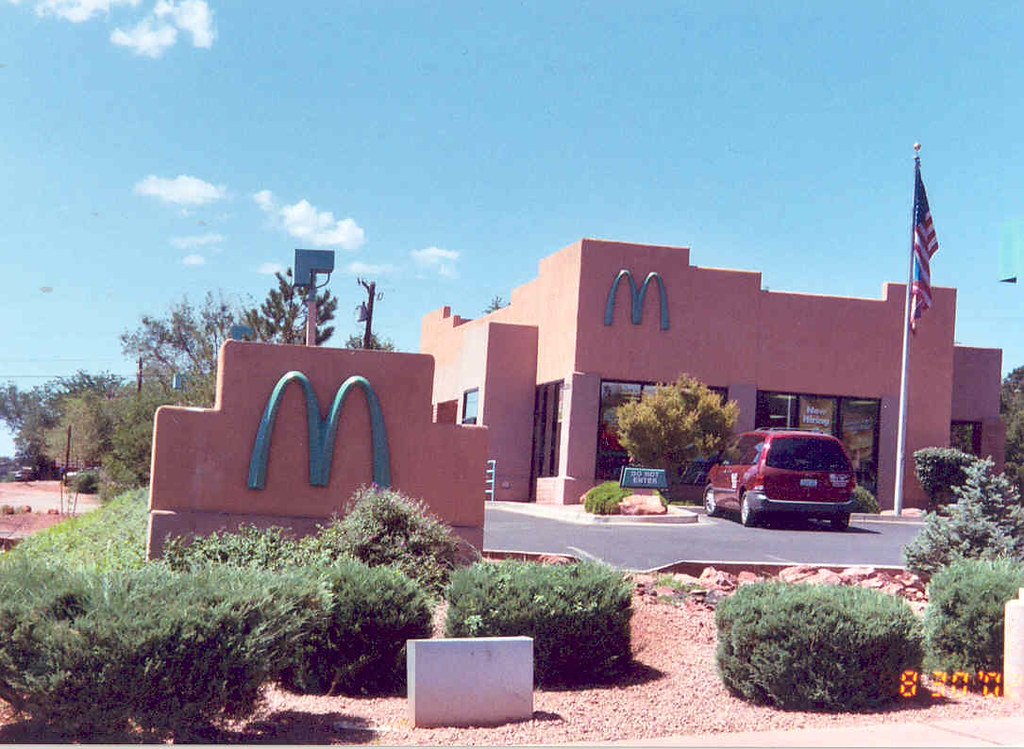
At the end of 2025, McDonald’s had 45,356 restaurants worldwide, including 13,706 in the United States. Approximately 95% of the worldwide network was franchised. Under conventional arrangements, McDonald’s generally owns or secures a long-term lease on the land and building, while franchisees invest in equipment and operate the location.
In its consolidated markets, McDonald’s said it owned approximately 56% of the land and 80% of the buildings at restaurants as of December 31, 2025. These ownership shares refer to consolidated markets, not every restaurant worldwide, and some sites are leased rather than owned.
Is the property empire really worth $120 billion?
The headline-making $120 billion figure has a traceable source. In a September 19, 2025 analysis, Macquarie Asset Management estimated that a hypothetical real estate investment trust built from McDonald’s property business could have an asset value of approximately $120 billion if valued using a 6% capitalization rate and contemporary rental income.
That is a scenario-based estimate, not a transaction price, independent property-by-property appraisal or amount listed on McDonald’s balance sheet. The corporation reported $28.24 billion in net property and equipment at December 31, 2025, including about $22.8 billion of net property and equipment under franchise arrangements. Accounting carrying value and a capitalized-rent estimate answer different questions.
A lower rental yield, stronger expected growth or other assumptions could raise the estimated value; higher required yields or weaker rental expectations could lower it. Any actual sale or property spin-off would involve financing, leases, tax treatment and corporate strategy that the simplified estimate does not establish.
What the latest 2026 filing adds
The model remained central to McDonald’s through the third quarter of 2026. In its Form 10-Q for the nine months ended September 30, 2026, the company reported $8.069 billion in franchise rents, up from $7.752 billion for the comparable nine months of 2025. It reported 46,554 restaurants worldwide at September 30, including 44,630 franchised locations. These are nine-month and point-in-time figures, respectively, not full-year 2026 results.
That same filing makes clear that conventional franchise rent and royalties depend in part on restaurant sales, subject to contractual minimum rent payments. The company is therefore not completely insulated from falling customer traffic, financially stressed franchisees or difficult operating conditions.
Why American franchise operators and customers should care
Franchisees face day-to-day labor, food, equipment and other operating costs while making payments required by their agreements with McDonald’s. Those costs and the corporation’s rental structure can affect the financial room available for staffing, investment and menu pricing; the effects differ by operator and market. The SEC filing does not support the assertion that the corporation earns its rent regardless of whether franchisees remain viable.
For readers, the broader lesson is how a famous consumer company can earn substantial income by controlling locations, licensing intellectual property and collecting contractually recurring payments. McDonald’s is still a restaurant business. Its franchising and property arrangements explain much of how that business generates corporate profits.
Video and source documents
The original YouTube Short that prompted this fact-check describes McDonald’s business model; its revenue and valuation claims are distinguished from audited figures above. Video link supplied by the original publisher; playback and embed availability have not been independently confirmed.
- McDonald’s 2025 SEC Form 10-K (filed February 24, 2026)
- McDonald’s third-quarter 2026 SEC Form 10-Q
- Macquarie Asset Management’s September 2025 real estate valuation scenario
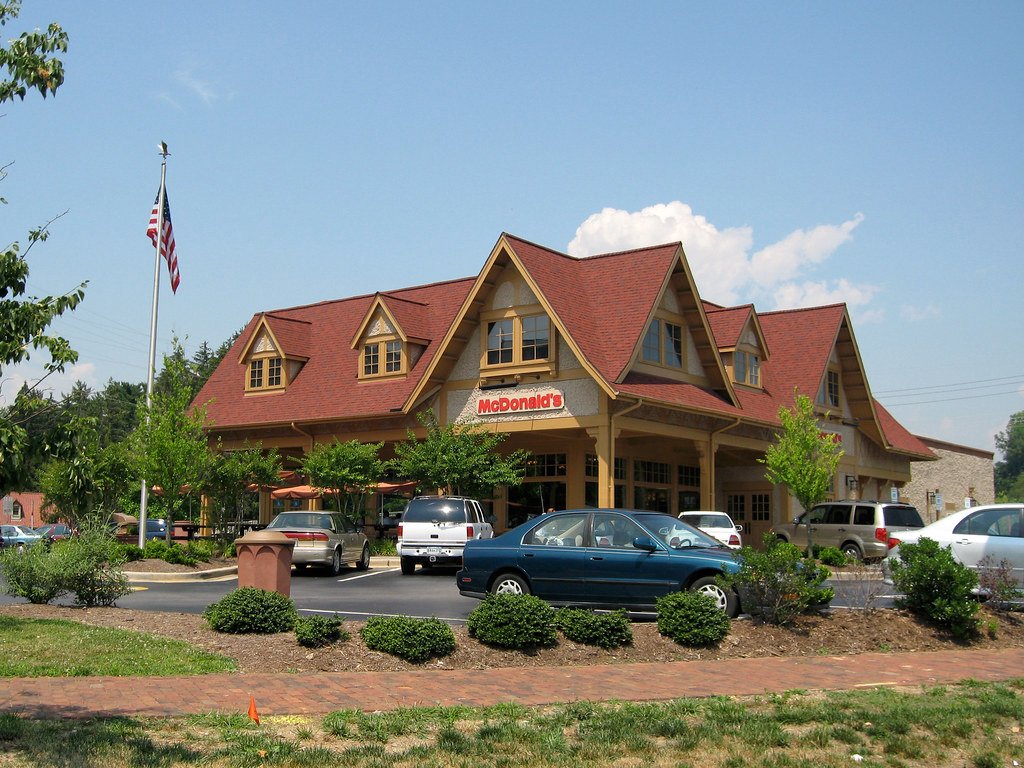
Photo credits: Featured photograph—McDonald’s restaurant in Asheville, North Carolina, by NNECAPA, CC BY 2.0. Inline photograph—McDonald’s restaurant in Sedona, Arizona, by NNECAPA, CC BY 2.0. Both are archival photographs; their dates were not independently verified.