WASHINGTON, Nov. 18, 2026 — The FBI is warning that hackers are using an artificial intelligence-assisted penetration-testing framework called ARTEX to speed up intrusions against businesses and government networks. Its November 13 cybersecurity advisory says some operations moved from initial targeting to privileged access in less than three hours — a warning about how little time defenders may have to respond.
The warning concerns the misuse of a security-testing tool, not evidence that ChatGPT or Claude themselves have been breached. ARTEX can connect to AI models, including OpenAI GPT and Anthropic Claude, to coordinate tasks normally requiring substantial human involvement.
What the FBI actually reported
The FBI’s 13-page FLASH advisory, numbered FLASH-20261113-001, says malicious cyber actors have used ARTEX since at least August 2026. It lists attempted activity involving financial services, government, technology, defense, energy, healthcare, manufacturing, telecommunications and other sectors.
ARTEX was designed as an authorized penetration-testing framework. Its multi-agent system can automate reconnaissance, discovery of vulnerabilities, attempts to exploit weak access controls and subsequent actions. In unauthorized hands, the same automation can compress the time between discovering a weakness and exploiting it.
The FBI says the original developer removed the public GitHub repository in October after reports of abuse. Copies and related deployments nevertheless remained available; the agency cited researchers who had identified more than 1,600 publicly exposed ARTEX console instances in early November. That count is of exposed consoles, not confirmed compromised companies.
Microsoft traces attacks through a software supplier
In an October 21 investigation, Microsoft attributed a broad ARTEX-assisted campaign to Storm-0940, a threat actor it assesses as aligned with the Chinese state. Microsoft said the group targeted hundreds of organizations and, in multiple incidents, reached privileged cloud access in under three hours.
One prominent case involved compromised ConnectWise Cloud Backup application credentials. Microsoft reported that attackers attempted sign-ins to more than 2,250 downstream customer tenants. This does not mean 2,250 customers were successfully breached. Microsoft said most targeting attempts failed, although it observed privileged access and persistence in some affected cloud environments.
A separate November 5 Microsoft report describes attackers using agentic AI techniques to locate exposed software credentials. In one case, the interval from a search for exposed secrets to extracting Azure Key Vault data was approximately five minutes. Microsoft described that as related agentic tooling, not proof that every such incident used ARTEX.
Amazon documents credential theft and attempted identity fraud
Amazon Threat Intelligence reported November 13 that its MadPot security sensors collected records associated with malicious ARTEX agents between October 3 and November 5. One campaign sought API keys that could be used to access AI services and potentially fund further credential hunting. Another targeted cryptocurrency platforms’ identity verification systems with deepfake techniques.
Amazon assessed ARTEX involvement with moderate confidence and said it could not independently confirm every outcome described in the agents’ captured records. The records help explain attackers’ objectives; they are not proof that each target was successfully compromised.
Why U.S. organizations should pay attention
The central risk is not an AI model operating on its own. It is the combination of automated attack tools, exposed credentials, overly broad software permissions and weaknesses in trusted third-party applications. Cloud accounts used by schools, community organizations, local businesses, hospitals and publishers can be exposed through the same kinds of connections targeted in these campaigns.
The ConnectWise case illustrates how the compromise of one supplier can create risks for many downstream organizations. For small U.S. businesses, the lesson is practical: protecting the main website alone is insufficient if backup providers, administrative accounts and external integrations have wider access than they need.
Practical steps for defenders
- Inventory internet-facing services, cloud applications and third-party integrations, especially those with administrative permissions.
- Review unusual sign-ins, new service-account credentials and unexpected changes to cloud identities or permissions.
- Rotate exposed or compromised API keys and passwords, and reduce privileges that are no longer necessary.
- Preserve audit records and investigate suspicious access quickly rather than assuming unsuccessful sign-ins are harmless.
- Use the detection guidance and indicators of compromise supplied by the FBI advisory; report suspected intrusions to appropriate incident-response teams and law enforcement.
What the warning does not establish
The FBI does not say every ARTEX installation is malicious, that all attempts succeed, or that consumer-facing ChatGPT and Claude services were themselves hacked. Naming an AI model as a compatible component of ARTEX is not evidence that its developer directed or approved a criminal intrusion.
Nor should this warning be treated as proof that unrelated U.S. service outages were caused by ARTEX. The documented finding is narrower and important on its own: several real attacks have shown that automated tools can reduce the defender’s response window to hours or less.
Primary sources
- FBI Internet Crime Complaint Center, FLASH-20261113-001, November 13, 2026 (PDF).
- Microsoft Security, ARTEX and the ConnectWise supply-chain attack, October 21, 2026.
- Microsoft Security, AI-assisted credential discovery and misuse, November 5, 2026.
- Amazon Threat Intelligence, ARTEX cybercrime campaigns, November 13, 2026.
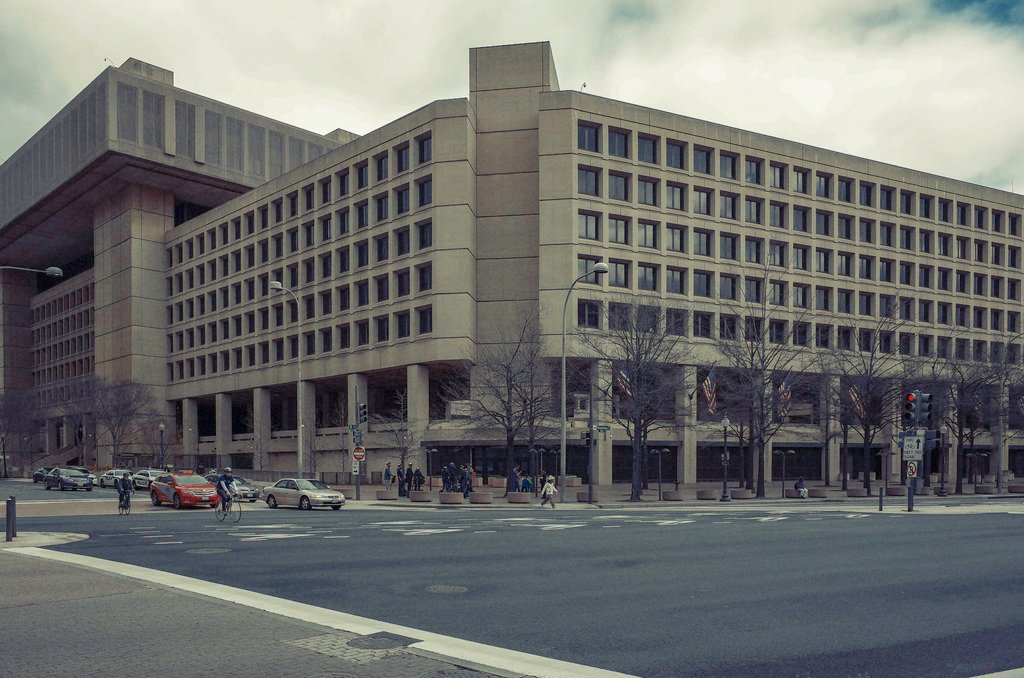
Featured photograph: Archival exterior of FBI headquarters in Washington, D.C., by patrick_thibodeau, licensed CC BY 2.0. The photograph illustrates the agency issuing the warning; it does not depict an ARTEX intrusion.